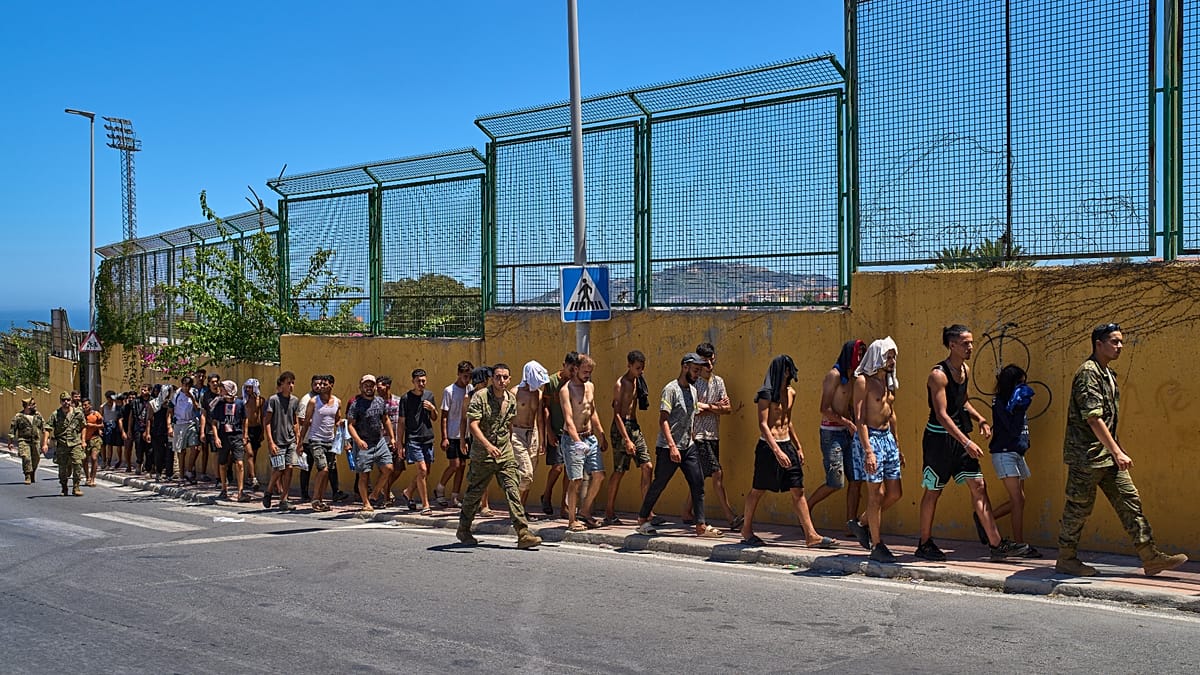
The border crossing between Ceuta and Morocco is markedly quieter than in recent days, yet the shockwaves from last week's mass entry are still being felt across the Spanish enclave. Spanish authorities report that the majority of the estimated 60,000 people who crossed irregularly on Thursday have already been sent back or have returned voluntarily. A steady, if reduced, stream of migrants continues to head back, many saying they had been lured by social media messages claiming the frontier was open and no documents were required.
In the city itself, the initial fear has given way to a simmering indignation. Nearly everyone I spoke with expressed disbelief that such a situation could have unfolded, and there is a growing demand for urgent explanations. The tense atmosphere is now fuelling political debate, with the far-right Vox party seeking to capitalise on the crisis.
Residents voice anger and frustration
A taxi driver captured the mood of many: “I got the feeling that people are very, very angry. I know they’re very angry right now. There are 85,000 of us here, and 60,000 are coming in. So, tell me. What do we do? What are we going to do? We can’t even buy bread. There was no bread. There was nothing. Nothing, nothing. Everything was closed.”
While he was reluctant to assign blame, others were more direct. A middle-aged man, referring to the initial legal obstacles to immediate repatriation because many had arrived by sea, called Prime Minister Pedro Sánchez an “accomplice” and described the episode as “a disgrace—for me, a disgrace. This has never happened before in my life.”
Yet some Ceutanos also recognise a humanitarian dimension. A 78-year-old pensioner told me: “If there are children there, they need to be given something to drink, they need to be given something to eat. It’s common sense, but that now all of Ceuta, all of Spain—and Spain stands with you—is with you.” Still, he condemned the overall situation: “This is a state of emergency and a declaration of martial law, just to go shopping at Mercadona? I have to pass a soldier every ten meters away from him ten or twenty meters away from him and feed the troops well and the police. That’s a state of siege, and it’s a state of national emergency. There’s no question about it.”
Vox leader visits and points finger at Madrid
Santiago Abascal, the leader of Vox, visited Ceuta on the same day, accusing the Spanish government of being subservient to Morocco. Speaking to the media, Abascal placed the blame squarely on the authorities in Rabat and, above all, on Pedro Sánchez himself. His visit underscores how the crisis has become a political flashpoint, with Vox seeking to mobilise public anger ahead of regional elections.
The episode has also had wider European repercussions. Italy has reinstated border checks on arrivals from Spain, while 22 EU member states have demanded emergency talks on the surge. European Commission President Ursula von der Leyen has sought to reassure the bloc that no migrant from Ceuta reached mainland Spain or the EU, but the incident has exposed the fragility of the EU's external borders.
Reports have emerged that Spain had advance warning of the migrant surge, according to sources, raising questions about preparedness and response. The Spanish government has defended its actions, but the criticism from Ceuta's residents and opposition parties is unlikely to subside quickly.
As the city cautiously returns to a semblance of normality, the deeper issues remain unresolved: the diplomatic standoff with Morocco, the legal framework governing returns, and the long-term sustainability of Spain's migration policy. For many in Ceuta, the scars of this week will take time to heal, and the demand for accountability is only growing louder.