Italy has reintroduced border checks on travellers arriving from Spain, a move that has deepened a political rift between Rome and Madrid over how to handle the recent migrant surge in the Spanish enclave of Ceuta. The checks, which began on Saturday morning, apply to arrivals by sea and air and are set to last for one month.
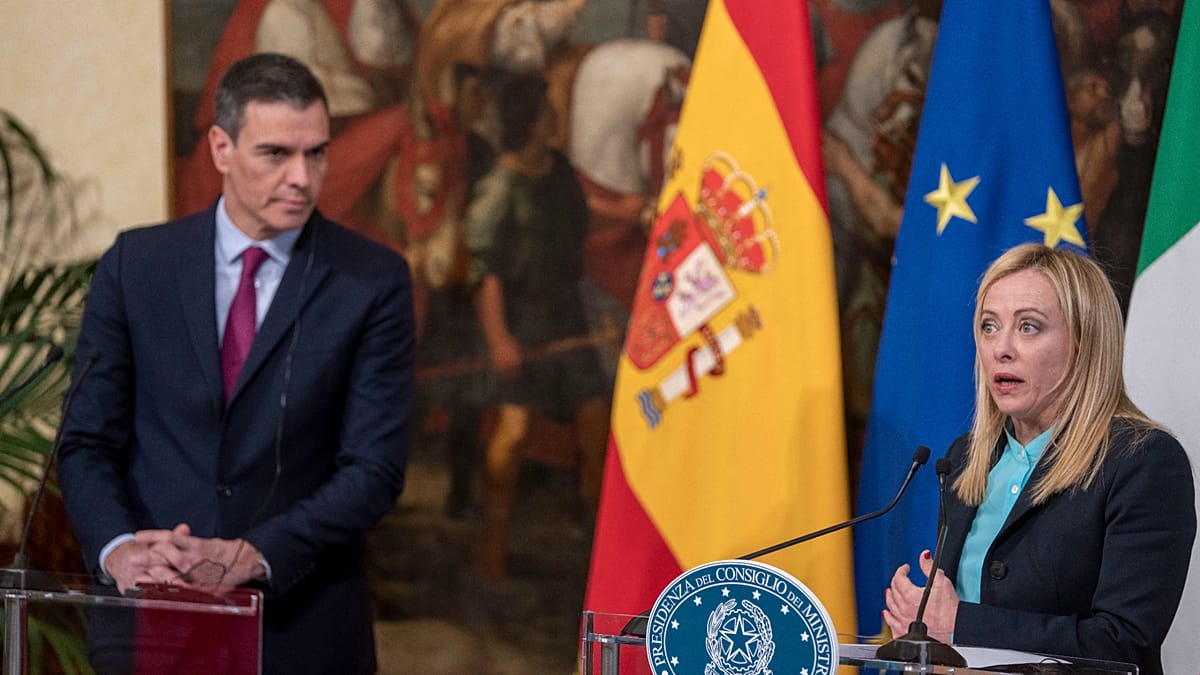
The decision follows news that thousands of migrants had reached Ceuta, a Spanish territory on Morocco's Mediterranean coast. In a post on X, Italian Prime Minister Giorgia Meloni said her government had decided to "temporarily suspend the free movement regime provided for by Schengen on maritime and air links with Spain, reintroducing border checks."
While some media outlets interpreted this as a suspension of the Schengen Agreement itself, the treaty already permits member states to reintroduce border controls "in the event of a serious threat to public order or internal security." Italy has, in fact, maintained similar checks at its border with Slovenia for over a year, targeting travellers from third countries. Interior Minister Matteo Piantedosi described the latest measure as "important but precautionary."
What the checks mean for travellers
From Saturday morning, police at Rome Fiumicino, Milan Malpensa, and Milan Linate airports began carrying out random checks on passengers arriving from Spain. For EU citizens, showing proof of identity was sufficient. Non-EU nationals, however, had to present a valid residence permit or visa in addition to their identity document.
Piantedosi explained that the checks are aimed at "monitoring the regularity of movement of non-EU citizens within the Schengen area." For those travelling from Italy to Spain, nothing changes—they remain free to enter the country.
The move has drawn sharp criticism from Spanish authorities. Prime Minister Pedro Sánchez has written to European Council President Antonio Costa and European Commission President Ursula von der Leyen, urging Brussels to intervene and support Spain in aligning EU strategies on migration. Sánchez has previously called the Ceuta surge a violation of Spain's territorial integrity.
At the same time, Meloni and Danish Prime Minister Mette Frederiksen sent a joint letter, co-signed by 22 EU leaders, requesting a meeting to discuss urgent measures against irregular migration. Their letter calls for joint action "to strengthen external borders, tackle irregular migration, combat human traffickers, make returns more effective and remove any factor that could encourage new illegal entries."
On Saturday afternoon, von der Leyen said on social media that she had spoken with Commissioners Brunner and Šuica about the Ceuta crisis. She noted that most of the migrants who had entered the enclave irregularly had already been repatriated, and that none had reached mainland Spain or other EU countries. She reiterated the need to strengthen Europe's resilience and said she was ready to take part in a videoconference requested by EU leaders, scheduled for next Tuesday and organised by Micheál Martin, the Taoiseach of Ireland and current president of the Council of the EU.
The row between Rome and Madrid highlights the broader tensions within the EU over migration policy. While Italy's decision to restore checks is a unilateral step, it is permitted under Schengen rules. However, no country can unilaterally suspend another from the free-movement area, and the measure is seen as a symbolic but pointed response to the situation in Ceuta.
As the EU debates how to respond, the situation in Ceuta remains a flashpoint. The enclave has seen record arrivals, and Spain has been returning migrants to Morocco in large numbers. The crisis has also exposed legal deadlocks in Spain's ability to process returns, and it has tested the limits of EU solidarity.
For now, travellers between Italy and Spain should expect occasional checks, particularly at major airports. The coming weeks will show whether the measure is extended or whether Brussels can broker a common approach to the challenges posed by irregular migration at Europe's southern borders.