Twenty-two European Union member states have formally requested an emergency meeting to coordinate the bloc's response to the migrant influx that overwhelmed the Spanish enclave of Ceuta this week. In a letter addressed to European Commission President Ursula von der Leyen, European Council President António Costa, and Irish Prime Minister Micheál Martin — whose country holds the rotating Council presidency — the leaders described the situation as a matter of urgency.
The letter, initiated by Italy and Denmark according to diplomatic sources, calls for an extraordinary videoconference of EU interior ministers. The signatories express serious concern over the events, even as Madrid insists that nearly all of the estimated 50,000 people who crossed from Morocco into Ceuta have been returned.
Concerns over uncontrolled crossings
The leaders argue that the crisis risks creating a dangerous precedent. "We cannot allow uncontrolled mass crossings, the instrumentalisation of migration or other hybrid threats to create the perception that illegal entry into the European Union is possible," the letter states. They warn that such a perception would encourage further attempts, undermine confidence in the bloc's common migration policy, and have repercussions for all member states.
To counter this, the signatories say they are prepared to consider "any necessary measures," including the reinforcement or temporary reintroduction of internal border controls within the Schengen Area. The letter also points to Spain's decision to grant legal status to some unauthorised migrants as a potential "pull factor" that may have contributed to the crisis — a claim Madrid has rejected.
Notably absent from the list of signatories are France, Portugal, and Luxembourg. French President Emmanuel Macron, Portuguese Prime Minister Luís Montenegro, and Luxembourg's Luc Frieden did not endorse the letter, which was also addressed to the European Commission and Council presidents.
Sánchez hits out at EU partners
The diplomatic pressure comes as Spanish Prime Minister Pedro Sánchez publicly rebuked some EU member states for their response. In his own letter to Ursula von der Leyen on Saturday, Sánchez wrote that while most partners had shown solidarity and offered assistance, "others, however, have chosen to attack Spain and to call for its temporary exclusion from the Schengen Area."
This appears to be a direct reference to calls from Italian Prime Minister Giorgia Meloni's administration to suspend Spain's visa-free Schengen arrangement. The Italian government has argued that Spain's handling of the crisis undermines the integrity of the bloc's external borders.
The dispute highlights the deep divisions within the EU over migration policy. While the 22 leaders stress the need for a coordinated response, the refusal of key member states to sign the letter suggests that consensus remains fragile. The tensions between Rome and Madrid over Schengen have become a flashpoint for broader disagreements on how to manage irregular arrivals.
For Spain, the crisis has also exposed legal and logistical challenges. The government has struggled to process the sheer number of arrivals, and questions have been raised about the legality of rapid returns. As Ceuta's record arrivals expose Spain's legal deadlock on returns, the EU's internal debate over solidarity and responsibility is likely to intensify.
The European Commission has so far avoided direct comment on the letter, but officials in Brussels are expected to discuss the proposal in the coming days. The call for an emergency meeting reflects growing anxiety among member states that the Ceuta crisis could be a harbinger of larger migratory pressures on the EU's southern flank.
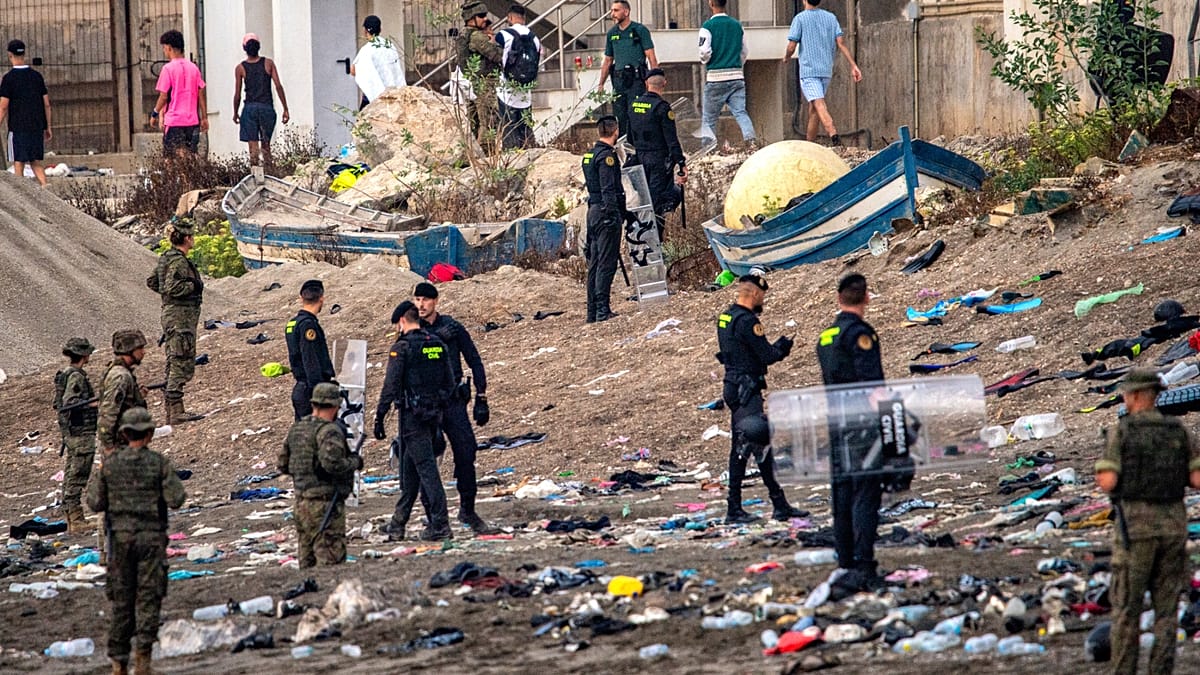
Meanwhile, the situation on the ground remains tense. Spanish army soldiers have been deployed to block access to beaches where migrants crossed, and the enclave's infrastructure is strained. The EU has said that migrants cannot move freely to the mainland, but the long-term solution remains unclear.
As the bloc grapples with these challenges, the Ceuta episode has become a test of European unity. The reported deaths and tightened sea border controls underscore the human cost of the crisis, while the political fallout continues to reverberate across EU capitals.