Organisers of France's centre-left primary say the vote is back on track after a cyberattack slowed the first day of balloting. By midday on Saturday, 87,841 of the 140,282 registered voters had cast their ballots, representing 62.6% of the electorate. That compares with just 20,000 votes by 7 p.m. on Friday, when the attack disrupted the online platform.
The primary, organised by the Socialist Party (PS) and Place publique, will choose a single candidate to carry the centre-left banner into the 2027 presidential election. Turnout is seen as a key measure of the legitimacy the winner will bring to the race for the Élysée Palace, where the far-right and far-left already have well-established contenders.
Mélenchon looms over the contest
Although Jean-Luc Mélenchon, leader of La France Insoumise (LFI), was not invited to take part, he has remained a central figure in the televised debates. The discussions have focused on whether the centre-left should seek an alliance with LFI for the legislative elections that follow the presidential vote, and on whether to endorse the Insoumise candidate in a second-round run-off if the centre-left fails to qualify.
Rachel Garrat-Valcarcel, a political journalist and author of the newsletter Blocs & Partis, told Euronews that a turnout of "at least 80%" would be needed for the primary to be considered a success. But she added that a high turnout alone would not be enough. To "very possibly" generate momentum, she argued, Raphaël Glucksmann would have to win "by a very wide margin in the first round."
Five candidates, one favourite
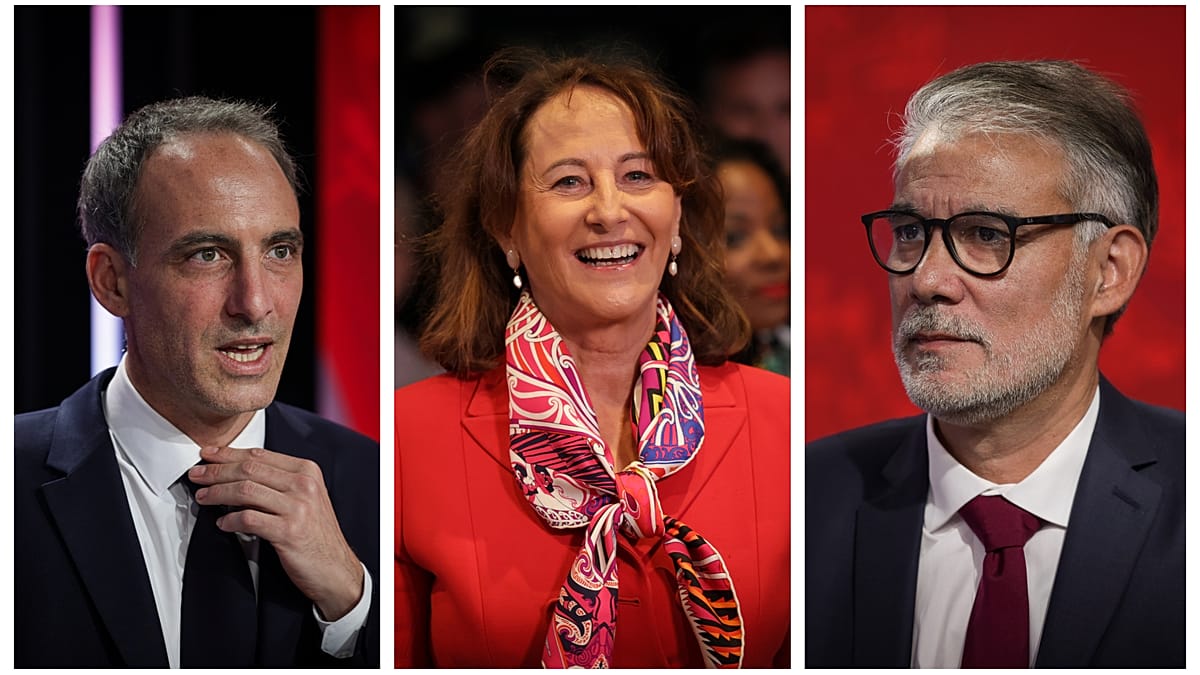
Glucksmann, who leads the European Parliament list that won 14% in the 2024 EU elections, is widely seen as the favourite. His challengers include Ségolène Royal, the former presidential candidate and prominent Socialist figure; Olivier Faure, the current PS leader; and MPs Jérôme Guedj and Emmanuel Maurel.
The campaign has not been without controversy. Socialist MP Philippe Brun was excluded from the primary on September 16 after accusations of "violence" against a former staffer. The debates have also been heated, with Royal going so far as to call Glucksmann a "political intern."
The €15 fee charged to non-members of the PS and Place publique, reduced to €10 for those on lower incomes, has drawn criticism. Critics argue the fee could favour Glucksmann's supporters, who are perceived as more affluent.
The primary is being watched closely across Europe, as France's 2027 presidential election will have significant implications for the continent's political landscape. The outcome could shape alliances and policy directions in the EU's second-largest economy. Similar dynamics are playing out elsewhere, as seen in Czech voters casting ballots in their own local and Senate elections, and in concerns about Russian disinformation targeting Baltic voters.
Voting continues until Sunday at 6 p.m. Paris time. The results will be announced later that evening, setting the stage for the next phase of the French presidential race.



