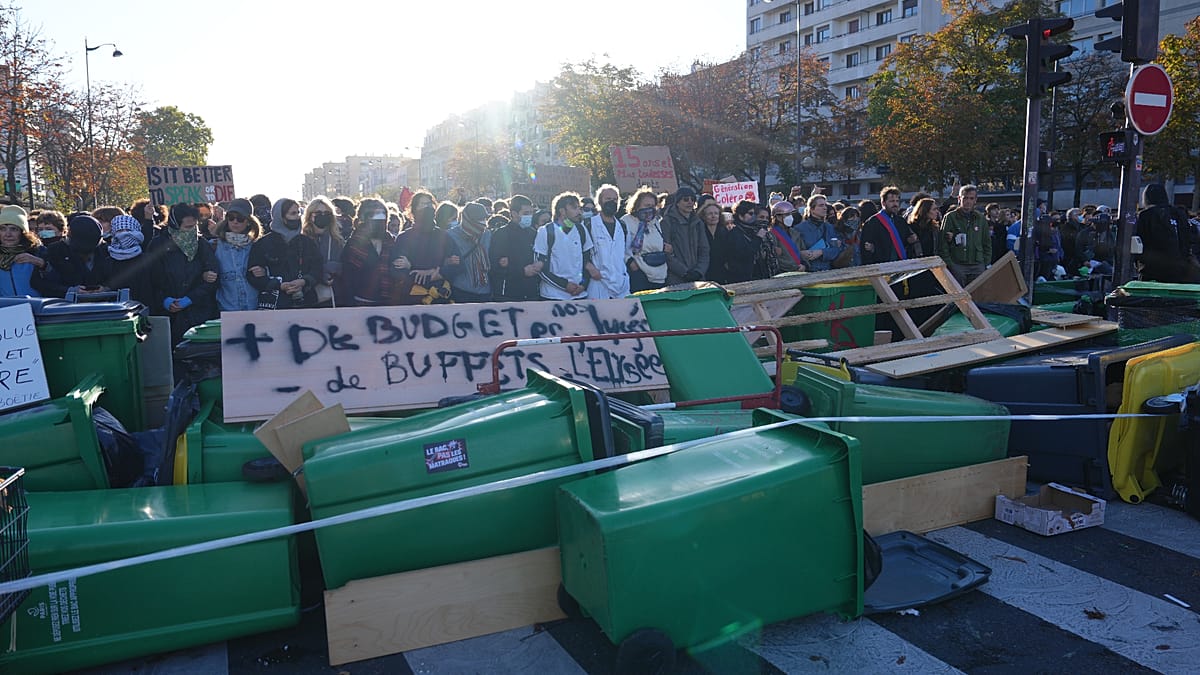
Paris — French students and police clashed again on Thursday as protests against government education reforms entered their fifth day, with tensions escalating across the capital and other cities. Demonstrators, many of them lycée students, threw projectiles and set up barricades in the Latin Quarter, while riot police responded with tear gas and charges. The scenes echoed the yellow vest movement's confrontations, raising concerns about a new wave of social unrest in France.
Protests spread beyond Paris
The unrest is not confined to the capital. In Lyon, Bordeaux, and Toulouse, students have occupied university buildings and blocked traffic, demanding the withdrawal of a planned reform of the baccalauréat and the university entrance system. The movement, which began over proposed changes to the national curriculum and increased selectivity in higher education, has quickly broadened into a wider critique of President Emmanuel Macron's economic and social policies.
In Paris, the clashes reached a peak near the Sorbonne, where protesters chanted slogans against the government and called for Macron's resignation. Police reported at least a dozen arrests, while several officers were injured. Student leaders accused the police of heavy-handed tactics, a claim echoed by some politicians on the left.
UN weighs in
The United Nations has expressed concern over the escalating violence, urging both sides to exercise restraint. In a statement, a UN spokesperson called on French authorities to respect the right to peaceful assembly and on protesters to refrain from violence. The warning came as images of injured students and police circulated widely on social media, intensifying public scrutiny.
French Interior Minister Gérald Darmanin defended the police response, insisting that officers were acting to protect public order. "We will not tolerate violence against the republic," he said in a televised address. However, his comments did little to calm the situation, and protests have continued to grow.
Political fallout
The protests have also exposed divisions within French politics. Jean-Luc Mélenchon, leader of the left-wing La France Insoumise, has thrown his support behind the students, calling for a "popular front" against the government. Meanwhile, Marine Le Pen's National Rally has sought to capitalize on the unrest, framing it as evidence of Macron's failure to govern.
The government, for its part, has shown no sign of backing down. Education Minister Jean-Michel Blanquer defended the reforms as necessary to modernize the French education system, arguing that they would reduce inequality and better prepare students for the job market. But critics argue that the reforms favor elite institutions and disadvantage working-class students.
Broader European context
The French protests come amid a wider wave of social discontent across Europe. In Belgium, unions have clashed with police over austerity measures, while in Spain, housing protests have intensified following the eviction of a pensioner in Madrid. The French situation is being closely watched by other European governments, which fear that similar reforms could trigger unrest in their own countries.
Some analysts see a pattern: across the continent, citizens are pushing back against austerity and structural reforms, often with little trust in traditional political institutions. The French student movement, though rooted in education policy, has become a symbol of this broader discontent.
What's next?
As the protests enter their second week, the government is facing a critical test. Macron, who has staked his presidency on reform, is unlikely to concede easily. But with the UN warning of further violence and public opinion divided, the path forward remains uncertain. Student unions have called for a national day of action next week, raising the stakes for both sides.
For now, the streets of Paris remain tense, with police and protesters bracing for more confrontations. The world is watching to see whether France can navigate this crisis without further escalation.



