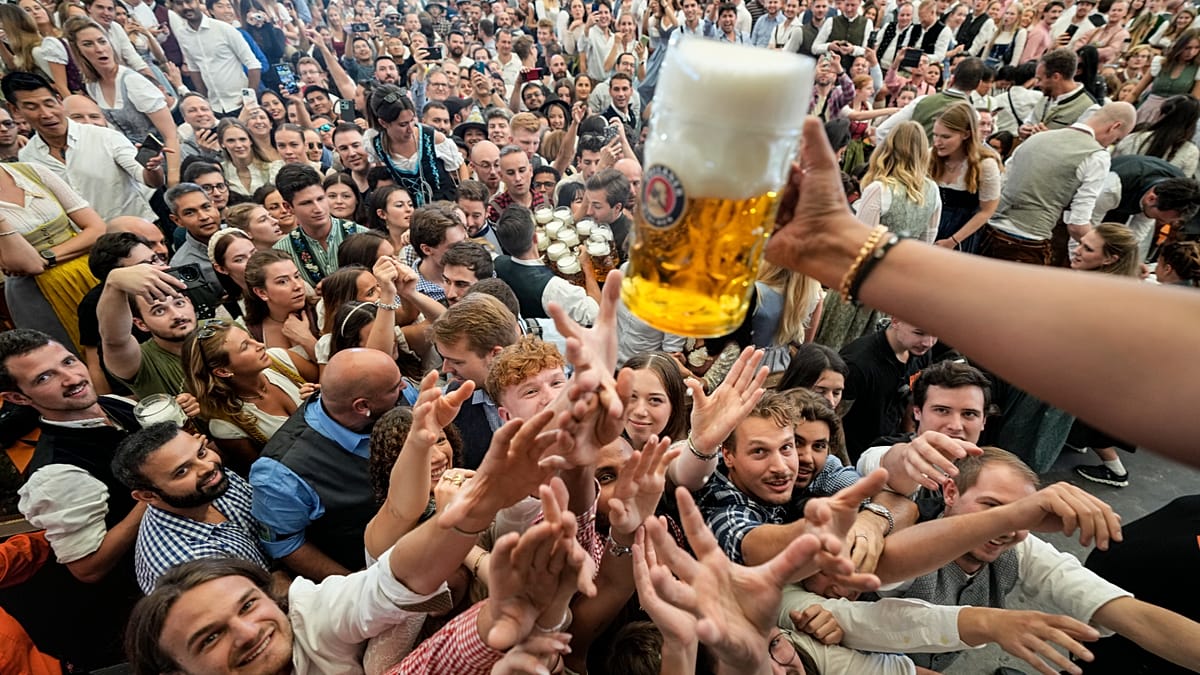
As temperatures rise and summer approaches, Germans are once again turning to their national drink. While Oktoberfest in Munich draws millions each year—serving some 6.5 million litres in 2024—the country's relationship with beer runs far deeper than a single festival. From home-brewing competitions to a 5,000-metre underground pipeline at a football stadium, Germany's beer culture is both traditional and inventive.
Home-Brewing Championships: A National Obsession
Germany's home-brewing championship, now in its ninth year, crowns the best amateur brewer in the country. In 2025, Jan Mordhorst from Seevetal, near Hamburg, took the title, beating around 200 competitors. His winning entry was an Altbier, a traditional top-fermented style from the Rhineland. “Altbier is a demanding style,” Mordhorst said at the award ceremony. He has since published his recipe online for other enthusiasts to try.
Mordhorst offered practical advice for aspiring brewers: “Ideally, the wort should be fermented in a cask or pressure fermentation tank. Once maturation is complete, the beer is carefully drawn off from the top using a floating dip tube and then bottled under counter-pressure. This produces an especially clear beer.” His prize includes 400 litres of his own beer, brewed by the competition's sponsor, Störtebeker Braumanufaktur, and a non-cash prize worth €2,500. The beer will go on sale in spring 2025. For the 10th anniversary in 2026, the competition will focus on wheat bock beers.
The Rise of Microbreweries and Craft Beer
Craft beer, a concept imported from the United States, has taken root in Germany since the 2010s. Unlike mass-produced pilsners, Helles, and wheat beers, craft breweries experiment with unconventional hop and malt combinations, often producing smaller batches with higher hop content. This drives up prices but appeals to a growing audience seeking novelty.
Limited-edition beers can command extraordinary sums. Japanese brewer Sapporo once sold “Sapporo Space Barley,” made from barley seeds that orbited Earth on the International Space Station. Only 250 six-packs were produced, priced at around €95 each—roughly €12 per bottle. In Bavaria, Gänstaller Bräu from Hallerndorf offers its Gänstaller Onyx – Imperial Stout at €20 per litre. On the BeerTasting app, users describe it as full-bodied, bitter, opulent, and almost oily.
Monastic Brewing: A Staple Food
Beer brewing has deep roots in German monasteries. The Benedictine monks who settled at Andechs in 1455 brought extensive brewing knowledge, and the monastery's website notes that beer was considered a staple food, not a luxury. Brother Willibald Mathäser once said: “Here in Bavaria, beer is not a luxury but a staple food. It is made from grain, yeast and water, just like bread.”
Today, monastic beers from Andechs and Weltenburg Abbey are marketed as premium products, priced higher than standard industrial pilsners. Many monasteries offer tours and on-site dining, allowing visitors to sample these historic brews in their original settings. The tradition of offering beer to pilgrims has evolved into a thriving tourist attraction.
A 5,000-Metre Beer Pipeline
For football fans, beer is almost as essential as the match itself. During the 2006 FIFA World Cup, the Veltins-Arena in Gelsenkirchen installed a 5,000-metre beer pipeline to serve tens of thousands of litres on match days. Four cooling centres beneath the stadium stored 52,000 litres of beer, which flowed through underground stainless-steel pipes directly to taps in the stands. This eliminated the need to transport individual kegs through the stadium. While innovative in 2006, many modern large stadiums now use central tanks and pipe systems.
Germany's beer culture continues to evolve, blending centuries-old traditions with modern ingenuity. Whether through home-brewing championships, craft experimentation, monastic heritage, or stadium engineering, the country's love for beer remains as robust as ever.