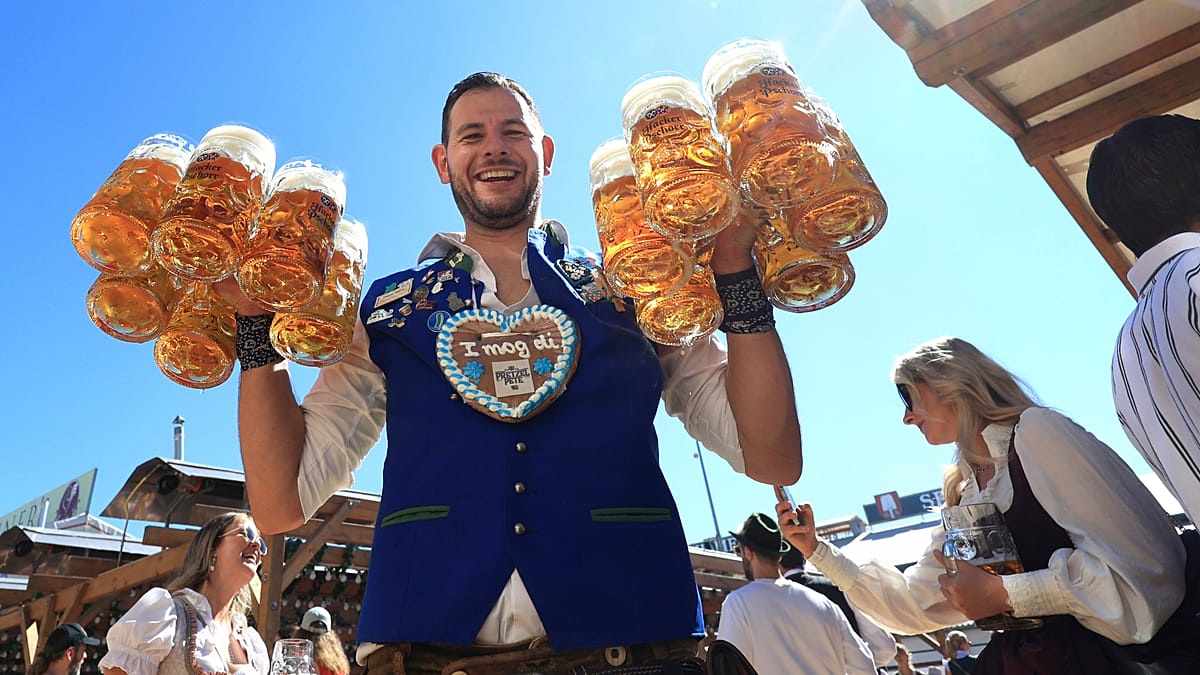
Munich's brewing traditions took centre stage this week as the city celebrated its annual Brewers' Day, with the Giesinger Brewery using the occasion to renew its campaign for a place at the world-famous Oktoberfest. The event, held at Marienplatz and the Viktualienmarkt, featured processions, ceremonial keg-tapping, and a strong dose of Bavarian Gemütlichkeit.
Giesinger, a relatively young craft brewery founded in 2010 in the Giesing district, has become a local favourite for its unfiltered beers and commitment to traditional brewing methods. Its push for inclusion in Oktoberfest—a festival historically dominated by six major Munich breweries—reflects broader shifts in the city's beer culture, where smaller producers are gaining recognition alongside established names like Augustiner and Hofbräu.
A Tradition Under Pressure
Oktoberfest, which draws millions of visitors to Munich each year, has long been a bastion of the city's brewing guild. The six breweries that supply the festival's beer tents—Augustiner, Hofbräu, Paulaner, Spaten, Löwenbräu, and Hacker-Pschorr—have held exclusive rights for decades. But as craft beer movements sweep across Europe, from Berlin to Brussels, calls for greater diversity are growing louder.
Giesinger's campaign is not just about market share; it is a cultural argument. The brewery argues that Oktoberfest should reflect the full breadth of Munich's brewing heritage, not just its industrial giants. "Beer is part of our identity," said a spokesperson for Giesinger during the Brewers' Day festivities. "We want to show that Munich's beer culture is alive and evolving."
The push comes as other European cities grapple with similar tensions between tradition and innovation. In Belgium, for instance, the Amaterasu Stage Production recently highlighted cultural exchange in Brussels, while in London, the Museum of Youth Culture has been celebrating a century of subcultures—both examples of how heritage can adapt to new influences.
Brewers' Day 2026: A Showcase of Craft
This year's Brewers' Day was particularly significant as it marked the 2026 edition of the event, which serves as a prelude to the main Oktoberfest season. The procession through Munich's historic centre included horse-drawn beer wagons, brass bands, and brewers in traditional Tracht attire. At Marienplatz, the mayor tapped the first keg, a ritual that symbolises the start of the brewing year.
Giesinger used the platform to distribute samples of its signature beers, including its popular "Giesinger Hell" and a seasonal Märzen. The brewery also hosted a small tent near the Viktualienmarkt, where visitors could learn about its brewing process and the history of the Giesing district. The event drew a mix of locals and tourists, many of whom expressed support for the brewery's Oktoberfest bid.
"It's about time we had some fresh blood," said Klaus Müller, a Munich resident attending the celebrations. "The big breweries are fine, but Giesinger makes beer with real character."
Broader European Context
The debate over Oktoberfest's exclusivity mirrors wider discussions across Europe about preserving cultural traditions while embracing change. In the EU, the push for regulatory stability in sectors like investment—as seen in Europe's approach to Central Asia—often clashes with the need for innovation. Similarly, in the beer world, the tension between heritage and craft is playing out in cities from Prague to Dublin.
Munich's brewing guild, however, remains cautious. The six incumbent breweries argue that their long-standing relationship with Oktoberfest ensures quality and consistency for the millions of visitors. They also point to the logistical challenges of adding new participants to an already tightly managed event. Yet Giesinger's campaign has gained traction among younger consumers and some city officials, who see it as a way to keep the festival relevant.
As the debate continues, one thing is clear: Munich's beer culture is far from static. Whether or not Giesinger secures a spot at Oktoberfest, its push has already sparked a conversation about what the festival—and Bavarian brewing—should represent in the 21st century.