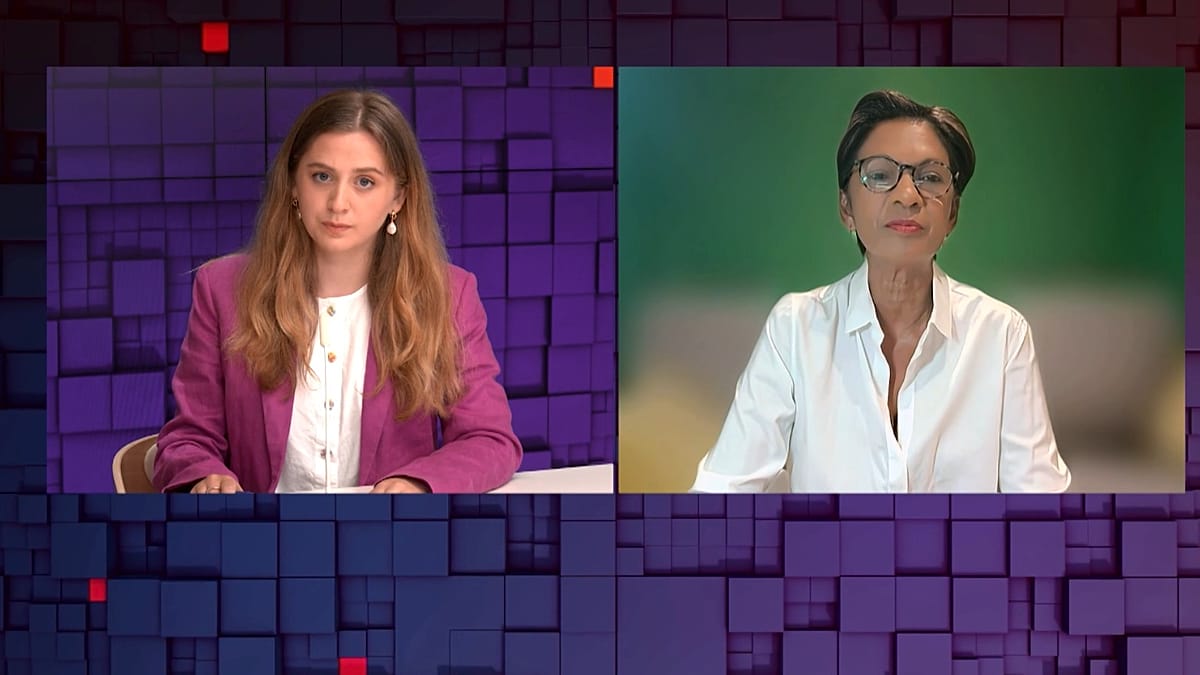
Gina Miller, the businesswoman and campaigner who successfully challenged the British government in court over its Brexit process, has called on the next UK prime minister to present a coherent plan for the country’s future relationship with the European Union. Speaking to European Pulse on the eve of the tenth anniversary of the Brexit referendum, Miller expressed disappointment with outgoing Prime Minister Keir Starmer’s approach, which she described as lacking clarity on what he termed “realigning” with the EU.
“I’m hoping that the new leader of the Labour Party will have a plan and a strategy, some clarity on the direction of travel on our relationship with Europe,” Miller said. Starmer, who announced his resignation hours before the interview, was widely seen as the most pro-European British leader since the 2016 vote, but he carefully balanced internal party pressure for closer ties with public reluctance to revisit the referendum outcome.
Swiss Model as a Template
Miller argued that the UK should consider a Swiss-style agreement with the EU, which would grant deep access to the single market for specific sectors, similar to the arrangement enjoyed by non-member Switzerland. “In my mind, the door is open on a Swiss-type agreement, and I think that’s something we should be very clear about, rather than cherry-picking here, there and everywhere in tiny little steps,” she said. “I’m hoping the opportunity is there for a new leader to be much bolder and talk about alignment.”
However, she acknowledged that such a deal has been rejected by Brussels in the past and that neither side currently has the political bandwidth for comprehensive negotiations. The upcoming post-Brexit ‘reset’ talks, scheduled for 22 July, aim to finalise a ‘triple deal’ covering agri-food trade barriers, electricity market integration, and a youth mobility scheme. Miller warned that without a bold vision, the UK risks being overtaken by political forces like the far-right Reform party, which she said is “lurking over British politics” and could form a government after the next general election.
Legal Legacy and Democratic Safeguards
Miller’s legal challenges in 2016 and 2019 established that prime ministers cannot bypass Parliament on major constitutional matters. In 2016, she forced a parliamentary vote on triggering Article 50, and in 2019, she successfully argued that Boris Johnson’s suspension of Parliament was unlawful. “Irrespective of my personal support for remaining in the EU, this was much more about the process and ensuring prime ministers could not put themselves above the law,” she said. She stressed that any future realignment with the EU must be transparent and debated in Parliament: “Whatever happens next cannot be sneaked through the back door.”
Miller noted that the same checks and balances must apply to discussions on rejoining the bloc, which some Labour figures have floated. She also highlighted the personal toll of her activism: she and her family were placed under anti-terrorism protection due to death threats, and abuse has intensified as the Brexit anniversary approaches. “I’m getting it from both sides this time,” she said. “From the ‘Leavers’ because their hatred hasn’t gone away, and from the ‘Remainers’ because they think we can just rejoin tomorrow.”
Economic Damage and Political Polarisation
A decade after the referendum, a broad consensus among researchers and institutions confirms that Brexit has damaged the UK economy by an estimated 5% of GDP, according to most economists. Miller said she suspected from the start that the Leave campaign had no plan for victory. “That has unfortunately played out in the fact that there is a confirmation that our economy has been damaged,” she added. A recent poll by the European Council on Foreign Relations found that up to two-thirds of British voters, across party lines, believe Brexit has hurt the country.
Miller acknowledged that Brexit has left deep wounds but also spurred greater political engagement. “If there is one positive to take from Brexit, it is that people are now much more engaged, and that’s why we are seeing so many of the new parties that are coming,” she said. As the UK prepares for a new leader and the next general election, the debate over Europe is far from settled.