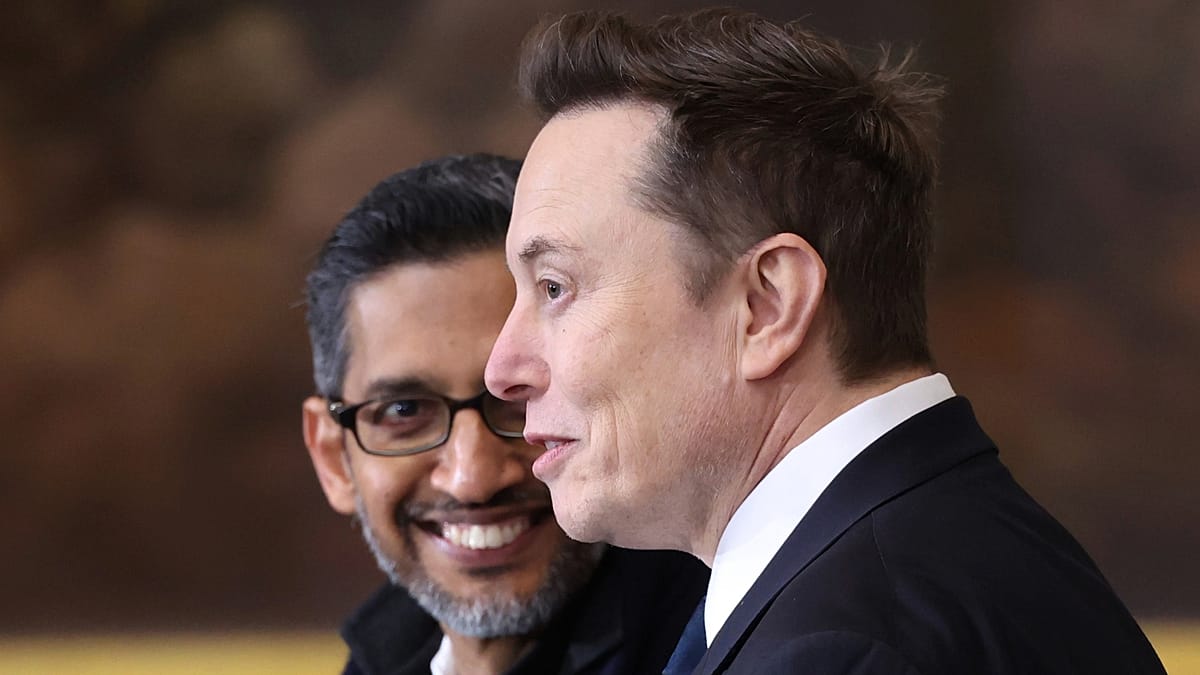
In a striking reversal of roles, Google has agreed to lease computing capacity from SpaceX for a staggering $920 million per month, a deal that underscores the shifting dynamics in the AI infrastructure market. The 32-month contract, valued at roughly $30 billion, will see Google gain access to 110,000 Nvidia GPUs housed in SpaceX's data centres, known collectively as 'Colossus'.
Just five years ago, it was Google that supplied computing resources to SpaceX to support its Starlink satellite internet service. Now, following SpaceX's acquisition of the artificial intelligence firm xAI in February 2026, the company has amassed over 2 GW of computing power across multiple US data centres. The combined entity, SpaceX/AI, is estimated to be worth $1.25 trillion.
A Strategic Move Ahead of IPO
The agreement comes days before SpaceX's highly anticipated initial public offering, which is expected to value the company at over $1.75 trillion. The deal with Google is likely to further boost that valuation. In its IPO filing, SpaceX noted that its compute infrastructure and strategy provide 'substantial flexibility in how we allocate and monetise capacity,' specifically referencing 'compute service agreements with third parties.'
SpaceX has also announced a similar arrangement with Anthropic in May, signalling a broader push to monetise its AI infrastructure. While Elon Musk's Grok AI model has yet to turn a profit, these deals are being presented as evidence of a strong return on investment in large-scale data centres.
For Google, the deal is part of a broader effort to scale capacity to meet surging customer demand for AI platforms and agents, particularly among large enterprises. The utilisation window for the GPUs runs from October 2026 to June 2029, with a clause allowing Google to terminate the agreement if SpaceX fails to deliver access by September 30, 2026.
The European angle here is indirect but significant. European businesses and governments are increasingly reliant on US-based AI infrastructure, raising questions about data sovereignty and strategic autonomy. As the EU pushes forward with its own AI regulations, including the AI Act, the dominance of American tech giants in this space is a growing concern for policymakers in Brussels, Paris, and Berlin.
Meanwhile, xAI's Grok model has faced global backlash over the generation of deepfake pornography, leading to multiple lawsuits and state probes. In the UK alone, data protection violations under the UK GDPR could result in fines of up to 4% of worldwide annual revenue. This regulatory scrutiny adds a layer of risk for European clients considering partnerships with SpaceX/AI.
The deal also highlights the increasing convergence of space and AI technologies. As European space agencies and startups like those in France, Germany, and Italy work on their own satellite constellations and AI capabilities, the competition for computing power and data centre capacity is likely to intensify.
For now, Google's massive bet on SpaceX's AI infrastructure is a clear signal that the race for AI dominance is accelerating, with implications that extend far beyond Silicon Valley.