Since April 2024, Turkish citizens have been able to visit a dozen Greek islands in the Aegean Sea without the usual Schengen visa, thanks to a visa-on-arrival scheme that has transformed travel between the two neighbours. Known in Türkiye as the "door visa" (kapi vizesi), the programme initially covered ten islands before being renewed and expanded to twelve last year.
The participating islands—Chios, Kalymnos, Kastellorizo, Kos, Leros, Lesvos, Limnos, Patmos, Rhodes, Samos, Samothraki, and Symi—all lie close to the Turkish coast. Turkish citizens can stay for up to seven days, but the visa cannot be extended and does not allow onward travel to mainland Greece or other Schengen-area countries.
The scheme has been a lifeline for many Turks, for whom obtaining a Schengen visa has become increasingly difficult. "Getting a Schengen visa is becoming increasingly difficult for Turks, but this new system makes it easy and fast for us to visit the Greek islands," said Emirhan Gurses, a 21-year-old student from Manisa, as reported by AFP.
The numbers speak for themselves: according to the Bank of Greece, nearly 1.5 million Turks visited Greece in 2025, up from 1.2 million the previous year. Turkish travel agents say most of these visitors took advantage of the express visa to see the islands. For many, it offers an affordable alternative at a time when soaring inflation has made holidays at home increasingly expensive.
A bridge between neighbours
Greek Prime Minister Kyriakos Mitsotakis hailed the scheme as "particularly successful" during a visit to Ankara in February. "In the last year alone, hundreds of thousands of Turkish friends have travelled to the Greek islands, bringing our peoples closer together," he said, adding that both countries want to renew the programme.
For first-time visitors like 21-year-old university student Ikra Altumsek, the scheme has opened the door to some of Greece's most popular destinations. "I think Samos was the perfect place to start," she said, wheeling her luggage alongside her mother as they waited for a ferry back to Kusadasi on Türkiye's Aegean coast. It was Altumsek's first trip abroad.
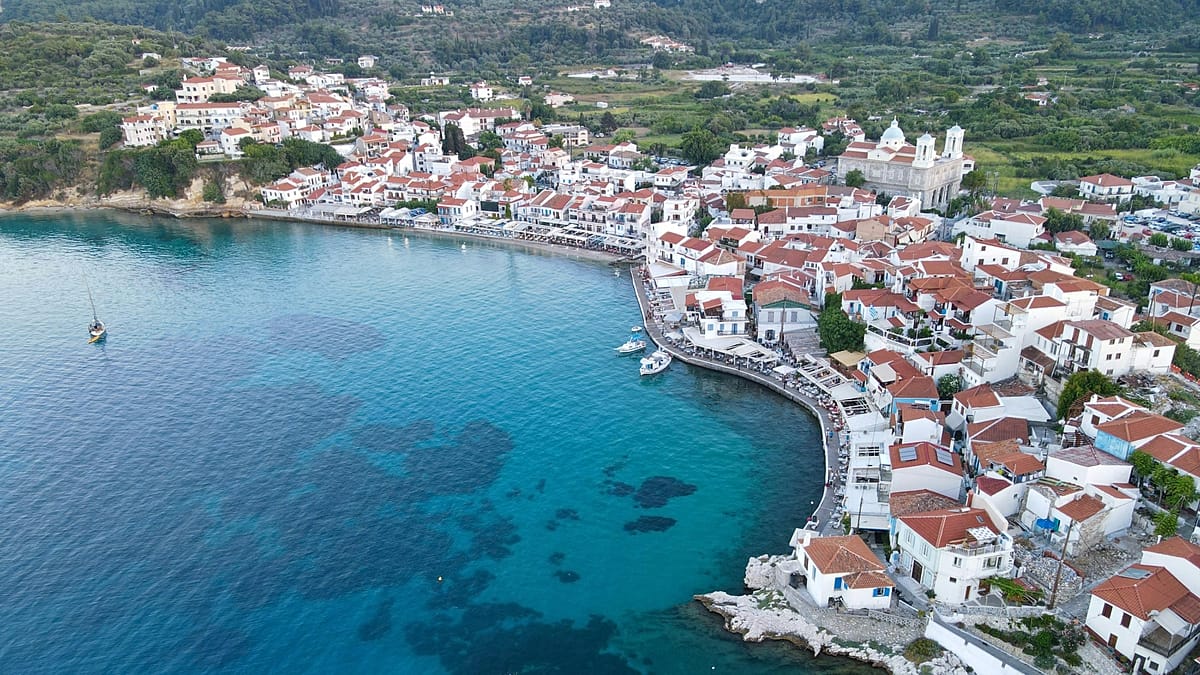
Samos, situated just opposite the Turkish coast, offers turquoise waters, quiet coves, traditional villages, and waterfront restaurants, along with a rich cultural heritage linked to Pythagoras. Turkish-flagged boats are a constant presence along the waterfront, arriving and departing throughout the day, highlighting the steady flow of visitors.
The crowds on Samos reflect the diversity of Turkish society. Among them are young travellers discovering the island for the first time, as well as families, including women wearing headscarves, accompanied by their spouses and children in strollers. Many restaurants display Turkish-language menus outside their entrances.
"The food is delicious. I have a 17-year-old son, and he keeps asking me, 'Mum, when are we going to Greece to eat?'," said Nevin Cagliguney, 51.
Economic impact and room for improvement
The visa-on-arrival scheme comes as Turkish demand for travel to the EU has outpaced the capacity of many consulates to process Schengen visa applications, leaving applicants facing long waits, rising costs, and uncertainty over approvals.
For tour guide Mikail Esabalioglu, a Greek resident of Samos originally from Istanbul, Turkish visitors have become an increasingly important part of the island's tourism economy. "We receive many Turkish guests, especially from Izmir and other parts of Türkiye's Aegean coast," he said. But he added that the programme could be improved, "because visitors sometimes have to wait a long time at the entrance and the arrival process can be difficult."
Samos business owner Giannis Kagias said Turkish visitors had "made a big difference" to the island's economy. "Our Turkish friends who come here are a great support," he said. "Without Turkish visitors, I think the situation for businesses on the island would be much more difficult."
Selim Zuberi, a 38-year-old consultant from Mersin, said the programme was also important for bringing people from the two neighbouring countries closer. The scheme has also been a bright spot in EU-Türkiye relations, which remain fraught over issues such as Cyprus's ongoing division and Greece's recent blockade of EU sanctions on Russian LNG. Yet the door visa shows that practical cooperation can yield tangible benefits for both sides.
As the programme is set to be renewed, its success may inspire similar initiatives elsewhere in the region, offering a model for easing travel friction between the EU and its eastern neighbours. For now, the Aegean islands are reaping the rewards of a policy that has made Europe a little more accessible.