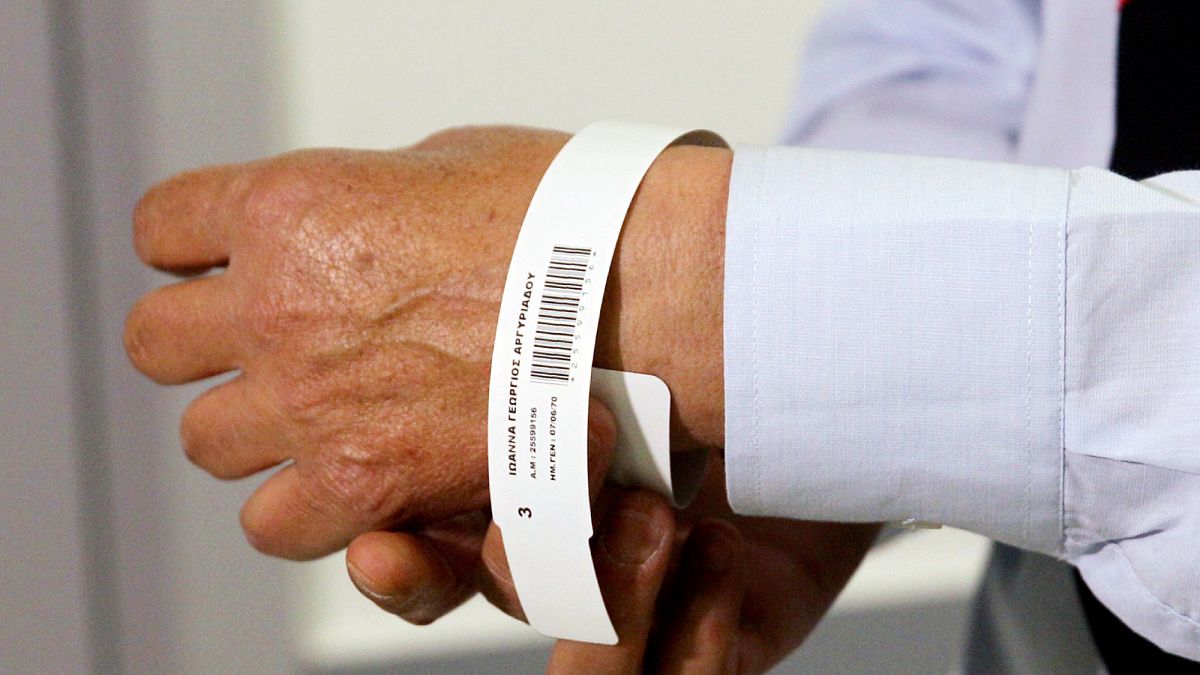
Greece has made significant strides in reducing emergency department waiting times through a digital triage system that assigns patients QR-coded wristbands upon arrival. Health officials report that the initiative, already active in ten public hospitals, has transformed the patient experience and is set for a nationwide rollout.
How the System Works
When patients enter an emergency department at participating hospitals, they receive a wristband bearing a unique QR code. This code accompanies them through every stage of care, from initial screening to treatment. Medical staff use the system to assess the severity of each case and prioritize accordingly. Patients can scan their own QR code to see how many people are ahead of them and their estimated wait time.
The program launched in May at Evangelismos General Hospital in Athens, where waiting times dropped from nine hours to just over five hours—still the longest among participating facilities. At the other end of the spectrum, Aghia Sophia Children's Hospital reported an average wait of under two hours. Across all ten hospitals, the average service time is four hours, with more than 44,000 patients treated between mid-May and mid-July.
Waiting times vary by specialty: radiology averages 15 minutes, surgery and cardiology about one hour each, and pathology less than two hours. Health Minister Adonis Georgiades noted that the system has brought “calm and order” to emergency rooms, as patients now know when their turn will come and where they will be directed.
Expansion Plans and Future Features
The government plans to extend the bracelet system to four more hospitals in the coming weeks, followed by another ten by the end of September. By February 2026, officials aim to have the system operational in 100 hospitals across the country. Around November, a new phase will introduce a platform that tracks real-time waiting times in emergency departments, allowing health authorities to intervene when delays become excessive and enabling patients to compare average wait times at different hospitals.
This digital overhaul comes as Greece continues to modernize its public health infrastructure, a priority for the government amid broader challenges in the sector. The initiative also highlights the potential of low-cost technology to improve efficiency in strained healthcare systems—a lesson relevant to other European countries grappling with similar issues.
Underlying Challenges
Despite the success, the bracelet system has not solved every problem. Officials acknowledge that roughly 30 percent of patients seeking emergency care could have been treated in primary care settings if that system were fully functional. Of the 44,000 patients who received bracelets, an estimated 17,000 did not need to be in the emergency room at all. This points to a deeper structural issue: Greece’s primary healthcare network remains underdeveloped, pushing non-urgent cases into already crowded emergency departments.
The situation echoes broader European debates about healthcare access and efficiency. In countries like Spain, where housing crises strain social services, or Germany, where police recently dismantled a trafficking ring using fraudulent documents, the intersection of public health and administrative capacity remains a persistent challenge. For Greece, the QR bracelet system is a step forward, but it also underscores the need for comprehensive reform of primary care to reduce unnecessary hospital visits.
As the system expands, it will be closely watched by other European nations seeking cost-effective ways to manage emergency care demand. The initiative demonstrates that targeted digital interventions can yield measurable improvements, even when broader systemic issues remain unresolved.