Montenegro has taken a decisive step toward joining the European Union, with EU ambassadors agreeing this week to begin drafting an accession treaty for the small Balkan nation. The decision, announced on Wednesday, establishes an ad hoc working party to prepare the legal text—a move European Council President António Costa described as a "key milestone" and "a big step towards accession to the European Union."
The announcement came ahead of a Joint Consultative Committee (JCC) meeting held on Friday in Podgorica, where Minister of European Affairs Maida Gorčević framed the development as the beginning of the end of a long journey. "Alongside the closing of the negotiation chapters, the drafting of an accession pact heralds the final lap of a fourteen-year marathon on the path towards the EU," she said. Gorčević reiterated the government's target of joining the bloc by 2028.
The JCC, a platform linking EU institutions with Montenegrin civil society under the Stabilisation and Association Agreement, provides a channel for non-governmental voices in the accession process. Gorčević stressed the importance of civil society participation in working groups, noting that their input helps ensure reforms are grounded in local realities.
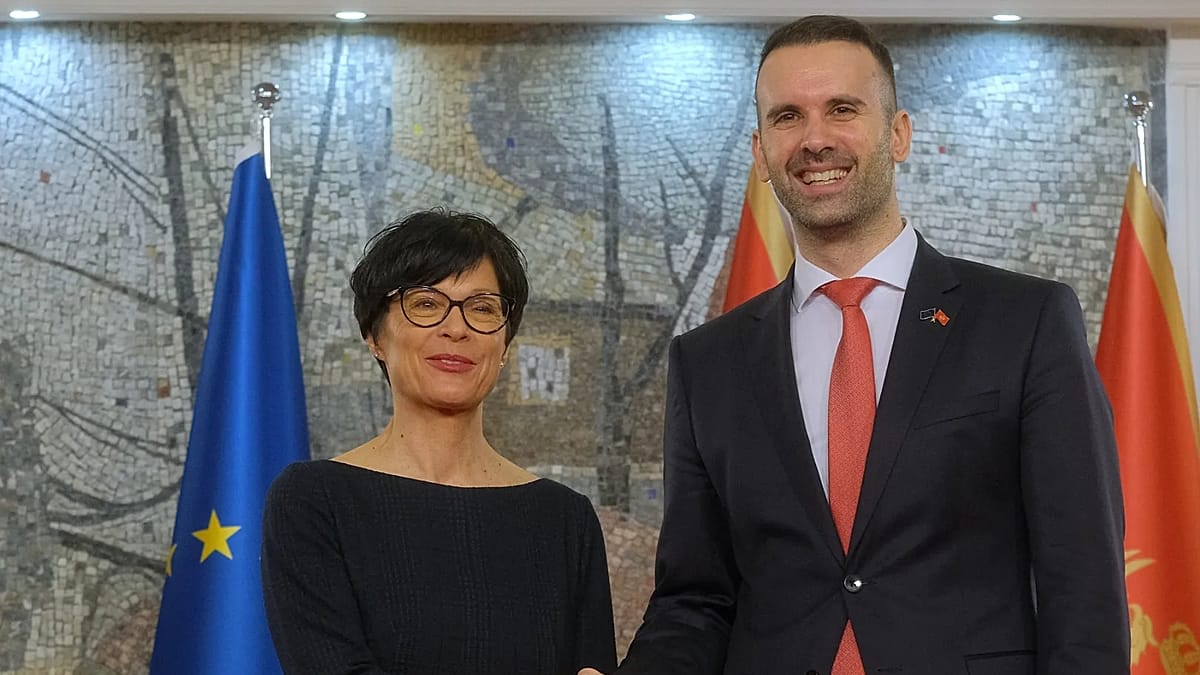
Riccardo Serri, deputy head of the EU Delegation to Montenegro, struck a cautiously optimistic tone. "Montenegro has a historic opportunity to bring its European Union accession process to a close," he said. "But there is no time to lose—progress depends on the implementation of concrete reforms in the coming months." Serri added that this effort must be driven by institutions in close collaboration with civil society.
Fourteen Years of Negotiations
Montenegro has been an EU accession candidate since 2010 and opened formal negotiations in 2012. Alongside Albania, it has been considered a frontrunner for enlargement since Croatia joined in 2013. Yet talks have dragged on for over a decade, slowed by the need to align with the EU's 35 negotiating chapters, grouped into thematic clusters covering everything from taxation to environmental policy.
Podgorica has so far concluded negotiations on 14 of those clusters. The remaining chapters include sensitive areas such as rule of law, fundamental rights, and justice reform—issues that have historically been stumbling blocks for Western Balkan candidates. Montenegro also maintains a distinctive monetary arrangement: though not a eurozone member, it has unilaterally adopted the euro as its currency.
European Commissioner for Enlargement Marta Kos welcomed the progress. "Montenegro’s place inside the EU is now taking shape," she said on Wednesday. Kos also suggested that the process offers a chance to learn from past enlargements. "It also offers a chance to draw lessons from past enlargements and include new and stronger safeguards in future accession treaties to prevent backsliding on the rule of law and fundamental values," she added.
The EU's enlargement agenda has gained renewed momentum in recent years, partly driven by the war in Ukraine and the bloc's desire to stabilise its eastern and southeastern neighbourhoods. Ukraine's own membership bid has reshaped the debate, with some member states pushing for faster integration of candidates that meet reform benchmarks.
Montenegro's progress also comes against a backdrop of political shifts elsewhere in the region. Hungary's recent election has altered Budapest's relationship with Brussels, while Bulgaria's prolonged political crisis continues to complicate EU decision-making. For Montenegro, the challenge is to maintain reform momentum amid domestic political pressures and the bloc's own internal debates.
The coming months will be critical. Brussels expects Podgorica to deliver on judicial reforms, anti-corruption measures, and media freedom—areas where the European Commission has previously flagged shortcomings. If Montenegro can meet these conditions, the accession treaty could be finalised within a year, paving the way for a referendum and eventual membership.
For now, the mood in Podgorica is cautiously hopeful. As Gorčević put it, the marathon is entering its final lap—but the hardest miles may still lie ahead.