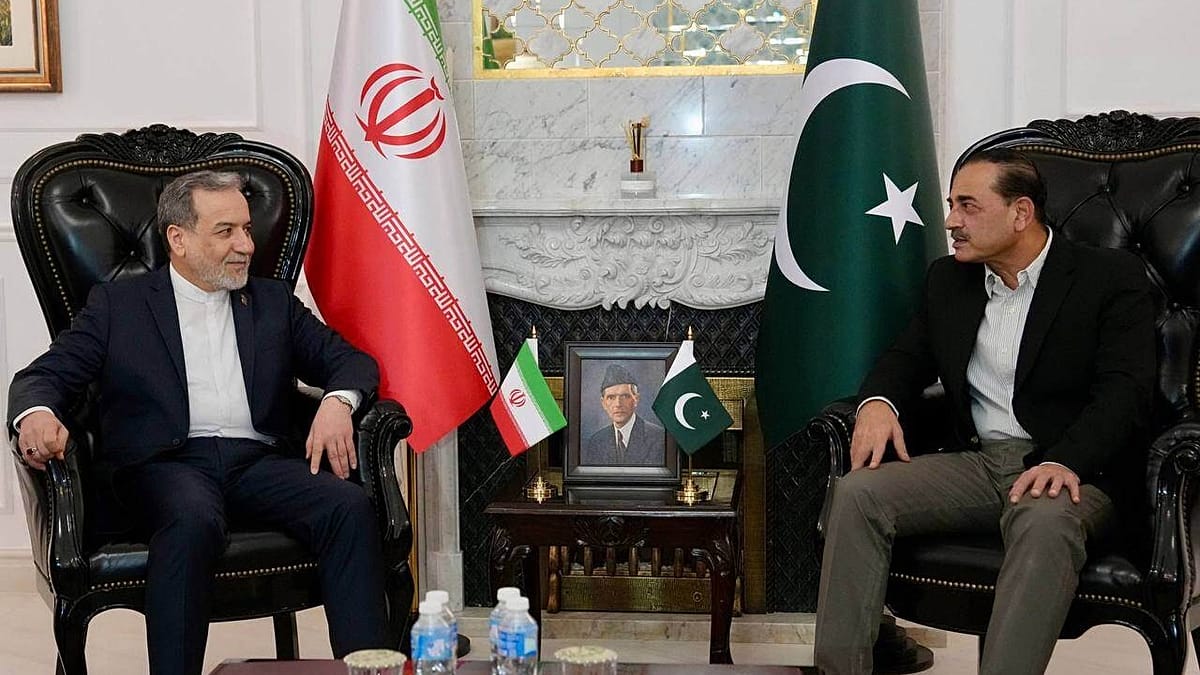
Iran's Foreign Minister Abbas Araghchi landed in Islamabad on Friday evening, initiating a second round of negotiations aimed at de-escalating regional tensions. Shortly after his arrival, Tehran's foreign ministry clarified that any discussions with the United States would remain indirect, with messages relayed through Pakistani officials rather than face-to-face meetings.
Araghchi held late-night meetings on Friday with Pakistan's Foreign Minister Ishaq Dar and Army Chief Field Marshal Asim Munir. On Saturday morning, he continued talks with Munir and Interior Minister Mohsin Naqvi, according to Pakistani officials.
The United States is sending special envoys Steve Witkoff and Jared Kushner to Pakistan on Saturday. Vice President JD Vance will not attend but remains on standby should his presence be deemed necessary, the White House stated.
Pakistan has emerged as a key mediator in the conflict, hosting an initial round of talks earlier this month. That session failed to produce a deal, and Iran was initially reluctant to send another delegation to Islamabad. The current round takes place amid heightened security: Islamabad was under near-lockdown on Saturday morning, with soldiers and police stationed at major intersections, snipers on rooftops, and helicopters patrolling overhead. Checkpoints and road closures are in place, particularly in the so-called "red zone" near the negotiation venue.
Iran Resumes Commercial Flights
Meanwhile, Iran resumed commercial flights at Tehran's Imam Khomeini International Airport on Saturday for the first time since the conflict with the US and Israel escalated in late February. State-run media reported departures to Istanbul, Muscat (Oman), and Medina (Saudi Arabia). Flightradar24 tracking data confirmed three Istanbul-bound flights departed on Saturday morning. Iran's airspace has remained largely closed since 28 February, with a partial reopening earlier this month following the first ceasefire announcement.
The indirect nature of the talks underscores the deep mistrust between Tehran and Washington. Iran has consistently ruled out direct negotiations, a stance reiterated by Araghchi during his visit. The European Union has watched these developments closely, given the potential impact on energy markets and regional stability. Markets remain on edge as the ceasefire's expiration approaches, with European capitals particularly concerned about oil price volatility and the risk of broader conflict.
Pakistan's role as mediator reflects its strategic position and ties to both Iran and the United States. The country has sought to position itself as a neutral broker, though its proximity to the conflict zone and internal security challenges complicate the effort. The first round of talks failed to bridge fundamental differences, and it remains unclear whether this second attempt will yield progress.
For European observers, the outcome of these negotiations carries significant implications. A failure to extend the ceasefire could reignite hostilities, threatening energy supplies and triggering new migration pressures. The EU has already convened crisis talks on energy and defence, as reported in Cyprus, and is exploring alternative energy routes, including the TRIPP corridor with Azerbaijan. Any escalation in the Gulf would directly affect European economies and security architecture.
Diplomatic efforts have also involved Qatar, which has urged restraint and dialogue. The Qatari mediation complements Pakistan's role, though the core impasse remains: Iran insists on indirect talks, while the US has pushed for direct engagement. The coming days will test whether Islamabad can bridge this gap or whether the region slides back toward confrontation.