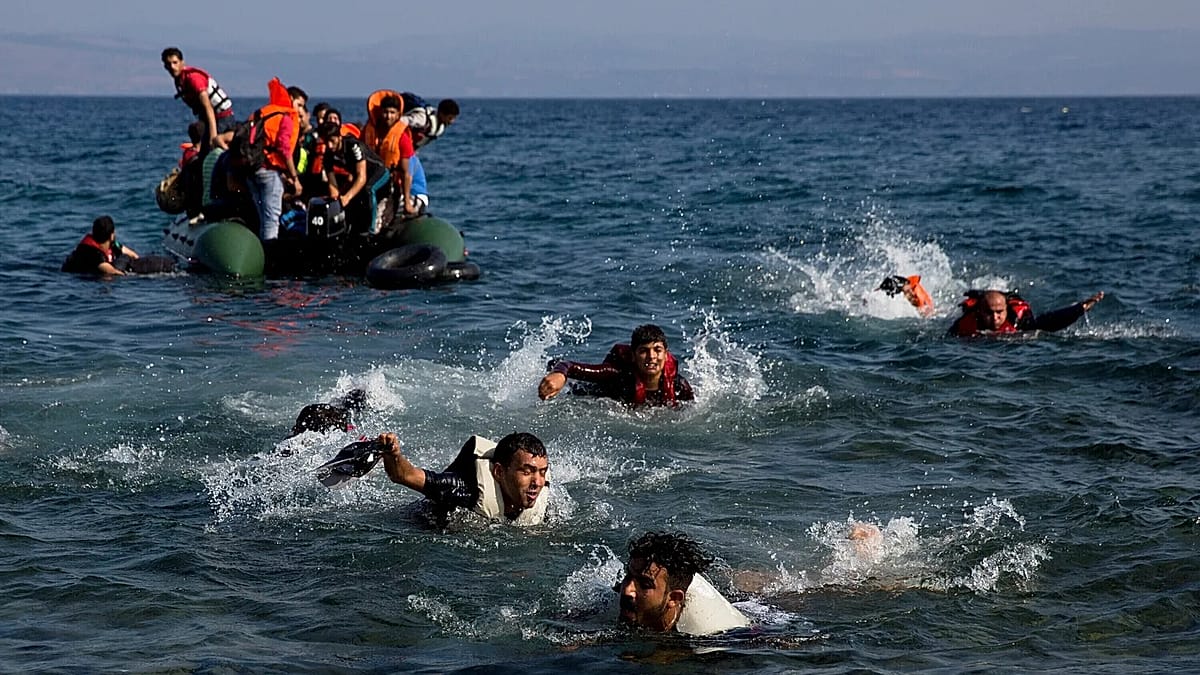
Turkish authorities reported on Thursday that one person died and 43 others were rescued after a migrant boat got into distress in the Aegean Sea, approximately 30 kilometres from the Greek island of Lesbos. The Turkish coastguard said the inflatable boat became "partially submerged" on Wednesday, prompting a rescue operation that saved 43 people, including four found in the water. The body of an irregular migrant was recovered, and a suspected smuggler was apprehended.
The incident has drawn fresh accusations against the Greek coastguard from the Norwegian NGO Aegean Boat Report, which monitors migrant crossings in the region. The NGO stated that it received an emergency call from people on the inflatable boat, who claimed that Greek coastguard personnel had damaged their vessel. "The group told us they had been violently pushed back by the Hellenic Coastguard," Aegean Boat Report said in a statement. "According to the survivors, the coastguard destroyed the engine, damaged the rubber boat during the attack, and left them helplessly drifting at sea while the boat started taking in water."
Recurring Allegations and Denials
The NGO has long documented what it describes as illegal pushbacks—a practice where coastguards force migrant boats back into Turkish waters rather than allowing them to reach Greek shores. Greece consistently denies these allegations, insisting that its coastguard acts in accordance with international law and rescues those in distress. However, the frequency of such incidents has drawn scrutiny from human rights groups and the European Union.
In February, a collision between a small boat and a Greek coastguard patrol boat off the island of Chios killed 15 migrants. That tragedy, just a short distance from the Turkish coast, underscored the dangers of the Aegean crossing. The latest incident near Lesbos adds to a grim toll: according to the International Organisation for Migration, at least 1,209 migrants have died or gone missing in the Mediterranean since the beginning of the year.
The Aegean Sea remains a key but perilous route for migrants attempting to reach the European Union from Turkey. The narrow straits between the Greek islands and the Turkish coast are heavily patrolled, and pushback allegations have become a recurring flashpoint in EU-Turkey relations. Ankara has frequently criticised Athens for what it calls violations of maritime law, while Greece argues that it is protecting its borders and combating smuggling networks.
For the survivors of Wednesday's incident, the ordeal is far from over. Those rescued by the Turkish coastguard are likely to be processed in Turkey, which hosts millions of refugees under a 2016 deal with the EU. That agreement, which aimed to stem the flow of migrants into Europe, has been strained by repeated allegations of pushbacks and by the broader geopolitical tensions between the two NATO allies.
The broader context of migration in Europe remains complex. While the Aegean route has seen a decline in arrivals compared to the peak of 2015, the Mediterranean as a whole continues to claim lives. The IOM's figures highlight the persistent dangers, and incidents like this one fuel debates about the EU's border policies and the treatment of migrants at sea. As the continent grapples with these challenges, the fate of those who risk the crossing remains a stark reminder of the human cost.