ATHENS — Greece's highest judicial authority has dealt a blow to the European Public Prosecutor's Office (EPPO), ruling that the EU body lacks the legal standing to challenge a domestic law that limits the terms of Greek prosecutors to two years instead of the five-year term preferred by Brussels.
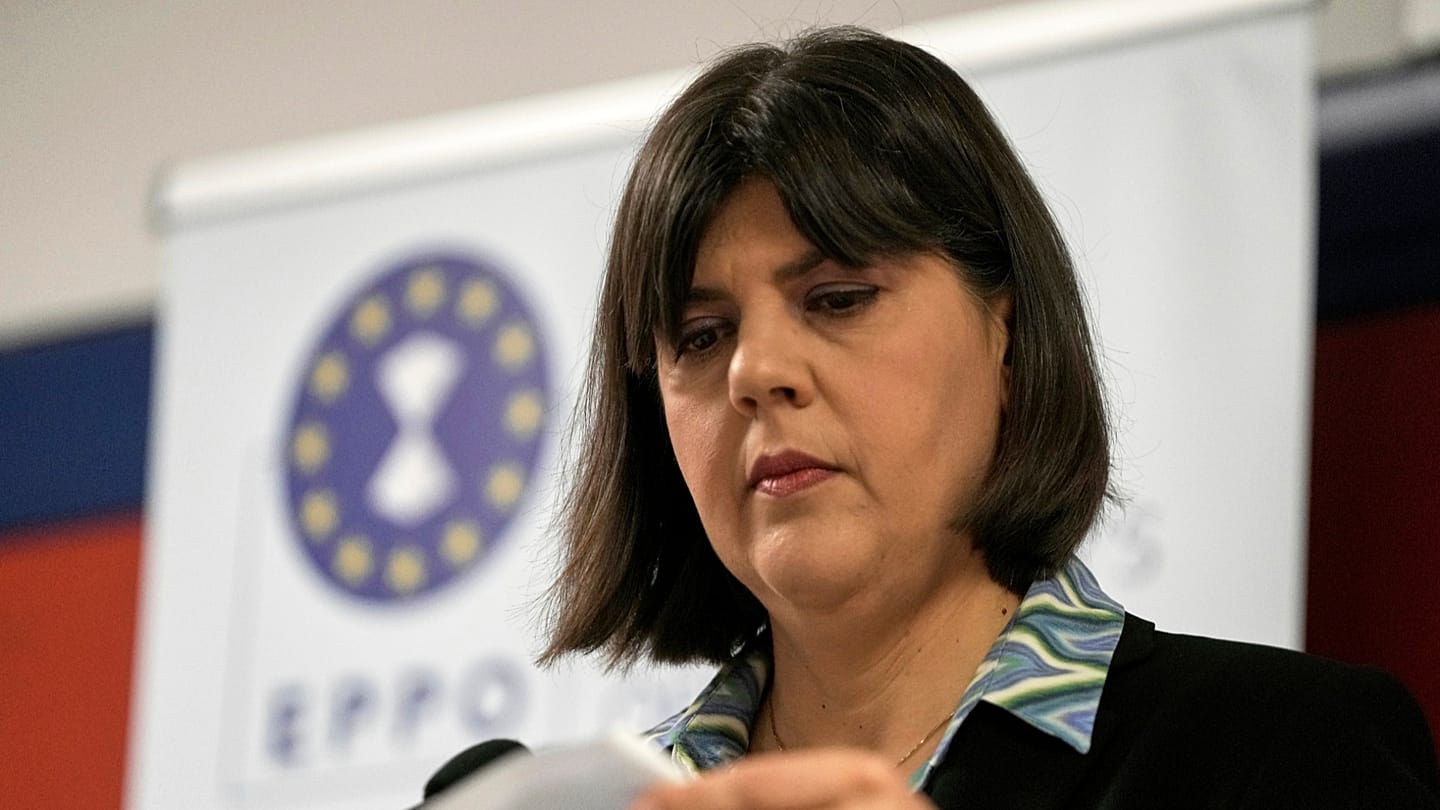
The decision, handed down by the Areios Pagos (Supreme Court of Greece), effectively upholds a 2023 Greek law that reduced the tenure of prosecutors seconded to the EPPO from five years to two. Laura Kövesi, the Romanian former prosecutor who heads the EPPO, had appealed the measure, arguing it undermines the independence and effectiveness of the EU's first supranational criminal prosecution agency.
Legal Standing Dispute
The court's reasoning centered on procedural grounds: it found that the EPPO, as an EU institution, does not have the right to directly contest a national law before a Greek court. This interpretation reinforces the principle of national sovereignty over judicial organization, a sensitive issue in many member states.
Kövesi had contended that the Greek law violated the EPPO's founding regulation, which requires member states to ensure the stability and independence of European delegated prosecutors. The five-year term, she argued, is essential to shield prosecutors from political pressure and to guarantee continuity in complex cross-border investigations.
Greece, however, maintained that the terms of its own prosecutors are a matter of national administrative law, not EU competence. The government in Athens has defended the two-year limit as a standard rotation policy applicable to all Greek judicial officials.
Broader Implications for EU Law
This ruling comes at a time when the EPPO is expanding its operations across the continent, investigating fraud against the EU budget, VAT evasion, and corruption. The agency, based in Luxembourg, has faced resistance from some member states wary of ceding judicial authority.
Legal experts note that the Greek decision could set a precedent for other countries where similar disputes arise. The EPPO's ability to function effectively depends on the cooperation of national judiciaries, and any erosion of its prosecutors' terms could weaken its investigative capacity.
The European Commission has yet to comment officially, but the case underscores the ongoing tension between EU-level institutions and national governments over the scope of supranational powers. Similar debates have emerged in other contexts, such as the dispute over the rule of law in Poland and Hungary.
Political Reactions
In Athens, the ruling was welcomed by the government of Prime Minister Kyriakos Mitsotakis, which has sought to assert national control over judicial appointments. Opposition parties, however, accused the government of undermining European cooperation. The left-wing SYRIZA party called the decision "a step backward for justice in Europe."
Kövesi, who previously led Romania's anti-corruption agency (DNA) and has a reputation for tenacity, is expected to explore other legal avenues, possibly including an appeal to the Court of Justice of the European Union (CJEU) in Luxembourg. The CJEU has previously ruled in favor of the EPPO's independence in similar cases.
The EPPO has already been involved in high-profile investigations across Europe, including cases of COVID-19 fund fraud and cross-border VAT carousel schemes. The Greek ruling may complicate its work in the country, which has faced scrutiny over its handling of EU funds.
For now, the Areios Pagos decision stands as a reminder that the path toward a unified European legal space remains uneven, with national courts often acting as gatekeepers of sovereignty.