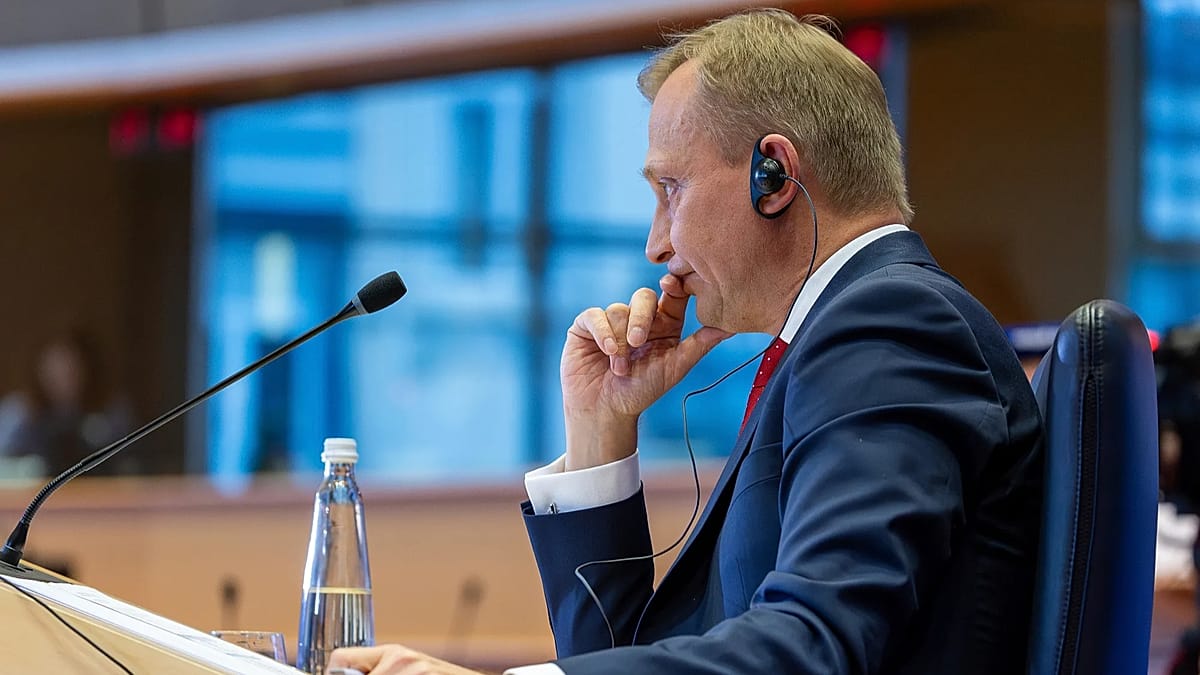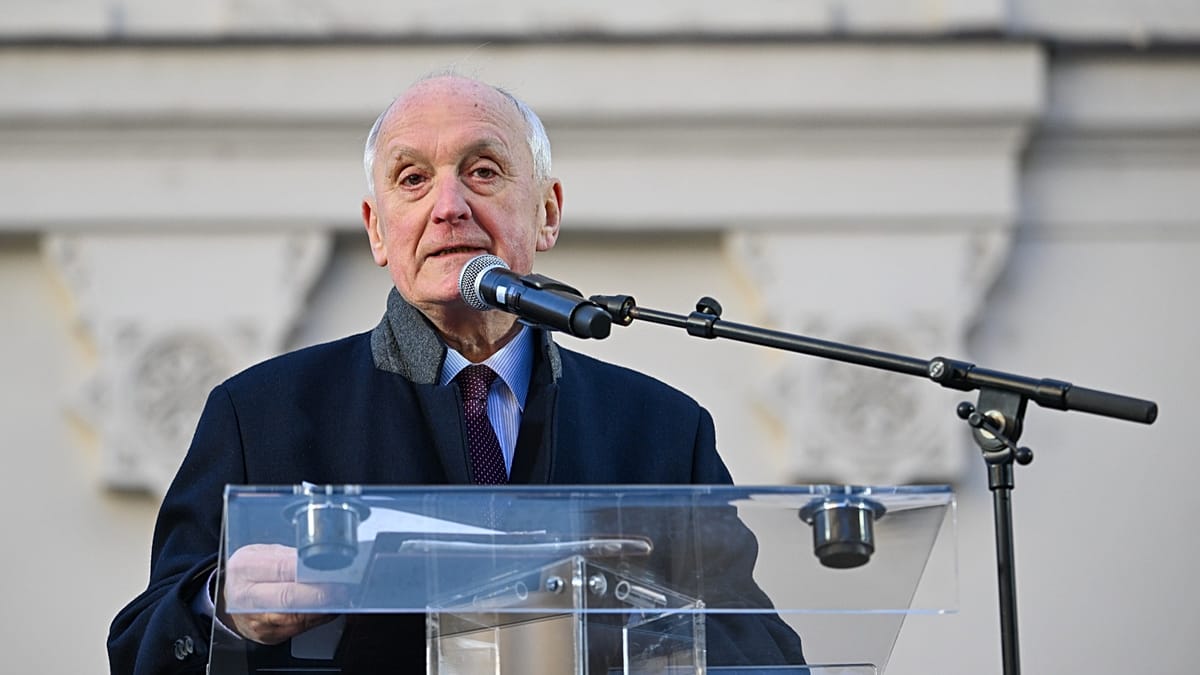
On Saturday, the Tisza Party, which commands a constitutional majority in Hungary's parliament, selected András Baka as its candidate for the presidency. The vote in the National Assembly is scheduled for Tuesday, and Baka's nomination marks a significant shift in the country's political landscape.
Baka, a legal scholar of international renown, began his career at the Institute for Legal Studies of the Hungarian Academy of Sciences and later served as director general of the College of Public Administration. His judicial career reached its peak during his two terms as a judge at the European Court of Human Rights (ECtHR) in Strasbourg, from 1991 to 2008. Upon returning to Hungary, he was elected president of the Supreme Court in 2009. However, the second Orbán government, which came to power in 2010 with a constitution-making majority, effectively removed him by renaming the Supreme Court as the Curia, creating a new institution and appointing a new head.
Baka subsequently won a case against the Hungarian state at the ECtHR, which found that his rights to a fair trial and to freedom of expression had been violated. He has since been a vocal advocate for the rule of law in Hungary and abroad. Known for his independent and somewhat old-school legal approach, Baka fits a profile that Hungary has seen in several presidents. Yet his outspoken criticism of the Orbán system, both domestically and internationally, may complicate his ability to embody national unity.
Powerless presidents instead of symbols of national unity
Before the elections, Tisza Party leader Péter Magyar indicated that, if his party secured a constitution-making majority, they would remove most high public dignitaries appointed by Fidesz, with the exception of central bank governor Mihály Varga. Magyar argued that these dignitaries were loyal Fidesz foot soldiers who had failed to fulfil their constitutional duties and whose aim after the election would be to obstruct the work of a Tisza government.
In Hungary's political system, the president of the republic primarily plays a ceremonial role, with little independent political room for manoeuvre. Under Fidesz rule, however, presidents did not even use this limited legal and communicative space, instead operating in parallel with the government and cooperating with it in every respect.
During the period from 2010 to 2016, only János Áder, a political veteran of the party, managed to serve the two terms available to him in full. László Sólyom, who had been elevated to the post by Fidesz while it was still in opposition and who projected an independent political and legal profile, was not elected for a second term. His successor, Pál Schmitt, a former Fidesz vice president, fell over a plagiarism scandal. János Áder then became president, and after his second term he was followed by Katalin Novák.
Novák spent her entire political career in Fidesz, but as a young woman she was officially meant to show a more European, more Western-facing face of the party than the mainstream led by Viktor Orbán. She had to step down after the pardon for sex abuse scandal. At that point Tamás Sulyok was elected, a figure little known to the public and without a strong public profile, and he too did not complete his first term.
President Tamás Sulyok was ultimately removed by means of a short sentence inserted into the 17th constitutional amendment, which the lawyer elected by Fidesz signed, thereby ending his mandate. Tisza has indicated that it will adopt a new constitution within this parliamentary term and will at least consider the possibility of electing the president of the republic directly.
Tisza's first political misstep
Prime Minister Péter Magyar promised public consultation on the choice of president, then, after a very short time, announced that the parliamentary group was nominating women's world chess champion Judit Polgár. The announcement was followed by a strong outcry; critics of the decision argued that the absence of consultation cast a shadow over the selection process. Sensing the outrage, Polgár declined Magyar's offer. After the failed nomination, Medián, one of Hungary's most trusted pollsters, measured the first significant drop (3–5 percentage points) in support for Tisza, which nevertheless remained at a historically high level, at 68% among decided party voters.
The nomination of Baka, a figure with a strong legal and international background, may help restore some credibility after that misstep. His experience at the ECtHR and his history of standing up to Fidesz could resonate with voters who value judicial independence and the rule of law. However, his critical stance towards the Orbán system might also polarise the political scene, as Hungary remains deeply divided.
As the parliament prepares to vote, the eyes of Europe are on Budapest. The outcome will not only determine who occupies the presidential palace but also signal the direction of Hungary's democratic trajectory under the new Tisza-led majority. For more on the broader context of Hungary's political shifts, see Magyar's options for the presidency and the Polgár nomination controversy.