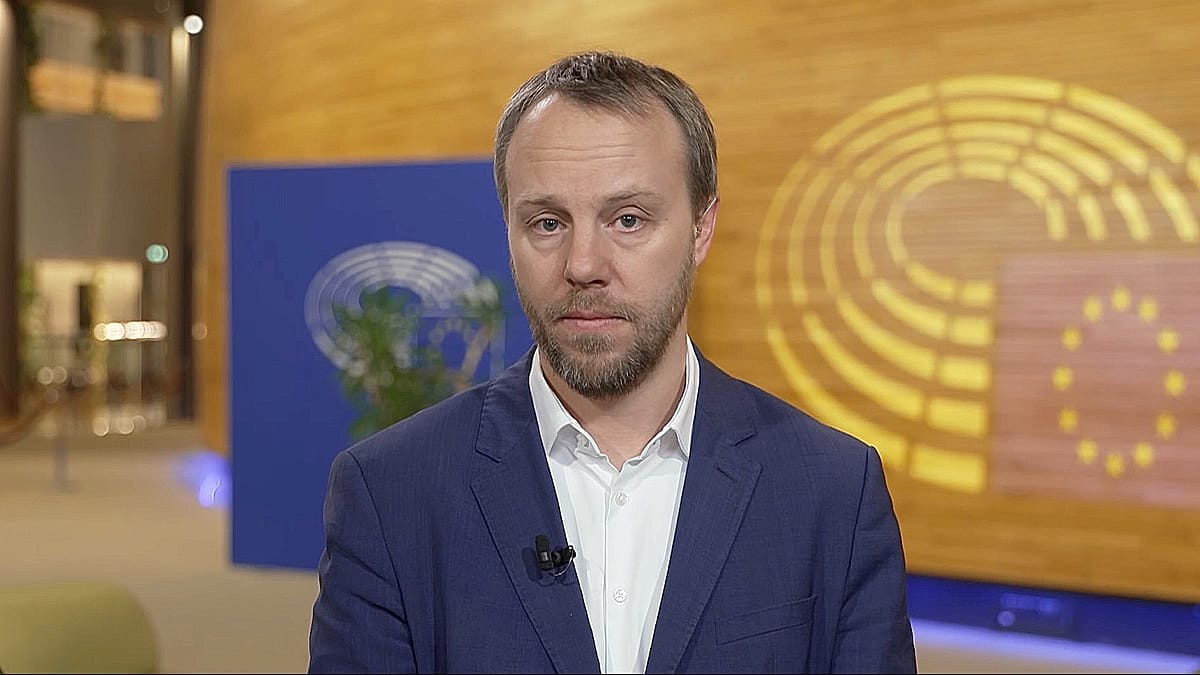
German Green MEP Daniel Freund has cautioned against prematurely closing the European Union's rule-of-law procedure against Hungary, arguing that the new government in Budapest still has significant work to do. Speaking ahead of Tuesday's European Parliament debate on the restoration of the rule of law in Hungary, Freund told Euronews: "We're not done yet."
Freund acknowledged that Péter Magyar's administration, which took office in April after a decisive election victory, has moved quickly on reforms. However, he insisted that key EU court rulings remain unimplemented and that the bloc should not relax its oversight until all major issues are resolved.
Poland as a warning
Freund drew a parallel with Poland, where EU sanctions mechanisms were lifted and frozen funds released swiftly after a change of government. Yet, according to the MEP, Warsaw continues to face rule-of-law concerns. "The sanctions mechanisms were stopped, and the money was unfrozen very quickly," he said, warning that Hungary could follow a similar path if the EU eases pressure before reforms are fully entrenched.
The April elections ended 16 years of rule by Viktor Orbán's Fidesz party, which had faced repeated allegations of corruption since first coming to power in 2010. During its tenure, Fidesz channeled state funds and contracts to business associates, and in Orbán's final months, the government engaged in a spending spree that ballooned the budget deficit. In response to these concerns, the European Parliament triggered Article 7 proceedings against Hungary in 2018.
Progress and remaining hurdles
On 20 November, the European Commission reported that Hungary had met 126 of 127 milestones required to unlock nearly €10 billion in frozen recovery assets. A separate €4.2 billion in cohesion funding was released in October. However, the Article 7 procedure remains a distinct and ongoing process.
Freund stressed that Article 7 should not be closed until "all major problems are addressed," including Hungary's continued failure to comply with a 2024 European Court of Justice ruling on asylum policy. That ruling imposed a €200 million fine plus €1 million per day of delay for non-compliance with an earlier judgment.
Despite these outstanding issues, Freund expressed optimism that they could be "wrapped up in a matter of months" if the Magyar government maintains its reform momentum. He also noted that Hungary's new leadership has already taken steps to reset relations with the EU, including meeting Ukraine's president in a break from the Orbán era.
The debate in Strasbourg comes as the EU grapples with broader challenges to democratic norms across the bloc. Freund's remarks underscore a growing sentiment among some MEPs that the Union must remain vigilant, even as new governments promise change. The outcome of the debate could influence whether the Commission recommends closing the Article 7 procedure, a move that would require unanimous support from member states.
For now, Freund's message is clear: the EU should not declare victory prematurely. "We're not done yet," he reiterated, urging colleagues to keep the pressure on until Hungary's reforms are irreversible.