In a rare public display of diplomatic leverage, Gulf states—Qatar, Saudi Arabia, and the United Arab Emirates—persuaded US President Donald Trump to suspend a planned military strike on Iran, according to statements from the White House and regional officials. The episode, which unfolded over the weekend, highlights the growing influence of these nations in steering Washington away from further escalation in a conflict that has already drawn in multiple actors across the Middle East.
Trump, speaking on his Truth Social platform late Monday, named the three Gulf leaders as “great leaders and allies” who asked him to “hold off” on renewed military action. He said they argued that “serious negotiations are now taking place” and that a deal acceptable to the United States and the broader region was within reach. In subsequent remarks at the White House, Trump elaborated that he had postponed a “very major attack” after being asked by Saudi Arabia, Qatar, the UAE, and others to delay for “two or three days.”
“They think that they are getting very close to making a deal,” Trump said. “If we can do that without bombing the hell out of them, I’d be very happy.” However, he maintained pressure on Tehran, instructing military leaders “to be prepared to go forward with a full, large-scale assault of Iran, on a moment’s notice, in the event that an acceptable deal is not reached.”
Qatar’s Mediation and Regional Coordination
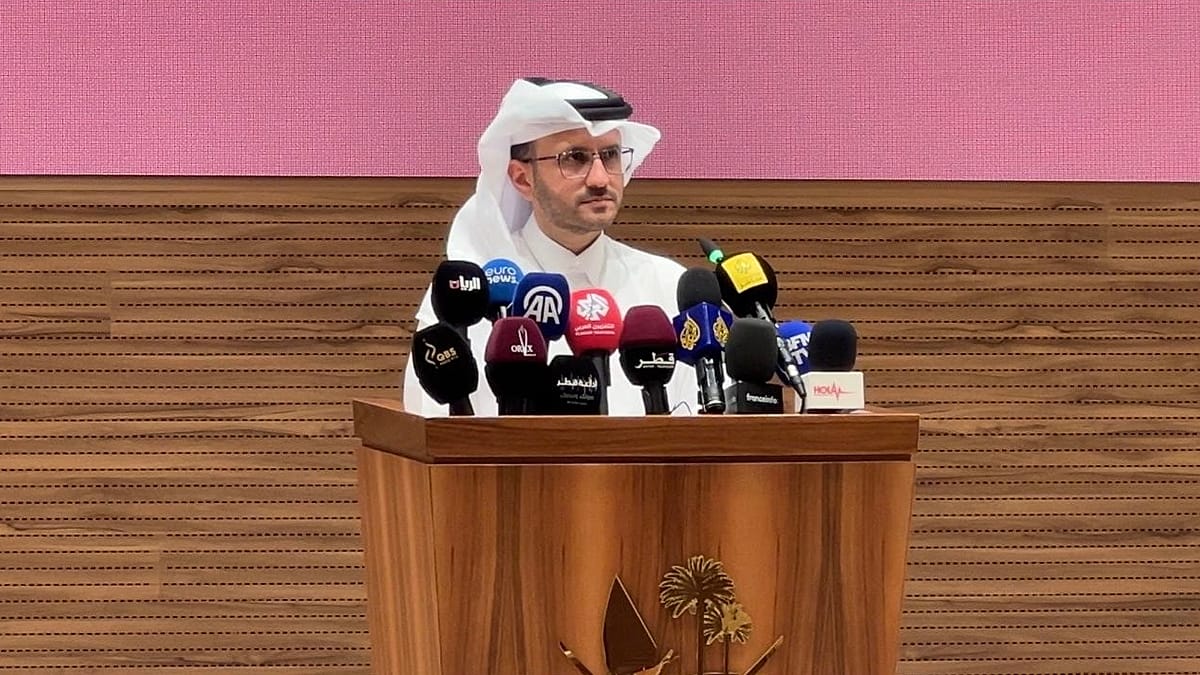
Qatar’s Foreign Ministry spokesperson, Dr. Majed Al-Ansari, told a news briefing in Doha on Tuesday that Doha had clearly communicated its position to Washington and other partners: the region must not be engulfed again in war. “Any escalation would have an immediate effect on its peoples,” he said, adding that there was strong regional backing for the existing ceasefire and that negotiations “need more time.” Al-Ansari declined to comment directly on Trump’s discussions with Gulf leaders but confirmed that Doha had stressed the importance of de-escalation and reopening the Strait of Hormuz, a critical chokepoint for global oil shipments.
“The freedom of navigation of the Strait of Hormuz is legally our right,” Al-Ansari said. “We have always stressed the importance of opening the strait and not changing the status quo.” He also noted that Qatar supports Pakistan’s mediation efforts, which have been central to diplomatic attempts to end the war.
Despite its push for diplomacy, Qatar delivered sharp criticism of Iran over attacks that targeted Qatari territory during the conflict. “There was an aggression against our country by Iran. It was against the sovereignty of Qatar, against the people of Qatar and against the wealth and prosperity of our people,” Al-Ansari said, adding that “this is not something we take lightly.” He emphasized that the people of Iran deserve peace, but that the Iranian government’s actions had strained relations.
Qatar’s Foreign Minister Mohammed Al Thani spoke by phone with his Saudi counterpart Faisal bin Farhan on Tuesday, urging all parties to respond to mediation efforts “in a way that opens the door to addressing the roots of the crisis through peaceful means and dialogue.” A similar call took place between Qatar and the UAE.
UAE’s Dual Role as Victim and Mediator
The UAE, which has faced multiple drone attacks in recent days—at least six over the past 48 hours—appeared to distance itself from more passive regional actors. Presidential advisor Anwar Gargash posted on X that “the victim's role has merged with that of the mediator, and vice versa, while the friend has turned into a mediator instead of being a steadfast ally and supporter.” He described the “confusion of roles during this treacherous Iranian aggression” as “baffling,” and warned that “the grey position remains more dangerous than outright inaction.”
The Gulf states’ intervention comes as the Washington-based Institute for the Study of War (ISW) reported that Tehran continues to formalize its claimed control over transit through the Strait of Hormuz, in contravention of the UN Convention on the Law of the Sea (UNCLOS). IRGC-affiliated outlets have threatened commercial and digital activity linked to the waterway, part of broader efforts to institutionalize Iranian authority.
Iran’s Deputy Foreign Minister Kazem Gharibabadi responded to Trump’s threats by stating on X that “Iran, united and resolutely, is prepared to confront any military aggression.” The standoff underscores the fragile balance in a region where European interests—particularly energy security and maritime trade—are directly at stake. The Strait of Hormuz remains a vital artery for European oil imports, and any disruption would have immediate economic consequences for EU member states.
The episode also echoes broader geopolitical dynamics: the Gulf states’ ability to sway US policy reflects their growing financial and diplomatic clout, even as European powers like France and Germany have struggled to mediate effectively. For European readers, the development serves as a reminder that the continent’s energy security and strategic interests in the Middle East are increasingly shaped by actors outside the EU framework. As the situation evolves, European capitals will be watching closely whether the Gulf-led mediation can deliver a lasting deal—or whether Trump’s threat of a “full, large-scale assault” remains a live option.