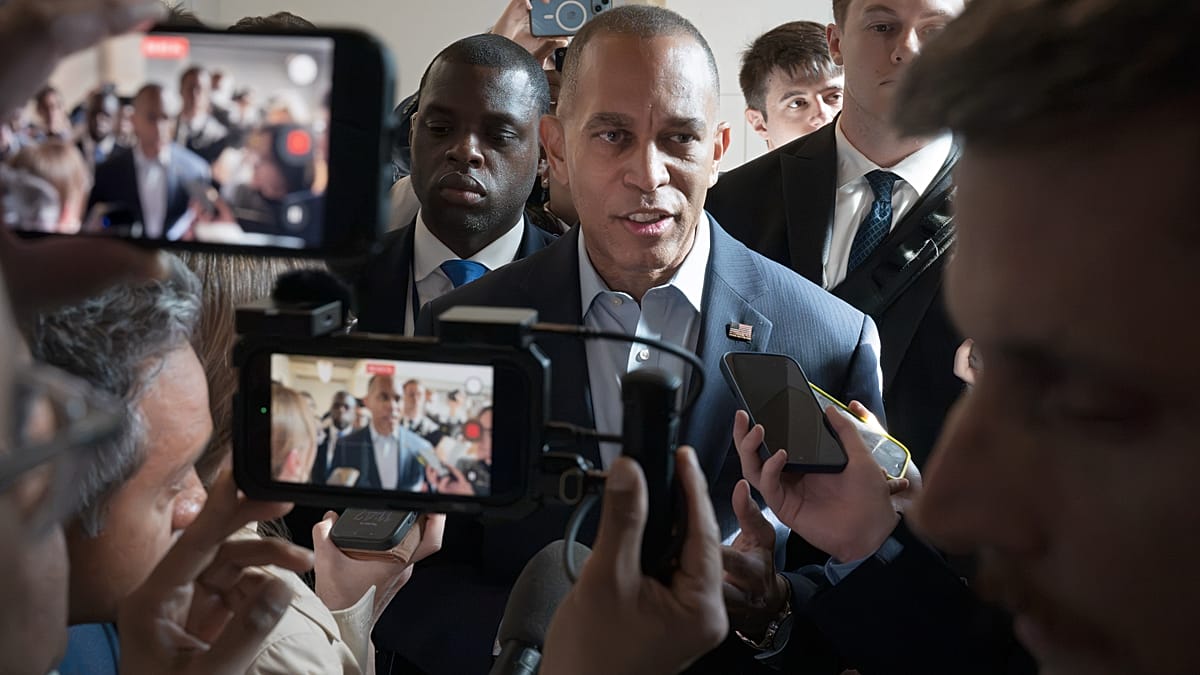
Hakeem Jeffries, the Democratic leader in the US House of Representatives, has taken a significant step toward becoming the first Black Speaker of the House. In a closed-door vote among Democratic lawmakers, Jeffries secured 251 votes in favor and 11 against, clearing the way for a formal vote when the new Congress convenes in January.
Jeffries, who represents a Brooklyn-based district in New York, has served as House minority leader since 2023. His nomination was not contested, but a small group of progressive newcomers voted against him, signaling lingering discontent within the party. In a joint statement, these lawmakers said there is “still work to be done” to secure commitments on key issues.
Progressive pressure and party unity
The dissenting lawmakers, some backed by the Democratic Socialists of America, have been vocal about their demands. Their statement highlighted priorities such as Medicare for All, ending what they call “ICE terror,” removing money from politics, and addressing the situation in Gaza. They said they have engaged in “good-faith conversations” with Jeffries to secure his commitments.
Jeffries, who ran unopposed, has acknowledged the challenges ahead. He faces a party eager for change after voters ousted Republicans in a rebuke of former President Donald Trump. The pressure was visible last week when protesters heckled Jeffries during a Democratic conference in Denver, Colorado.
Despite the opposition, Jeffries’s nomination is a historic milestone. He is part of a leadership team that includes Rep. Katherine Clark of Massachusetts, nominated for majority leader, and Rep. Pete Aguilar of California, nominated for majority whip. If elected, Clark would be the first female majority leader, and Aguilar the first Latino to serve as majority whip. Both also ran unopposed.
The trio represents a new generation of Democratic leadership, emerging after Nancy Pelosi stepped aside in 2022 following the party’s electoral defeat. Their rise has been closely watched, and they are expected to lead the party in the majority for the first time.
Meanwhile, a similar dynamic is playing out in the Senate, where Senate leader Chuck Schumer of New York faces a challenge from Sen. Chris Van Hollen of Maryland. Van Hollen, who has served since 2017, is positioning himself as a candidate for change.
The full House vote is scheduled for January 3, 2027. Jeffries has said he is taking nothing for granted, and the coming weeks will be crucial in uniting the party behind his leadership.