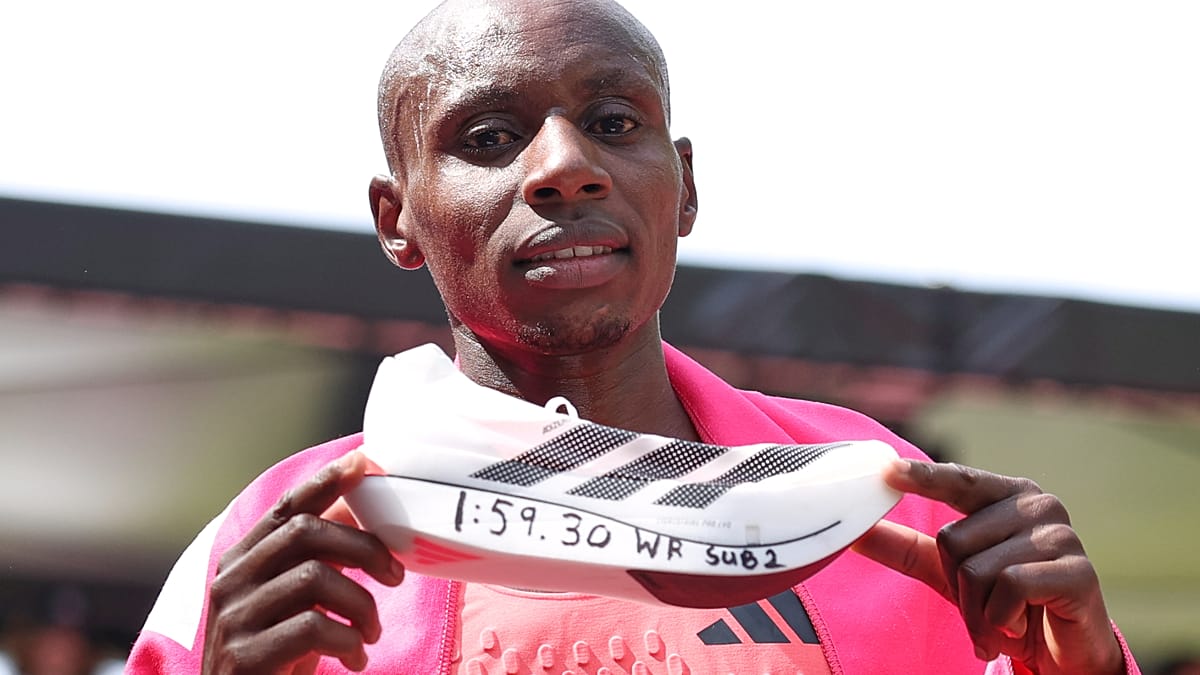
On a cool, nearly windless Sunday in London, the men’s marathon entered uncharted territory. Sebastian Sawe of Kenya and Yomif Kejelcha of Ethiopia crossed the finish line in 1:59:30 and 1:59:41 respectively, becoming the first runners to break the two-hour barrier in an officially sanctioned race. Eliud Kipchoge had achieved the feat in 2019 under controlled, non-race conditions, but this was the first time it happened in a competitive field.
The achievement did not come from a single breakthrough. Instead, it was the convergence of several factors: near-ideal weather, a tightly paced race, and a new generation of footwear that is reshaping the limits of human performance.
More Than the Athlete
Sawe credited the atmosphere of the London course, where hundreds of thousands of spectators lined the streets, as a key motivator. He also noted that racing alongside Kejelcha—who was making his marathon debut—pushed him to maintain a relentless pace. But experts say the real story lies in the system around the runners.
Adam Jansen, a former runner turned race analyst, pointed to three elements: temperatures between 10 and 15 degrees Celsius with minimal wind, exceptional athletic conditioning, and a new shoe weighing just 97 grams. Both Sawe and Kejelcha wore the same model from Adidas, a brand that sponsored four of the top five male finishers. Tigist Assefa, who broke the women’s-only world record in the same race, also wore those shoes.
Yannis Pitsiladis, director of the Centre for Exercise Science and Medicine at Hong Kong Baptist University, argues that neither training methods nor nutrition have advanced enough to explain the sudden leap. “We have introduced technology that can meaningfully influence outcomes,” he said. Research led by Pitsiladis shows that so-called “supershoes” can improve running economy by more than 6 percent, though the benefit varies significantly between athletes.
That uneven advantage raises a deeper question, Pitsiladis adds: “If access to technology begins to decide outcomes more than physiology, preparation, and talent, then we are no longer just testing the athlete. We are testing the system around them.”
Sawe himself acknowledged the shift. “The win reflects the hard work behind the scenes, the support of my team, and the role of innovation in helping me push beyond limits,” he said after the race.
The London course is not considered the fastest on the circuit; Berlin, which hosts its marathon in late September, typically yields quicker times under more controlled conditions. That suggests further records may fall soon. Meanwhile, shoe design continues to evolve, with analysts like Jansen predicting additional performance gains.
The question now is not whether marathon times can keep improving, but how much of that improvement will still be human. As technology becomes a more decisive factor, the sport faces a reckoning over what exactly is being measured when a record falls.