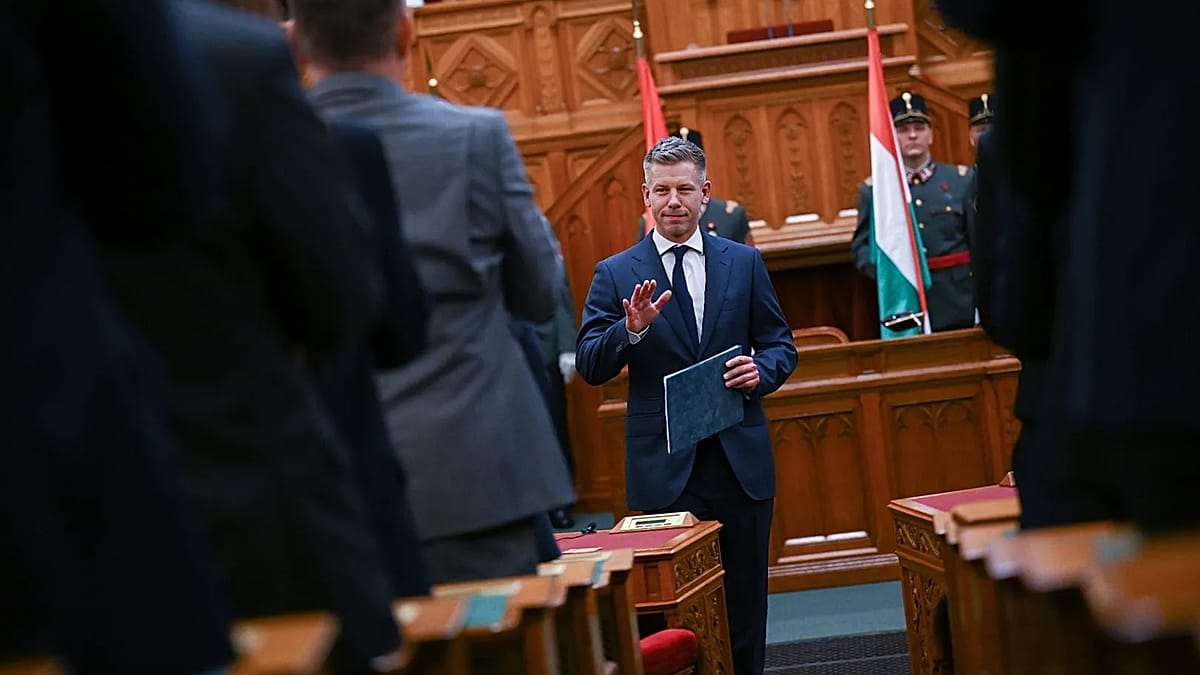
Hungary’s government has formally terminated the state of emergency that has been in place since 2020, a move that new Prime Minister Péter Magyar described as a decisive step back toward democratic normality. The emergency framework, first enacted under former Prime Minister Viktor Orbán during the COVID-19 pandemic, was later extended after Russia’s full-scale invasion of Ukraine in 2022. It granted the executive broad powers to rule by decree—a practice the European Parliament had previously labelled “totally incompatible with European values.”
“As of today, after four years, the wartime state of emergency in Hungary is ending, and with it we are also putting an end to the decree-based emergency rule introduced by the Orbán government six years ago,” Magyar wrote on X. The announcement marks a clear departure from the governance style of his predecessor, who had used the emergency powers to bypass parliamentary scrutiny on a range of issues.
A Shift in Foreign Policy Tone
On the same day, Magyar’s government summoned Russia’s ambassador to Budapest, Evgeny Stanislavov, to the foreign ministry for talks over a massive drone attack that struck the Ukrainian region of Transcarpathia on Wednesday. The region is home to a sizeable ethnic Hungarian community, and the strike—part of a broader Russian barrage involving at least 800 drones across some 20 Ukrainian regions—killed at least six people and wounded dozens, including children.
“The Hungarian government strongly condemns the Russian attack on Transcarpathia,” Magyar said during a press conference in Ópusztaszer. “She will tell him the same and ask for information on when Russia and Vladimir Putin plan to finally end this bloody war that began more than four years ago.” The summons represents a stark shift in tone from Budapest toward Moscow, which under Orbán had maintained unusually warm relations with the Kremlin, even as other EU capitals imposed sanctions and reduced energy dependence.
Ukrainian President Volodymyr Zelenskyy welcomed the move, calling it an “important message” and thanking Magyar for his comments. “Moscow has once again shown itself to be a common threat not only to Ukraine, but also to neighbouring countries and Europe as a whole,” Zelenskyy said on social media. The Russian government has not yet issued a public response to the summons.
The end of the state of emergency and the diplomatic démarche come as Hungary’s new leadership seeks to rebuild trust with Brussels and other EU capitals. The European Commission recently announced it would send a senior team to Budapest to discuss frozen funds, as Hungary explores alternative routes through its Exim Bank to unlock billions of euros in EU money. The shift in foreign policy also aligns with broader EU moves, such as the recent imposition of sanctions on Israeli settlers after Hungary’s new government backed the measure.
For many Hungarians, the lifting of the emergency decree is a symbolic end to an era of executive overreach that critics say eroded checks and balances. Magyar’s government now faces the challenge of restoring institutional independence while navigating a complex geopolitical landscape—balancing the security concerns of a NATO member on Ukraine’s border with the economic realities of a country still heavily dependent on Russian energy imports.