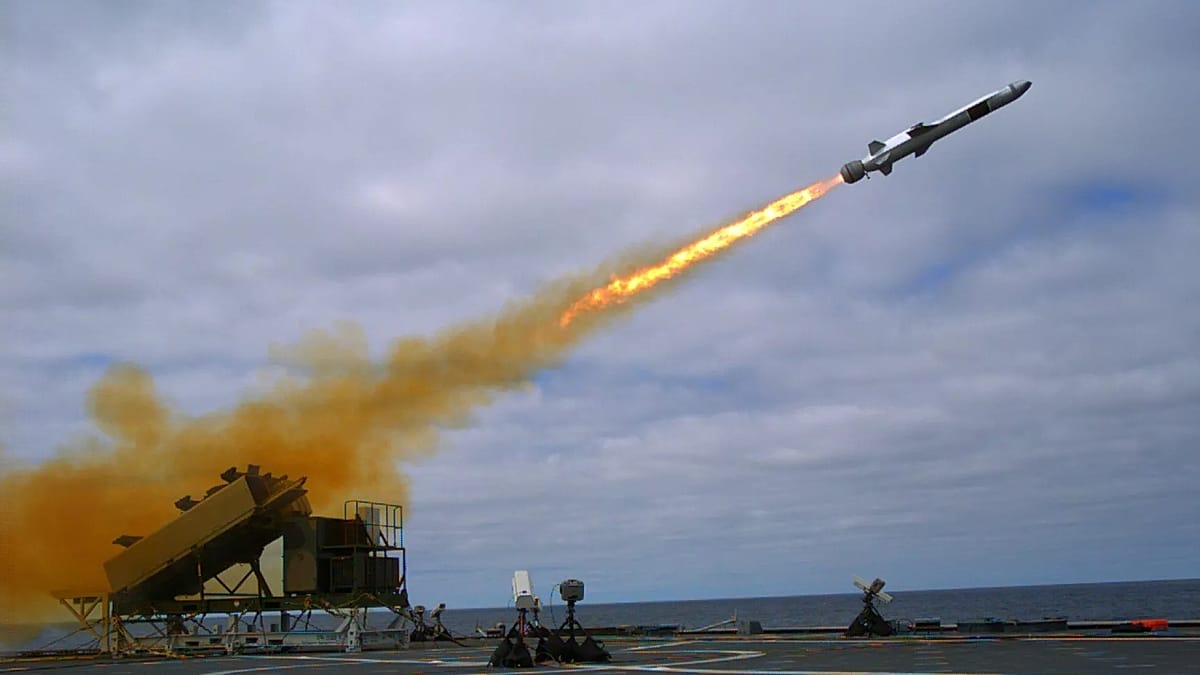
Malaysian Prime Minister Anwar Ibrahim has sharply criticized Norway's decision to revoke an export license for a naval missile system intended for the Malaysian navy, warning that the move could erode trust in European defense suppliers. Anwar raised his "vehement objection" during a phone call with Norwegian Prime Minister Jonas Gahr Støre after Oslo blocked the delivery of the Naval Strike Missile (NSM) system and launcher components for Malaysia's littoral combat ship program.
"Malaysia has honoured every obligation under this contract since 2018: scrupulously, faithfully and without equivocation," Anwar said in a statement. "Norway, it appears, has not felt compelled to extend us the same courtesy and demonstration of good faith."
Contractual Dispute and Financial Implications
Malaysian Defence Minister Mohamed Khaled Nordin told local media that the government had already paid nearly 95% of the contract value when Oslo blocked delivery in March. The NSM anti-ship missile system, manufactured by Kongsberg Defence & Aerospace AS, was meant to equip Malaysia's new class of littoral combat ships as part of its modernization efforts. Kongsberg stated that export licensing decisions are handled entirely by Norwegian authorities, according to Malaysian national news agency Bernama.
Anwar said Oslo's move would hurt Malaysia's operational readiness and "undoubtedly carry broader ramifications for the regional balance." He questioned the reliability of European defense suppliers if signed agreements could be reversed unilaterally. "Signed contracts are solemn instruments. They are not confetti to be scattered in so capricious a manner," the Malaysian leader said. "If European defence suppliers reserve the right to renege with impunity, their value as strategic partners flies out the window."
The Norwegian government has not made any public comment on the cancellation or Anwar's remarks. Khaled said the government is now examining legal options and possible compensation claims over the cancelled delivery.
This incident comes amid heightened scrutiny of European defense exports, particularly in light of ongoing conflicts such as the war in Ukraine. The European Union has tightened export controls on sensitive technologies, and Norway, while not an EU member, aligns closely with EU sanctions and export regimes. The revocation may reflect concerns about the end-use of the missiles or broader geopolitical considerations, though Oslo has not provided a rationale.
Malaysia's criticism highlights a growing tension between European defense suppliers and non-European buyers, especially in the Indo-Pacific region. The NSM is a advanced anti-ship missile system also used by several NATO navies, and its denial could push Kuala Lumpur to seek alternatives from other suppliers, potentially including China or Russia. This could have implications for European defense companies' market share in a strategically important region.
For Europe, the episode underscores the delicate balance between export controls and maintaining trust with international partners. As European nations seek to bolster their defense industries and export capabilities, incidents like this may prompt buyers to question the reliability of European suppliers. The outcome of Malaysia's legal and diplomatic efforts will be closely watched by other nations considering European defense equipment.