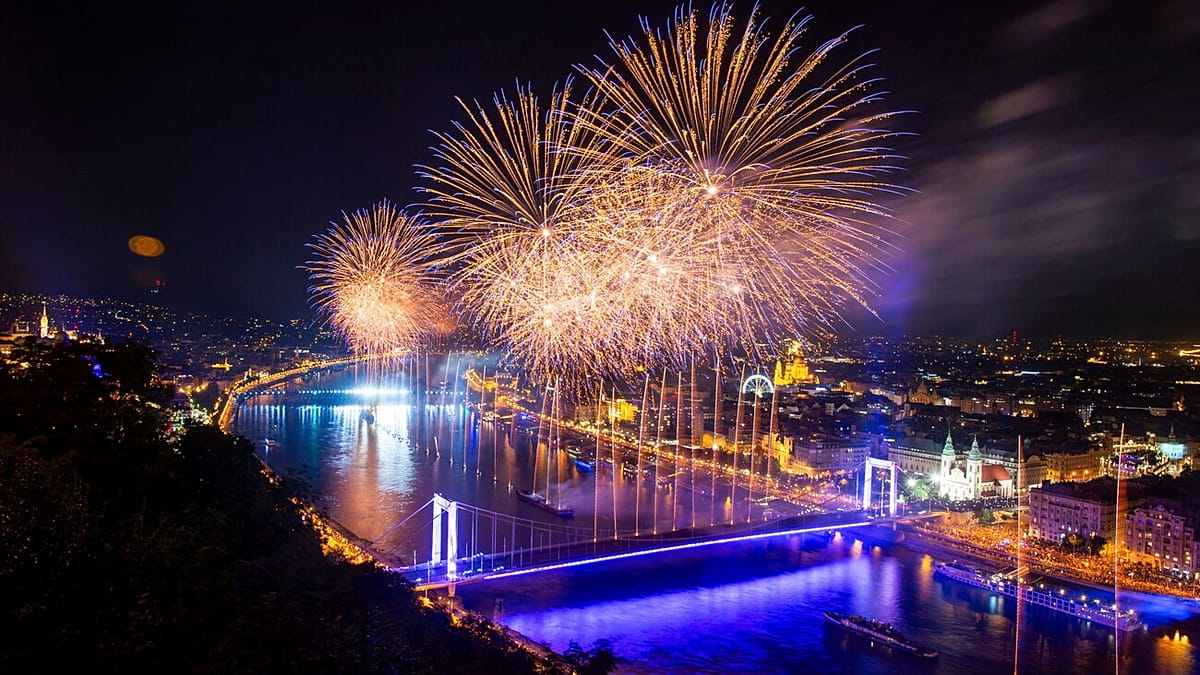
As Hungary prepares for its annual 20 August celebrations marking St Stephen's Day, a familiar debate has resurfaced—but this year with a twist. The government has confirmed the fireworks over the Danube will go ahead, but at a dramatically reduced cost after terminating contracts with the Lounge group, a conglomerate tied to the ruling Fidesz party. The new contractor, Hardrock Szolgáltató, is expected to stage the entire programme series for less than €11.1 million, compared to the €48.6 million previously agreed.
A Political and Financial Shake-Up
The controversy began when criminal proceedings were launched against the Lounge group, owned by Gyula Balásy, leading to frozen bank accounts and enforcement procedures. The National Event Organising Agency then terminated the framework contracts just weeks before the holiday, forcing a last-minute reorganisation. The Interior Ministry stated that the Lounge group's financial instability made it doubtful it could meet its commitments, risking payments to subcontractors and the event's feasibility.
The two contracts—one for the fireworks worth €13.8 million and another for the broader programme worth €34.7 million—had already seen half of the total paid as an advance. The new tender, conducted under time pressure, attracted only one bidder. The government claims the cost-cutting will not affect safety or the main programme elements, though some features will be scaled back.
Péter Magyar, a government spokesperson, noted that the fireworks and drone show were ordered and paid for by the previous administration, hence the decision to proceed. He indicated the celebrations would be more modest than in past years.
Environmental and Civic Opposition
Budapest's mayor, Gergely Karácsony, has been the most vocal critic. He argues that the pyrotechnic display causes significant air and noise pollution, harms wildlife, and that the public funds would be better allocated elsewhere. Karácsony has backed the civil organisation aHang, which launched a petition to redirect the money toward drought protection—a pressing issue in Hungary amid climate change. The petition has garnered hundreds of thousands of signatures in just one week.
“This would have been the moment to close this chapter for good,” Karácsony said, advocating for modern alternatives like light projections or drone shows. The debate echoes broader European tensions between tradition and environmental responsibility, as seen in other countries where fireworks have been replaced by quieter, less polluting displays.
The aHang petition reflects a growing civic movement questioning the use of public money for what some see as an outdated spectacle. The group argues that the €11.1 million could fund significant drought mitigation efforts, a concern amplified by recent dry spells affecting Hungarian agriculture.
Broader Implications for Hungary and Europe
The affair is not just about fireworks; it underscores deeper issues of political patronage and public spending. The Lounge group's close ties to Fidesz had made the contracts a symbol of alleged cronyism. The termination and subsequent cost reduction may be seen as a move by the current government to distance itself from past practices, especially as Hungary faces scrutiny over rule-of-law concerns. The country's reintegration into the Erasmus+ programme remains at risk, and Budapest has delayed necessary reforms.
Meanwhile, the political landscape is shifting. Prime Minister Viktor Orbán's successor, Péter Magyar, has moved to oust President Katalin Sulyok, triggering a constitutional crisis. The fireworks debate, while seemingly trivial, feeds into a broader narrative about governance and accountability.
For now, hundreds of thousands are expected to watch the display along the Danube, but the row over its cost and environmental impact is unlikely to fade. As Europe grapples with similar questions—from Spain's inflation to the EU's unity—Hungary's 20 August fireworks serve as a microcosm of the continent's struggle to balance tradition, fiscal responsibility, and ecological awareness.