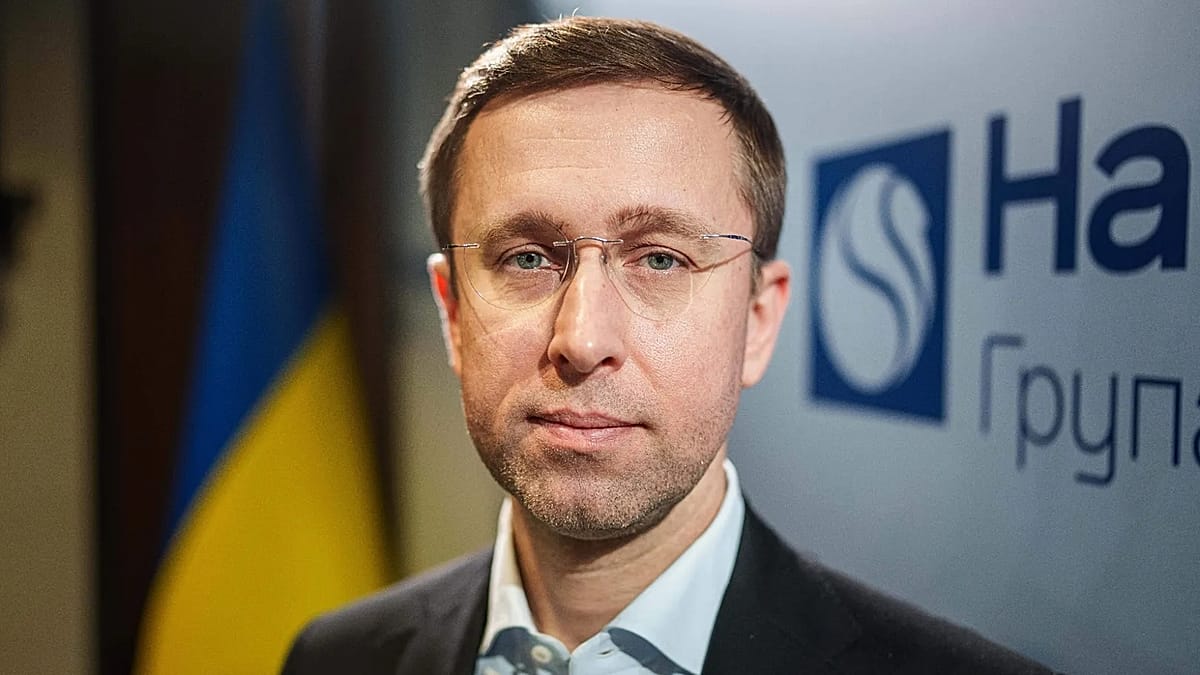
Ukraine’s parliament, the Verkhovna Rada, has confirmed Serhii Koretskyi as the country’s new prime minister, a move that forms part of President Volodymyr Zelenskyy’s broader government reshuffle. The appointment, proposed by Zelenskyy on 15 July, passed with relatively little controversy, in stark contrast to the turmoil surrounding the dismissal of Defence Minister Mykhailo Fedorov, which sparked rare wartime protests in Kyiv.
Koretskyi, who previously led the state energy giant Naftogaz from May 2025, brings extensive experience in Ukraine’s energy sector to the premiership. His career began in private energy firms before he took the helm of state-owned Ukrnafta and Ukrtatnafta between 2022 and 2025, a period defined by Russia’s full-scale invasion and Kyiv’s efforts to consolidate control over strategic assets. David Arakhamia, head of Zelenskyy’s Servant of the People faction in parliament, noted that Koretskyi’s expertise “will be invaluable, especially now as Ukraine prepares for what could be the most difficult winter in its history.”
Energy Security at the Forefront
Koretskyi assumes office at a critical juncture. Russia has intensified its campaign to cripple Ukraine’s energy infrastructure, launching repeated strikes on power plants and transmission networks. The government in Kyiv has prioritised preparing the system for the coming winter, when freezing temperatures could leave millions without electricity or heating. The United Nations reported in June that civilian casualties had reached their highest monthly level since 2022, underscoring the human cost of the ongoing war.
The new prime minister’s immediate task will be to coordinate the repair and protection of energy facilities, a challenge that has grown more acute as Moscow targets production sites. Under Koretskyi’s leadership at Naftogaz, the company managed to keep gas flowing despite relentless attacks, but the scale of damage this year has raised fears of a humanitarian crisis. The European Union has extended protections for Ukrainian refugees, though it has tightened rules for military-age men, reflecting the continent’s balancing act between solidarity and security concerns.
Koretskyi’s appointment comes amid a wider political shake-up. The dismissal of Defence Minister Fedorov, a popular figure, sparked rare wartime protests in Kyiv, with thousands demanding accountability. Zelenskyy’s decision to replace Fedorov was linked to a dispute over military reform, as detailed in our earlier report. The reshuffle signals the president’s determination to streamline governance as the war enters its third year.
Internationally, Ukraine continues to secure support from key allies. UK Prime Minister Keir Starmer, in his final visit to Kyiv before stepping down, reaffirmed Britain’s commitment to Ukraine’s defence. Such backing remains vital as Ukraine navigates both military and energy challenges.
Koretskyi’s background in the energy sector is seen as a strategic asset. His tenure at Naftogaz focused on maintaining operations under fire, a experience that will inform his approach to the premiership. Analysts expect him to push for greater integration with European energy markets, leveraging Ukraine’s gas storage capacity to enhance regional energy security. The appointment also reflects a broader trend in Ukrainian politics: technocrats with industry expertise are increasingly taking top roles as the country fights for survival.
As winter approaches, the new prime minister faces a daunting agenda. The resilience of Ukraine’s energy grid will be tested, and the government must also address reconstruction, military logistics, and diplomatic outreach. For now, Koretskyi’s confirmation offers a measure of stability, even as the war continues to reshape the country’s political landscape.