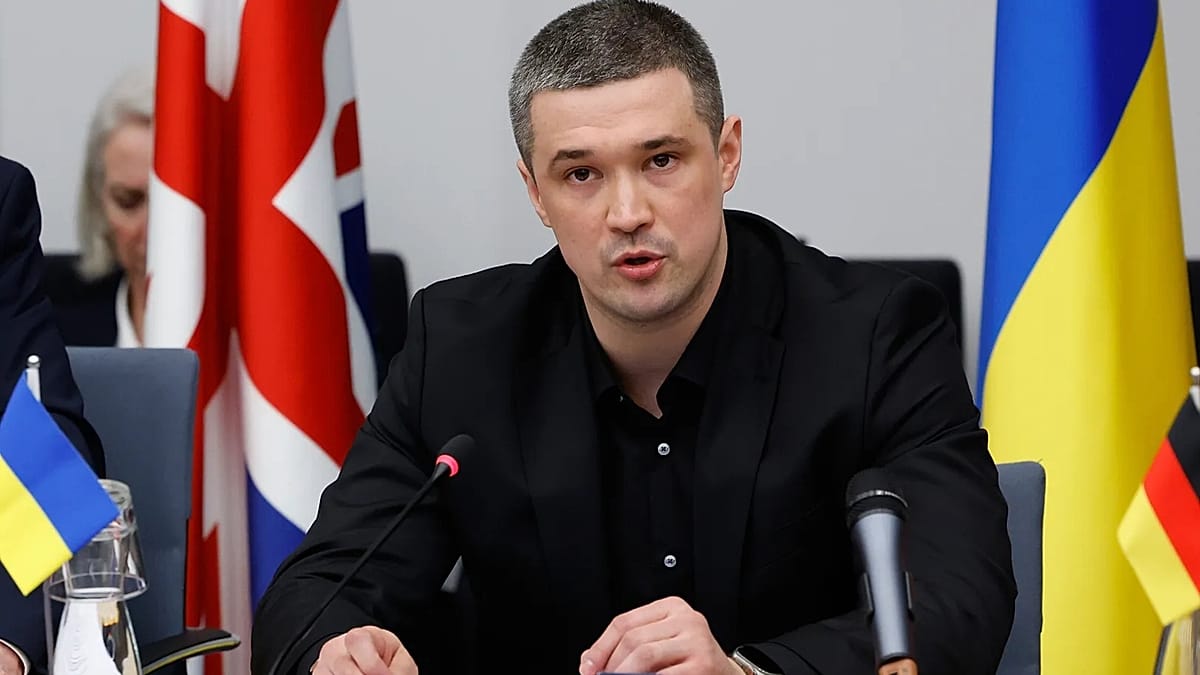
Ukrainian President Volodymyr Zelenskyy dismissed Defence Minister Mykhailo Fedorov on Wednesday as part of a broader government reshuffle, a move that has sparked public outcry and criticism from civil society. Fedorov, who served as defence minister for six months, confirmed his departure on social media, stating, “It was a great honour to serve the Ukrainian people as Defence Minister.”
Fedorov, a former deputy prime minister and minister of digital transformation, was widely respected for his role in modernising Ukraine’s military technology, particularly in drone development and production. He also spearheaded the campaign to “turn Crimea into an island,” targeting Russian logistics and military sites in the annexed peninsula. His dismissal has triggered an avalanche of criticism towards Zelenskyy, with calls for a peaceful demonstration in Kyiv on Thursday morning to protest against “constant reshuffles in the government and replacing effective ministers with convenient opportunists.”
Why Was Fedorov Dismissed?
According to reports, the key issue behind Fedorov’s dismissal was a clash with Commander-in-Chief Oleksandr Syrskyi over military reform, particularly regarding recruitment and the Defence Ministry’s operations. The dispute has been described as a generational clash between Fedorov, a young, innovative manager with a startup background, and Syrskyi, a more traditional military general. Zelenskyy held a meeting with both men on Wednesday to discuss key challenges, including mobilisation, and later declined to comment on the dismissal, saying only that he wants Ukraine’s military to be “united” and “on the same page.”
Fedorov acknowledged his failures, stating that he did not manage to complete the organisational transformation of the Ministry of Defence in line with NATO standards and “common sense.” He added, “The new structure has been put in place, many people have been made redundant, numerous processes have been set in motion. However, it was necessary to be even more decisive in dismissing those who were holding back the changes.”
Fedorov is expected to be replaced by Interior Minister Ihor Klymenko, a former head of the National Police who took over the interior ministry after the death of his predecessor, Denys Monastyrsky. The Ukrainian parliament is expected to support his nomination.
Fedorov’s Legacy and Public Reaction
Fedorov served as Ukraine’s deputy prime minister and minister of digital transformation from 2019 to January 2026, where he was praised for implementing the “state within a smartphone” strategy through the Diia app, which made government services accessible on smartphones. Since the full-scale Russian invasion, his ministry played a crucial role in drone development and production, as well as education reforms. He also launched a project linking the Digital Transformation Ministry with the Defence Ministry to advance military technology.
The news of his dismissal has caused outrage among Ukrainians, who see him as an effective and innovative minister. The reshuffle comes at a critical time as Ukraine continues to defend against Russian aggression and seeks to strengthen its ties with the European Union. The EU and Ukraine recently signed a joint drone production deal to boost defence capabilities, and European Commission President Ursula von der Leyen has declared the “tide turning” for Ukraine during a visit to Kyiv. The reshuffle also follows the ousting of Prime Minister Yulia Svyrydenko, with Naftogaz CEO tipped as her successor.
Fedorov’s dismissal highlights the tensions within Ukraine’s government as it balances the need for rapid innovation with traditional military structures. As Ukraine prepares for a new EU support package, the stability of its leadership remains a key concern for both domestic and international observers.