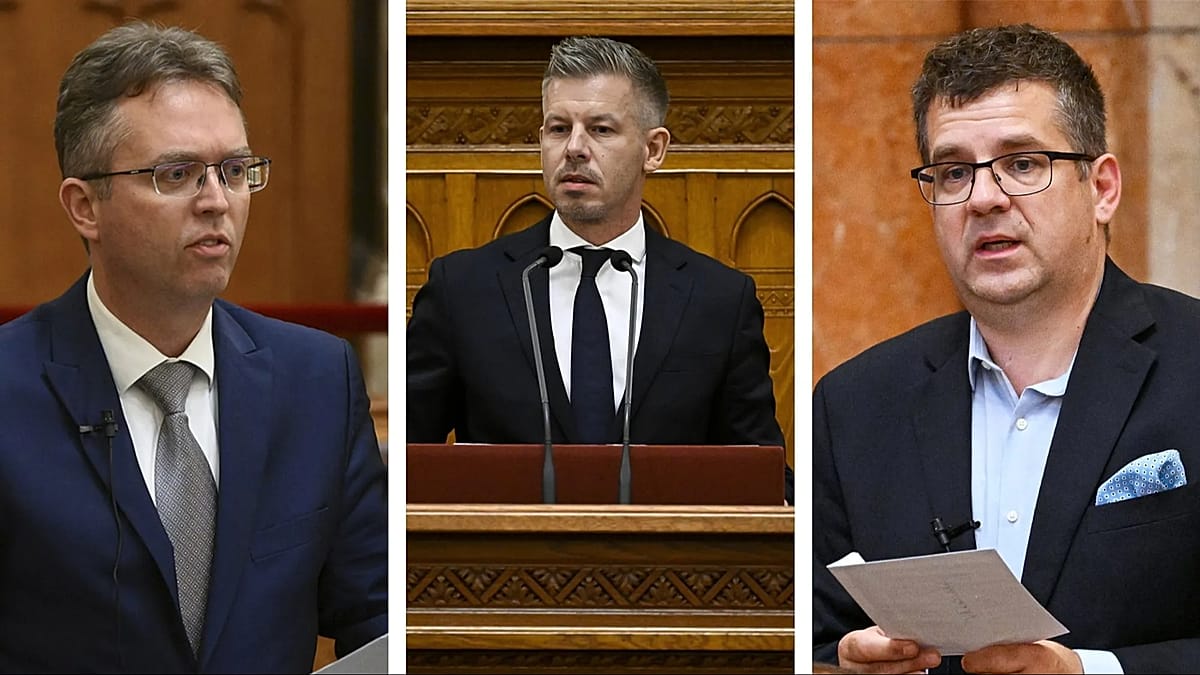
Hungary's National Assembly voted on Monday to strip parliamentary immunity from Prime Minister Péter Magyar and two former ministers who served under ex-leader Viktor Orbán, clearing the way for separate criminal investigations. The decision, passed with an overwhelming majority, marks the first time graft allegations have been pursued against senior figures from Orbán's sixteen-year rule.
Magyar, whose Tisza party won a landslide in April on a promise to root out corruption and abuse of office, had explicitly requested that his own immunity be lifted. He faces allegations of theft after prosecutors claim he snatched a phone from a man filming him in a Budapest nightclub in 2024 and threw it into the Danube. Magyar dismissed the case as a "sham," accusing prosecutors of trying to "conflate" the former ministers' cases with "the attempt at political character assassination...which has already failed several times."
The two former ministers are Balázs Hankó, who served as culture minister, and Miklós Seszták, a former development minister. Hankó, a lawmaker from Orbán's Fidesz party, is accused of embezzling more than €40 million in public funds, allegedly to finance the 2026 parliamentary election campaign and for personal benefit. In July, authorities seized Fidesz's servers in connection with the case, prompting Orbán to accuse investigators of conducting a "sham" probe designed to render his party "legally unviable."
Seszták, who belongs to Fidesz's ally KDNP, is under investigation for allegedly accepting bribes worth millions of dollars during his tenure as minister of national development between 2014 and 2018. The case centres on the purchase of second-hand buses at inflated prices. Both former ministers deny any wrongdoing.
The parliamentary vote took place during an extraordinary session in Budapest, with Fidesz and KDNP lawmakers boycotting the proceedings. The decision came in response to a request from prosecutors last week to investigate the three men.
Magyar's push to end immunity
Magyar has long argued that parliamentary immunity shields politicians from accountability and has said he wants to abolish it altogether for publicly prosecuted criminal offences. His Tisza party, which swept to power in April, has made anti-corruption a central pillar of its agenda, vowing to investigate the alleged misdeeds of the Orbán era.
The lifting of immunity is a significant step in that effort, though analysts note that the investigations are still in their early stages. The cases against Hankó and Seszták are the first graft probes targeting top government figures from Orbán's time in office, a period marked by repeated allegations of cronyism and misuse of EU funds.
Orbán, who remains a powerful figure in Hungarian politics despite his party's electoral defeat, has dismissed the investigations as politically motivated. His comments about the Fidesz server seizure echo his broader narrative that the judiciary and prosecutors are being weaponised against his movement.
For Magyar, the vote offers an opportunity to clear his name, but it also carries political risk. The nightclub incident, which occurred before he became prime minister, has been used by his opponents to paint him as erratic. By waiving his immunity, he is betting that transparency will bolster his credibility.
The developments come as Hungary's new government seeks to rebuild trust with European institutions, which have long criticised the country's rule-of-law record under Orbán. The investigations could signal a shift toward greater accountability, though sceptics question whether they will lead to convictions.
As the cases proceed, all eyes will be on Budapest to see whether this marks a genuine turning point in Hungary's fight against corruption or merely a political manoeuvre in a deeply polarised landscape.