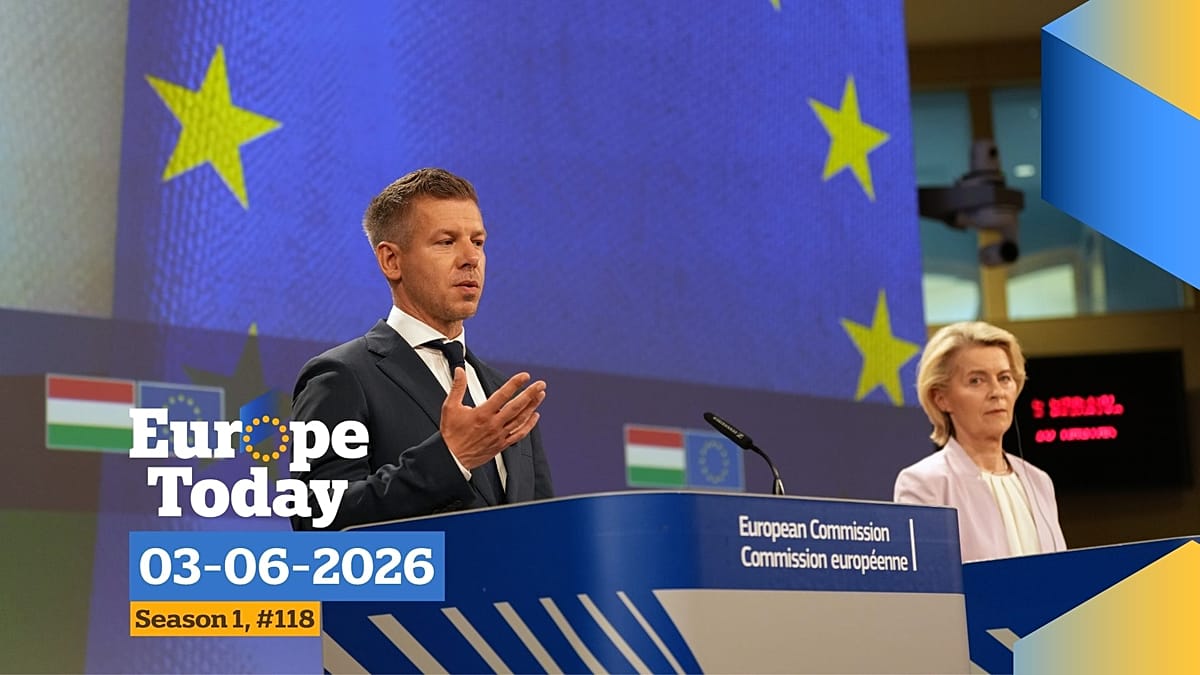
Budapest appears to be softening its stance on Ukraine's European Union accession process, with Hungarian officials indicating they could lift their veto on opening formal talks if Kyiv agrees to protect the rights of the Hungarian community in western Ukraine. The shift comes as the EU prepares another package of sanctions against Russia, keeping pressure on Moscow over its full-scale invasion.
Minority Rights as a Bargaining Chip
For months, Hungary has blocked the start of Ukraine's EU accession negotiations, citing concerns over the treatment of the ethnic Hungarian minority in Ukraine's Zakarpattia region. Prime Minister Viktor Orbán's government has demanded that Kyiv restore language and education rights that were curtailed after 2015. Now, sources close to the negotiations suggest a deal may be within reach: if Ukraine enacts legal guarantees for minority protections, Hungary would drop its objection.
This development is significant because it removes one of the main obstacles to Ukraine's EU path. The European Commission has already recommended opening accession talks, but unanimity among all 27 member states is required. Hungary's veto has been the primary bottleneck. A compromise would allow the EU to move forward with the formal start of negotiations, a symbolic and practical boost for Ukraine as it fights to defend its sovereignty.
Ukraine's President Volodymyr Zelenskyy has acknowledged the need to address minority concerns, though any changes must be carefully calibrated to avoid alienating nationalist sentiment at home. The Hungarian community in Ukraine numbers roughly 150,000 people, concentrated near the border with Hungary. Their rights have been a recurring issue in bilateral relations, even before Russia's full-scale invasion in February 2022.
EU Prepares 14th Sanctions Package
In parallel, the European Union is finalizing its 14th sanctions package against Russia, targeting sectors that have so far evaded restrictions. The new measures are expected to focus on closing loopholes in the oil price cap, cracking down on the shadow fleet of tankers transporting Russian crude, and expanding the list of individuals and entities subject to asset freezes.
David O'Sullivan, the EU's sanctions envoy, has been instrumental in coordinating enforcement across member states. In a recent interview, he emphasized that the bloc is determined to maintain pressure on Moscow. "We are seeing some evasion, but overall the sanctions are working," O'Sullivan said. "The Russian economy is under strain, and we are constantly adapting our measures to make them more effective."
The new package also targets Belarus, which has served as a staging ground for Russian attacks on Ukraine. European officials are pushing for stricter export controls on dual-use goods that could be used in weapons production. The EU has already imposed 13 rounds of sanctions since February 2022, targeting nearly 2,000 individuals and entities.
Broader European Security Context
The diplomatic maneuvering over Ukraine's EU accession and the sanctions regime unfolds against a backdrop of heightened security concerns across the continent. Recent weeks have seen a Russian drone barrage hit a residential area in Kharkiv, underscoring the ongoing threat to civilian infrastructure. Meanwhile, European leaders have signaled a willingness to join Ukraine peace talks, but only after a ceasefire is in place.
In a separate development, France detained a tanker linked to an Iranian network moving Russian oil, part of a broader effort to enforce sanctions and disrupt illicit trade. The vessel was intercepted off the coast of Brittany, highlighting the EU's growing capacity to police maritime sanctions evasion.
The combination of Hungary's potential compromise on EU accession talks and the new sanctions package suggests that European unity on Ukraine remains intact, despite occasional friction. For Kyiv, the prospect of formal accession negotiations is a powerful morale booster and a signal that the EU's door remains open, even as the war grinds on.
As the European Commission prepares to present its negotiating framework, all eyes will be on Budapest. If a deal on minority rights is finalized, it could pave the way for a historic step in Ukraine's European integration—one that seemed unthinkable just a few years ago.



