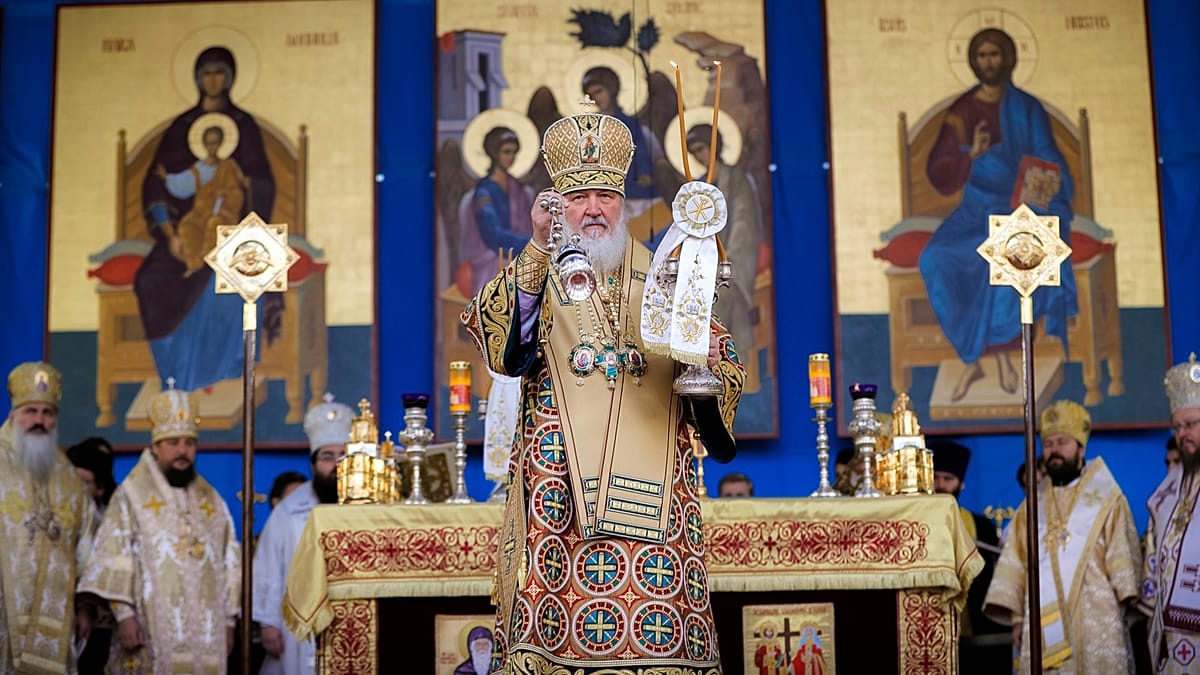
Budapest has indicated it will no longer block European Union sanctions against Patriarch Kirill, the head of the Russian Orthodox Church, according to sources familiar with the matter. The shift, confirmed by officials in Brussels, could clear the way for one of Moscow's most influential religious figures to be added to the bloc's blacklist for his vocal support of the war in Ukraine.
The EU first attempted to sanction Kirill in 2022, accusing him of endorsing the full-scale invasion and spreading revisionist propaganda. At the time, Hungary under former Prime Minister Viktor Orbán vetoed the move, citing concerns over religious freedom. Now, with Orbán replaced by Péter Magyar, Brussels sees an opportunity to revisit the decision.
“Sanctions which would undermine Hungary’s economic stability are an absolute no-go,” Márton Hajdu, chair of the foreign affairs committee in the Hungarian parliament and a close ally of Magyar, told Euronews. “But in cases where the previous government used the power of the Hungarian State to cut private deals, I expect the new government not to block joint EU efforts at increasing the pressure on Russia to end this war.”
A Mini Package Under Preparation
EU ambassadors are set to discuss a so-called “mini” sanctions package this week, targeting roughly ten individuals who were previously shielded by Orbán’s government. Among those who could be added or re-added are Sports Minister Mikhail Degtyaryov and oligarch Viatcheslav Kantor, both of whom were initially listed but later removed at Hungary's insistence.
“Revising names is not unusual,” an EU diplomatic source noted. The list of proposed designees can shift as negotiations proceed, given that sanctions require unanimity among member states. Slovak Prime Minister Robert Fico, who has also used his veto to protect certain Russian individuals, was not in office during the 2022 attempt to blacklist Kirill.
The package also targets a handful of vessels from Russia's so-called “shadow fleet,” which Moscow uses to evade Western restrictions on oil sales. These ships have been accused of sailing under false flags, carrying substandard insurance, engaging in sabotage, and posing environmental risks. In recent months, France, Sweden, and Poland have boarded suspected vessels, signaling a tougher stance on circumvention.
High Representative Kaja Kallas has urged the EU to act more swiftly against the shadow fleet, without waiting for a comprehensive sanctions package. “We have also taken the approach that we are working regarding the sanctions on the 'shadow fleet' on a rolling basis, so we are not putting together big packages, but as soon as we know about the ships, we are going to put them on,” she said last month.
Seizing the Post-Orbán Momentum
Magyar, who has sought to distance himself from Orbán's frequent use of the veto, appears eager to rebuild trust with Brussels. The shift comes as the EU considers extending the renewal period for sanctions from six months to one year—a change Orbán vehemently opposed because it would reduce his leverage.
The 21st package of economic sanctions is expected to be presented in June, with final approval targeted by 15 July. Ambassadors will hold a first discussion on the mini package this Friday, aiming for adoption at the Foreign Affairs Council on 15 June.
The potential listing of Patriarch Kirill marks a significant symbolic step. As head of the Russian Orthodox Church, Kirill has blessed Russian troops and described the war as a metaphysical struggle, drawing condemnation from religious leaders worldwide. His inclusion on the EU blacklist would freeze any assets held in the bloc and impose a travel ban.
Meanwhile, the EU's broader sanctions regime continues to evolve. The bloc has already imposed 20 rounds of measures targeting individuals, entities, and sectors of the Russian economy. The new approach of adding shadow fleet vessels on a rolling basis represents a procedural innovation designed to keep pace with Moscow's evasion tactics.
For Hungary, the decision signals a recalibration of foreign policy under Magyar, who has promised a more cooperative stance with EU partners. Whether this extends to other contentious issues, such as the rule of law or migration, remains to be seen. But for now, the signal on Kirill suggests a tangible departure from the Orbán era.