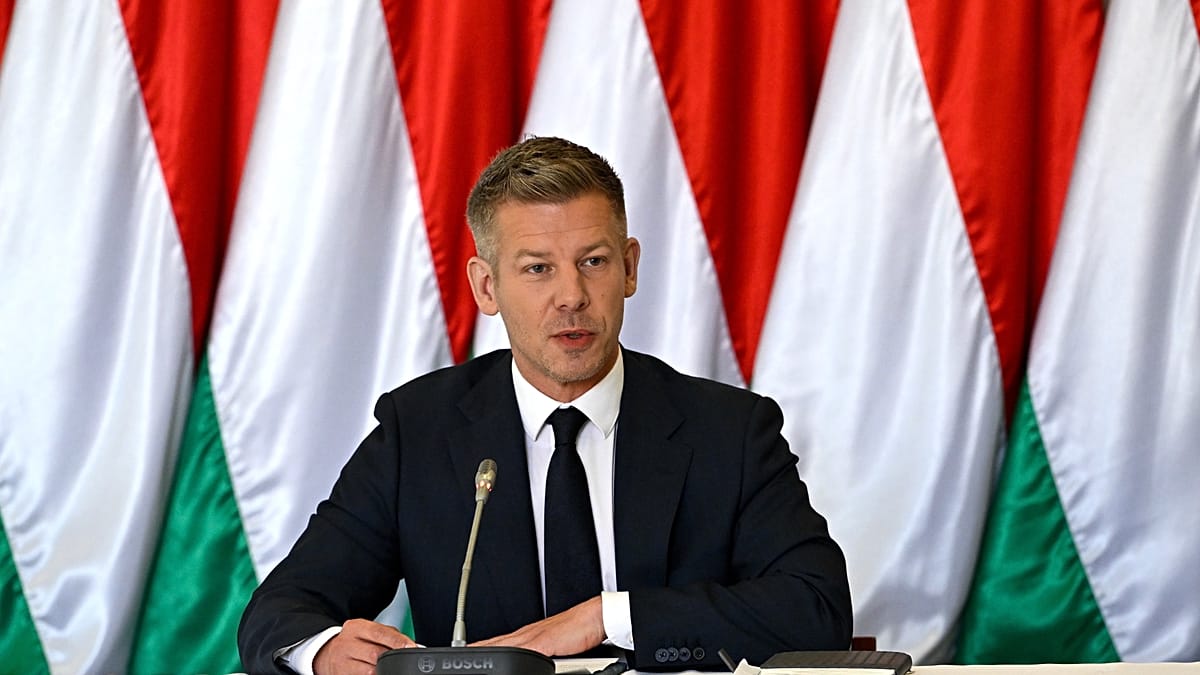
Budapest has indicated a willingness to engage constructively on Ukraine's European Union accession process, marking a significant departure from the obstructionist stance of the previous administration. The Hungarian ambassador to the EU told a meeting of member state envoys last Wednesday that the government of Prime Minister Péter Magyar is ready to work toward concrete outcomes, according to multiple diplomatic sources.
Under Viktor Orbán, Hungary blocked the opening of the first cluster of accession negotiations with Ukraine, which covers fundamental reforms in rule of law, public administration, and financial control. That veto has been a persistent irritant in EU relations and a source of frustration for Kyiv, which has been pressing for rapid progress amid the ongoing war with Russia.
Minority Rights at the Core of the Dispute
The central obstacle has been the status of the ethnic Hungarian minority in Ukraine's western region of Transcarpathia, home to roughly 150,000 people of Hungarian descent. The previous Orbán government drew up an 11-point plan demanding specific guarantees for language, education, and cultural rights for this community. Budapest has insisted that implementing these measures is a prerequisite for opening the first negotiating chapter with Ukraine.
Márton Hajdu, chair of the foreign affairs committee in Hungary's newly elected parliament from the Tisza Party, told Euronews that the condition remains clear: “We want legally guaranteed language, education, and cultural rights for the Hungarian minority in Transcarpathia as soon as possible.”
On Monday, Magyar announced on Facebook that Budapest had initiated technical consultations with the Ukrainian government to address these issues. He also revealed a phone conversation with European Council President António Costa, who, according to Magyar, had made clear to Ukrainian President Volodymyr Zelenskyy that “any further steps must be preceded by respect for the rights of the Hungarian minority living in Ukraine.”
Magyar has proposed meeting Zelenskyy in early June in Berehove, a town in Zakarpattia Oblast considered the cultural heart of the Hungarian community. Zelenskyy met with Hungarian representatives on 9 April, just days before the Hungarian elections, and described ethnic Hungarians as “our citizens, just like everyone else,” a remark Budapest has interpreted as constructive.
Brussels Seeks a Path Forward
The European Union has made minority rights a key benchmark for Ukraine's accession process. Kyiv has already taken steps to improve relations with other neighbours, including introducing a national day for the Romanian language in March, reciprocating Romania's annual Ukrainian Language Day.
A source close to the Hungarian government, speaking anonymously due to the sensitivity of the matter, indicated that if Ukraine implements the 11-point plan and the Hungarian minority in Transcarpathia approves the outcome, Budapest would likely support opening the first major negotiating chapter. However, the source cautioned that the Orbán government may have included several difficult or politically sensitive demands within the 11 points, describing them as “hidden landmines” that could complicate full implementation.
Ukraine's Foreign Minister Andrii Sybiha called the Hungarian election results a “pivotal moment” for European integration, saying they would give fresh momentum to Kyiv's EU membership bid. Deputy Prime Minister and Foreign Minister Anita Orbán confirmed that expert-level consultations between Hungarian and Ukrainian officials on minority rights would begin shortly.
The issue of Ukraine's enlargement could be on the agenda of the next European Council meeting, where Magyar and Zelenskyy are also expected to meet on the sidelines. However, the office of Council President Costa will only place Ukraine's accession on the agenda if concrete progress can be announced on formally lifting the Hungarian veto, Euronews understands.
Lifting the veto would be only the first step in a long process. Ukraine still needs to meet a wide range of criteria across multiple negotiating chapters, and the EU's enlargement methodology requires unanimous consent from all member states at each stage. But the shift in Budapest's posture represents the most significant diplomatic opening on this issue since the war began.