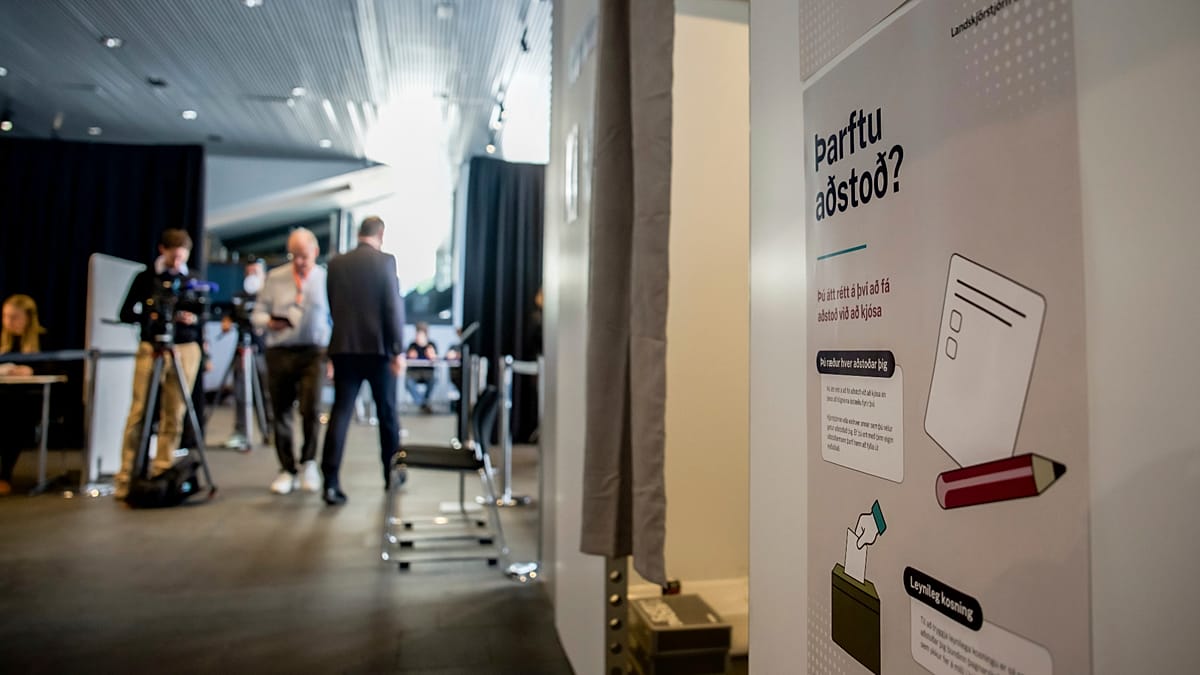
Reykjavík — Polling stations across Iceland closed at 10:00 p.m. local time on Saturday, bringing to an end a high-stakes referendum on the country's future relationship with the European Union. With vote counting now underway, preliminary results are expected overnight, and the outcome remains too close to call.
Icelanders were asked a single question: "Should Iceland resume accession negotiations with the European Union?" The talks, which began after the 2009 financial crisis, were frozen in 2013 following the election of a Eurosceptic government. Saturday's vote was seen as a pivotal moment for the island nation of roughly 370,000 people, which has long balanced its Nordic identity with a cautious approach to EU membership.
According to preliminary figures from local media, voter turnout was higher than, or at least comparable to, the 2024 parliamentary elections, when it reached 80%. That level of engagement suggests the issue has galvanised the electorate, with many Icelanders viewing the decision as a defining choice about their economic and political future.
Opinion polls in the final days before the vote showed a neck-and-neck race, with the pro-European camp's advantage steadily eroding. The narrow margin has left both sides bracing for a long night of counting, and the result could hinge on a few thousand votes.
What the vote means for Reykjavík and Brussels
The referendum is not legally binding, but it carries significant political weight. A vote in favour of resuming talks would give the Icelandic government a clear mandate to reopen negotiations with Brussels, potentially leading to full membership within a decade. A rejection, on the other hand, would likely shelve any EU ambitions for the foreseeable future, reinforcing Iceland's current status as a member of the European Economic Area and the Schengen area.
For the EU, the outcome matters beyond Iceland's shores. Iceland is a key partner in the Arctic and a vital ally on fisheries and climate policy. Its membership would extend the union's reach into the North Atlantic, a region of growing strategic importance as melting ice opens new shipping routes and resource opportunities. The vote could also have ripple effects in neighbouring Norway, which has long debated its own EU ties, and in the wider Nordic-Baltic region.
Pro-EU campaigners have argued that membership would provide economic stability, access to the single market's full benefits, and a stronger voice in European affairs. They point to the success of other small Nordic states, such as Finland and Sweden, which have thrived as EU members. Opponents, however, warn that Brussels would impose quotas on Iceland's prized fishing grounds, undermine its agricultural sector, and erode national sovereignty.
The fishing industry, which accounts for a significant share of Iceland's exports, has been a central issue in the campaign. Many in the sector fear that EU membership would force Iceland to open its waters to other member states, a prospect that has historically fuelled Euroscepticism. The referendum's outcome will therefore be closely watched not only in Reykjavík but also in Brussels, where officials have remained cautious, saying they would respect the will of the Icelandic people.
As counting continues, both camps have urged patience. The final result is expected to be announced in the early hours of Sunday morning. Whatever the outcome, the referendum has already demonstrated that Iceland's relationship with Europe is far from settled, and that the question of EU membership remains a live and divisive issue in the country's politics.