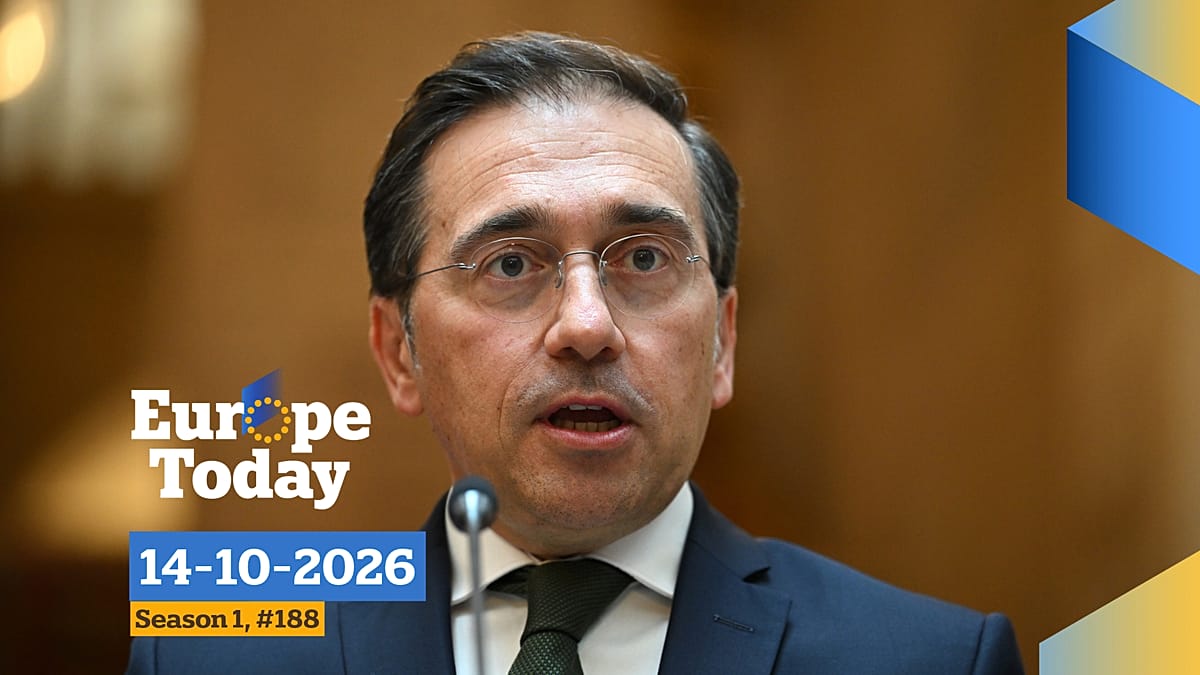
Warsaw — In an exclusive interview on the sidelines of the Warsaw Security Forum, Spanish Foreign Minister José Manuel Albares spoke with Euronews about the multiple challenges confronting Madrid. From the ongoing war in Ukraine to a domestic housing crisis and the uncertainty of snap elections, Spain's diplomatic balancing act has rarely been more demanding.
Albares acknowledged the strain of the war on European security, stressing that Spain remains firmly committed to supporting Ukraine. "We are in a situation where the rules-based international order is being challenged," he said, adding that Madrid's backing for Kyiv is unwavering. The minister also pointed to the recent drone attacks on commercial vessels in the Black Sea as evidence of Russia's escalating aggression, which he described as a threat to global shipping and food security.
Housing crisis and snap elections
At home, Spain is grappling with a severe housing affordability crisis, a topic that has moved to the top of the political agenda. Albares acknowledged the problem, noting that the government is working on measures to increase supply and regulate rental prices. "Housing is a fundamental right, and we are taking steps to ensure that young people and families can afford a home," he said.
The political landscape is further complicated by the possibility of snap elections. Prime Minister Pedro Sánchez has called for an early vote, and Albares defended the decision as necessary to ensure stability. "Democracy is about listening to the people, and we are ready to face the verdict of the ballot box," he remarked.
Ceuta and Morocco
Renewed tension with Morocco over the enclave of Ceuta has also put Madrid on edge. The minister stressed that Spain's sovereignty over Ceuta and Melilla is non-negotiable, while expressing a desire for constructive dialogue with Rabat. "We are neighbors, and we must find ways to cooperate, but our territorial integrity is not up for discussion," Albares said. The issue has been a recurring flashpoint, and the recent warm welcome for the Spanish royals in Ceuta underscored the deep ties between the enclave and the mainland.
Black Sea drone attacks
Meanwhile, the Black Sea has become a new theatre of Russian aggression. Two commercial vessels were struck by drones off Bulgaria's coast, with one sinking, according to Bulgarian Prime Minister. The attacks are part of a series of incidents targeting ships navigating these waters, raising fears for maritime safety and grain exports. Angela Skujins, reporting for Euronews, noted that these strikes are a direct challenge to international law and the freedom of navigation.
EU-China reset
In trade news, EU Trade Commissioner Maroš Šefčovič returned from talks in Beijing with what some see as modest progress. Bernd Lange, chair of the European Parliament's International Trade Committee, cautioned against calling it a breakthrough. "We need to be realistic. There are positive signals, but the structural issues remain," he said. The EU is seeking a more balanced relationship with China, addressing market access and state subsidies, but expectations are tempered.
Ireland's EU budget compromise
Ahead of tomorrow's crucial EU summit, Irish minister Neale Richmond defended his country's compromise on the next seven-year budget. The draft, which was cut by €141 billion from the original €1.7 trillion proposal, has sparked debate among member states. Richmond argued that the compromise is a necessary step to secure a deal, balancing the needs of net contributors and recipients. "We have to find common ground, and this proposal reflects that," he said.
As Europe faces a complex web of security, economic, and political challenges, the decisions made in the coming days will shape the continent's trajectory. With the war in Ukraine, hybrid threats, and internal pressures, European leaders are under intense scrutiny. The NATO warning about hybrid attacks adds another layer of urgency to the discussions.
For Spain, the path forward is fraught with difficulty, but Albares remains confident. "We are a strong democracy, and we will overcome these challenges together," he concluded.