KYIV — A Russian ballistic missile struck a power plant in Kyiv on Tuesday evening, President Volodymyr Zelenskyy said, with no advance warning from Western allies and despite US President Donald Trump's talk of an "energy ceasefire." The attack underscores the fragility of any truce and the deepening rift between Kyiv and Washington.
Ukraine has long relied on Western intelligence, particularly from the United States, to detect incoming Russian strikes. The absence of a heads-up this time is rare and raises troubling questions about whether the Trump administration has quietly limited intelligence-sharing with Kyiv, especially after the recent US–Russia diesel deal. Trump denied any cut-off when pressed by reporters on Tuesday night.
London and Brussels close ranks
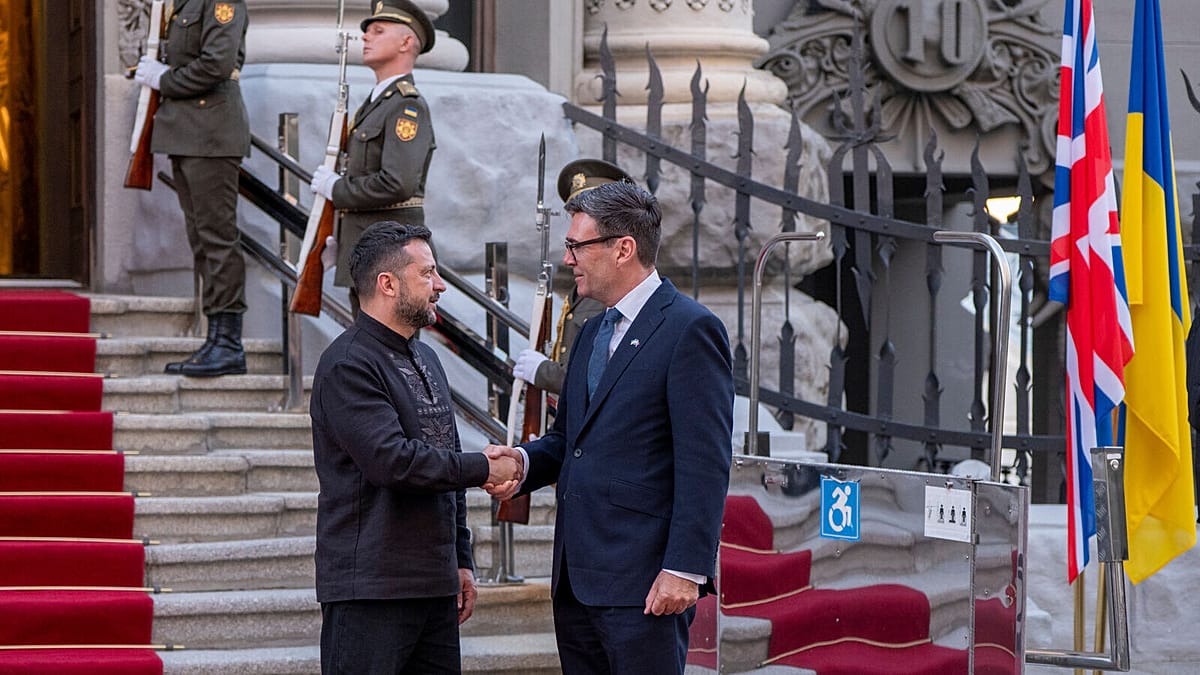
Zelenskyy is now looking to Europe. On Wednesday he meets UK Prime Minister Andy Burnham in London, a marked shift from the cautious approach of Burnham's predecessor, who was careful not to alienate Trump. Downing Street said Burnham will pledge tighter sanctions and increased military and financial support for Ukraine in the coming weeks, and the UK has promised to speed up deliveries of Lightweight Multirole Missiles (LMMs) to counter jet-powered Russian drones.
Yet Zelenskyy is not slamming the door on Washington. He told reporters that Kyiv has proposed fresh talks with the US in the coming days, sending proposals to Steve Witkoff and Jared Kushner. "We are ready to meet in the coming days," he said.
On Friday, Zelenskyy will join EU leaders in person for the second day of the European Council summit in Brussels, where he has lined up several additional meetings. EU officials and diplomats are confident the 27 leaders will present a united front against Trump's go-it-alone diplomacy. The summit conclusions may even express displeasure over the diesel deal, though that depends on consensus.
"We think the deal is regrettable. It's against the strategy we've been following for the past four years to put pressure on Russia and disconnect from Russian energy sources," a senior EU official said. "We have seen that dialogue with the US doesn't always lead to full agreement, but it's always better than not having dialogue."
The European Commission is also preparing new disbursements under the €90 billion support loan this week, according to sources. Zelenskyy could hold his first bilateral meeting with Hungarian Prime Minister Péter Magyar, following a breakthrough on minority rights that has eased the path for Ukraine's EU accession talks.
Air defence shortfalls and frozen assets
Pressure is mounting on European nations to provide Kyiv with the air defence missiles it desperately needs. Spain and Greece, both of which hold such missiles in their stockpiles, have so far resisted. Speaking at the Warsaw Security Conference, Spanish Foreign Minister José Manuel Albares told our EU editor Maria Tadeo: "I can guarantee you that we have done as much as we can every time and we will continue to do it."
Albares also revived the idea of channelling immobilised Russian state assets into a loan for Ukraine, a proposal that was shelved months ago due to Belgian opposition. "Why should we put our taxpayer money when there are frozen assets and we know that there will have to be reparations at the end of the war?" he asked.
Black Sea drone threat spreads
Meanwhile, European and NATO allies are scrambling to respond after drones struck two more vessels in the Black Sea off Bulgaria's coast early Tuesday. Bulgarian Prime Minister Rumen Radev called the attacks "absolutely unacceptable," adding that "logic suggests" Russia stands to benefit, though he conceded there is no conclusive evidence of attribution. The incident follows a series of drone attacks off the Romanian and Bulgarian coasts last week, including one that proved fatal.
The threat is also hitting Moldova. Vitalie Micov, Chief of Staff of the Moldovan National Army, told our colleague Angela Skujins that a drone enters Moldovan airspace almost every two or three days, some laden with explosives. "They are also having a significant impact on the morale of the civil society and impacting the safety and security within the region," he said.
The issue will feature prominently at the EU summit, where leaders are expected to endorse measures to bolster Europe's eastern flank and advance counter-drone infrastructure projects. EU foreign policy chief Kaja Kallas and European Commission President Ursula von der Leyen are also pushing for a long-touted anti-hybrid warfare toolbox.
As Europe rallies around Kyiv, the question remains whether words will translate into the concrete military support Ukraine needs — and whether Washington's wavering will force the continent to step up decisively. For now, Zelenskyy is betting that European unity can fill the gap.