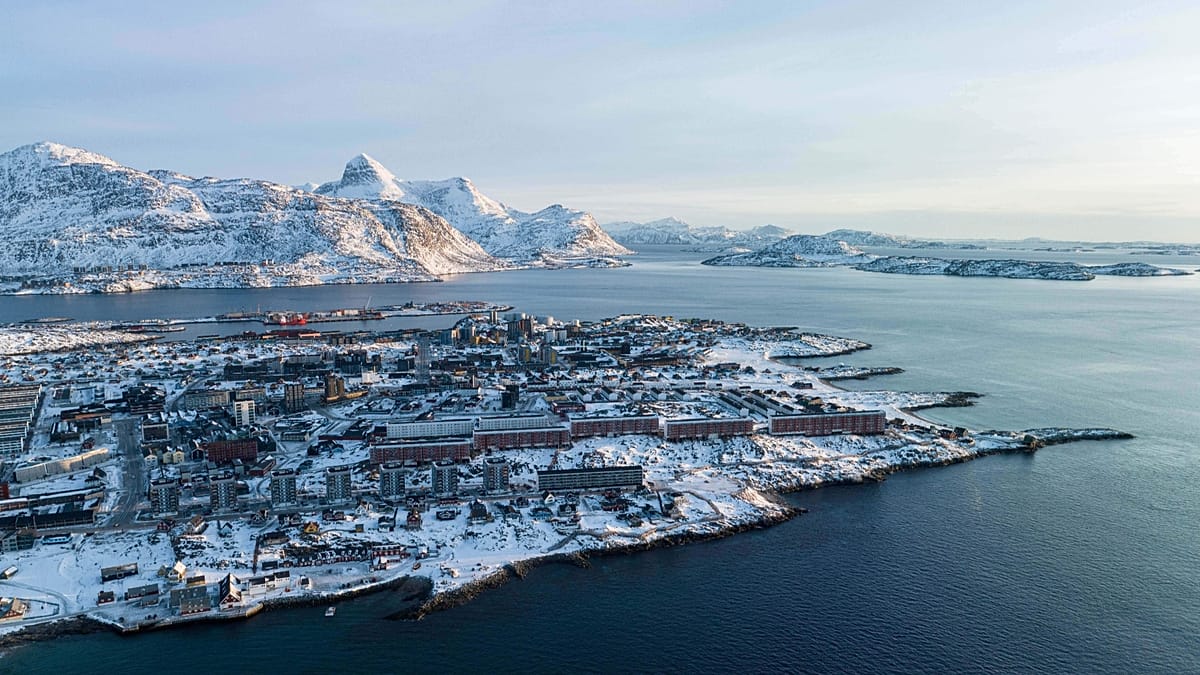
US President Donald Trump has described Greenland as "second to none" for the security of both the United States and Europe, arguing that any future attack on America would have to cross the Arctic island. In a post on his Truth Social platform, Trump said Greenland, "from a Security Purpose in the Defence and Offence of both the United States of America, and Europe, is second to none." He added that any future attacks on the US would have to come across Greenland, "where our Defence will routinely knock down drones, missiles, or any other form of weapon not yet even conceived."
The remarks come weeks after Washington signed a security agreement with the leaders of Greenland and Denmark, a deal that allows the US to build two new military bases on the island. The agreement, signed on the sidelines of the UN General Assembly in New York in September, permits the US to modernise and enlarge its existing Pituffik Space Base and establish new defence areas at Narsarsuaq and Mestersvig. It also grants American forces "free access to and movement between" defence areas across Greenland, including territorial waters, by land, air and sea.
Strategic importance and natural resources
Greenland sits on the shortest missile route between Russia and the United States, making it a key location for Trump's proposed "Golden Dome" missile defence shield. The island also holds untapped rare earth deposits and is becoming increasingly important as melting polar ice opens new shipping routes. Trump said that "massive Oil, Gas, and Mineral Exploration is getting ready to begin in our new and beautiful Greenland!" Citing experts, he claimed that "the amount of easily available Oil is far greater than that of almost...anywhere in the World." He did not provide details of prospective American involvement.
The announcement has raised concerns among Greenlandic authorities and residents. In August, media reports of a US oil company's preparatory operations in a remote region of eastern Greenland left locals uneasy. The island's government has previously expressed caution about large-scale resource extraction, balancing economic opportunities with environmental and social impacts.
The security deal was welcomed by Danish Prime Minister Mette Frederiksen and Greenland's Premier Jens-Frederik Nielsen. Frederiksen said the agreement "strengthens our common security in the Arctic and the North Atlantic Area," while Nielsen called it "to the benefit of us all." The deal stopped short of Trump's earlier threat to seize the territory by force, a move he had argued was essential for US national security.
The US military presence on Greenland has fluctuated over the decades. At the height of the Cold War, Washington operated 17 military facilities and had over 10,000 troops on the island. Today, the US runs just one base, Pituffik Space Base, which is used for missile warning, missile defence and space surveillance missions, according to the US Space Force.
Trump's latest comments come amid broader discussions about European security and the role of the Arctic in transatlantic defence. The region has gained strategic importance as Russia expands its military capabilities in the High North. The deal with Greenland and Denmark is seen as a step towards strengthening NATO's northern flank, though some European officials have expressed caution about the US approach.
For Copenhagen and Nuuk, the agreement represents a pragmatic compromise. Denmark, a NATO member, has long cooperated with the US on Arctic defence, but the prospect of a more assertive American presence has sparked debate in the Danish parliament. Greenland, which enjoys home rule, has been wary of being drawn into great-power rivalry, yet its leaders recognise the economic potential of mineral and energy resources.
The coming months will show how the security arrangement translates into practice. The US has yet to announce a timeline for construction at the new bases, and the extent of American involvement in resource extraction remains unclear. What is certain is that Greenland's strategic value is rising, and both Washington and European capitals are paying closer attention to the Arctic.