In the heart of the Spreewald, a UNESCO-recognised biosphere reserve southeast of Berlin, the village of Lehde is defined by water. With more than 200 small bridges and canals crisscrossing the area, many homes are accessible only by boat. For 129 years, the German postal service has adapted to this landscape by delivering mail by barge — a tradition that continues today under the steady hand of postal worker Andrea Bunar.
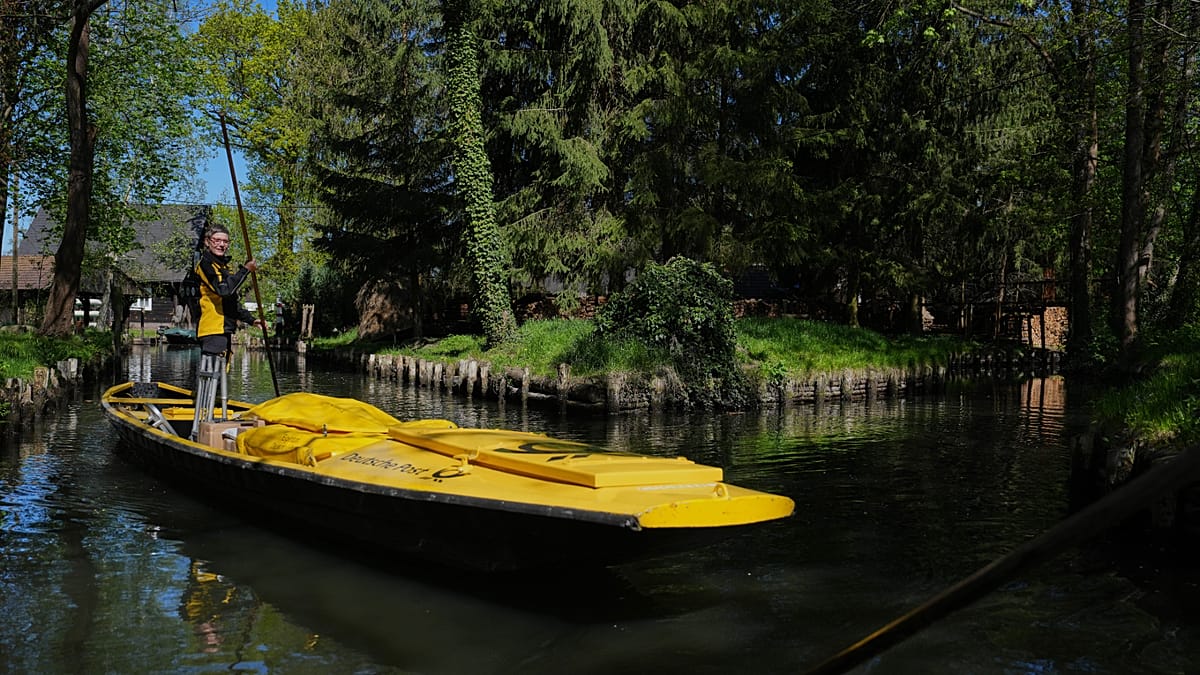
Bunar, who took over the route in 2023, navigates the narrow waterways in a flat-bottomed wooden barge, stacking letters and parcels alongside the occasional package of groceries for elderly residents. The service is not a tourist attraction but a functional necessity: without it, many households in Lehde would have no reliable mail delivery. The tradition dates back to 1896, when the Imperial Postal Service first assigned a boat to the village, and it has operated every year since, through two world wars, German division, and reunification.
A Living Link to the Past
The Spreewald's canal network was originally built for peat transport and logging, but over time it became the backbone of daily life in isolated settlements. Today, the mail boat is one of the few remaining regular boat services in Germany that operates as a public utility rather than a leisure activity. Bunar's route covers roughly 12 kilometres of canals each day, stopping at wooden jetties where residents wait with their outgoing letters.
“The people here rely on this service,” Bunar told local media. “It’s not just about mail — it’s about staying connected.” Her predecessor, who worked the route for 27 years, trained her on the currents, low bridges, and seasonal ice that can make winter deliveries treacherous. The barge is equipped with a small electric motor to supplement the traditional pole, but the principle remains unchanged: slow, steady, and waterborne.
The tradition has become a point of pride for the region, which draws visitors curious to see a working postal boat in action. Unlike the barefoot trails of the Black Forest, which offer a sensory escape, the Spreewald mail boat is a functional piece of infrastructure that also serves as a cultural landmark. Local tourism officials note that the boat appears on postcards and in travel guides, but they emphasise that its primary purpose is practical.
Broader Context: Tradition vs. Modernisation
Germany’s postal service, now part of the privatised Deutsche Post DHL Group, has faced pressure in recent years to cut costs and digitise. Yet the Lehde route has survived because of its unique geography and strong local advocacy. The village’s 700 residents, many of whom are elderly, would face significant hardship if the service were withdrawn. The mail boat is also used to deliver medications, official documents, and small goods ordered online — a reminder that even in an era of email and e-commerce, physical delivery remains essential in rural Europe.
The tradition echoes similar waterborne postal services elsewhere in Europe, such as the mail boats on the canals of Venice or the floating post offices on Lake Constance. But the Spreewald route is notable for its uninterrupted history and its integration into a UNESCO-protected landscape. As Germany debates rising energy costs and inflation, the mail boat’s low-carbon operation — using electric propulsion and manual poling — offers a small-scale example of sustainable logistics.
For now, Andrea Bunar plans to keep the tradition alive as long as she can. “It’s a special job,” she said. “You get to know everyone, and you see the seasons change from the water. That’s something you don’t get in a van.”