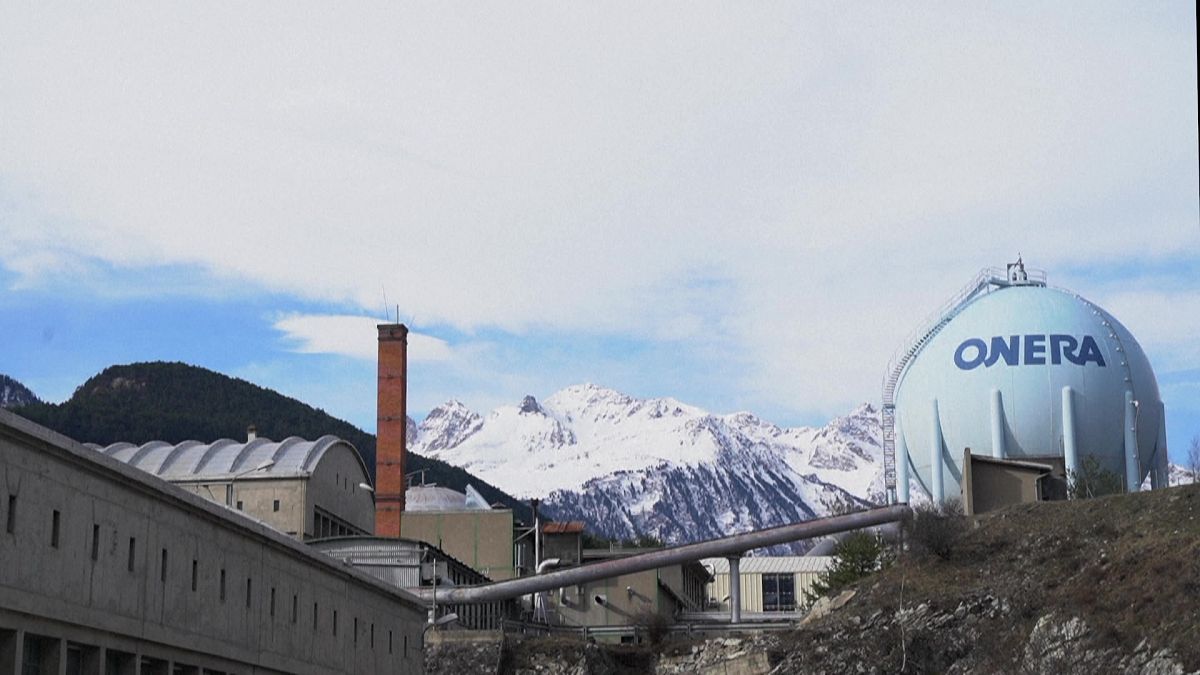
In a quiet valley of the French Alps, beneath giant domes and grey tubes, engineers are pushing the boundaries of aerospace technology. The ONERA research centre in Modane, nestled in the Maurienne valley, houses some of the world's largest wind tunnels, which have been operational for 75 years. These tunnels simulate flight conditions for new aircraft and missile designs, playing a critical role in European aerospace development.
Wind tunnels are essentially large tubes that generate controlled airflow—continuous or gusty—to replicate the aerodynamic forces an aircraft experiences in flight. At Modane, models of iconic aircraft such as the Concorde, the Rafale, the Airbus A380, the Mirage, and the Falcon have all undergone rigorous testing. The facility can expose these models to winds reaching Mach 12—nearly 15,000 km/h—for hours, measuring acoustics and resistance to pressure.
A Hub for European Aerospace Sovereignty
As the aviation industry seeks to reduce carbon emissions and France advances new military projects spurred by the war in Ukraine, demand for these wind tunnels has surged. The facility, run by the French national aerospace research centre (ONERA), is now at full capacity, with almost all of its test slots booked for the next four to five years. "There isn't a single missile from the nuclear deterrent force that hasn't passed through here," said Bruno Sainjon, ONERA's Director General. "These days, when both civilian and military sovereignty have regained importance, the site has become even more indispensable."
One of the site's four wind tunnels, the S1, measures 24 metres wide and 400 metres long, making it one of the largest in the world. It is uniquely powered by hydraulic energy from two dams, reflecting a commitment to sustainable operations. ONERA says that testing aircraft components in these tunnels allows designers to identify and resolve issues early in the development process.
The tunnels are large enough to accommodate full-scale aircraft and missile models, enabling detailed aerodynamic simulations. "It allows us to experiment with new engine test benches, new models, new test configurations in dimensions that allow us to have a very high measurement precision and resolution because the wind tunnel is large," explained Olivier Guillerme, Head of the Experimentation and Development Unit at ONERA. Engineers can also probe fuel efficiency for nuclear missiles and new fuselage designs.
The advanced transonic systems, capable of reaching the speed of sound, help experts assess whether an aircraft in development will meet noise regulations during flight. This is increasingly important as European cities and airports tighten noise restrictions.
The S1 tunnels have a storied past: they were originally built by the Nazis in the Austrian Alps in 1942. After World War II, the Allies dismantled and transferred them to Modane in 1948. Since then, countless models from major French and European aeronautical programs have been tested here before entering service.
This facility underscores Europe's commitment to maintaining technological independence in aerospace, a sector where sovereignty is increasingly contested. As French domestic politics grapple with other challenges, the strategic importance of sites like Modane remains clear. The wind tunnels are not just a relic of Cold War engineering but a vital asset for Europe's future in the skies.