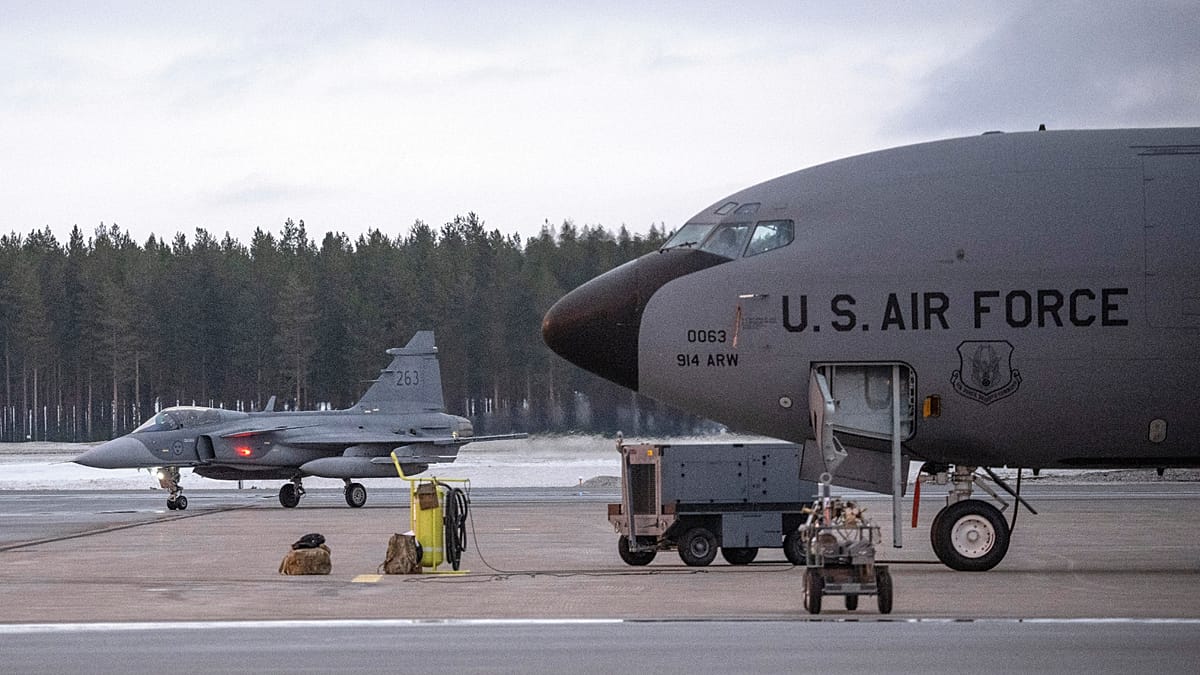
Iran has escalated its diplomatic campaign against Bulgaria, issuing a third warning over Sofia's decision to allow the United States to station a military refuelling aircraft on its territory. The move sharpens a growing rift between Tehran and a NATO member state in the Balkans.
In a statement posted on social media, Iranian Foreign Ministry spokesperson Esmaeil Baghaei said that “those making decisions in Bulgaria must bear responsibility for the dangerous decision to host a US aerial refuelling aircraft at their military bases.” The language echoed earlier warnings, but the timing suggests a deliberate ratcheting of pressure.
Tehran's latest salvo came just days after US President Donald Trump publicly thanked Bulgarian Prime Minister Rumen Radev on his Truth Social platform. “Thank you, Prime Minister Radev! Bulgaria stands with Trump and supports the deployment of a US Air Force base despite Iran’s threats,” Trump wrote. The post amplified a dispute that had previously been confined to diplomatic channels.
The Iranian Foreign Ministry sought to frame the issue as a matter of Bulgarian sovereignty and historical goodwill. “The Bulgarian people know very well that the Iranian people have never had any problems with Bulgaria. For decades, relations between our two nations have been based on mutual respect,” the ministry said. Yet the underlying message was clear: Tehran views the US military presence as a direct threat and expects Sofia to reconsider.
Bulgaria's defence minister plays down risks
Inside Bulgaria, the exchange has stirred public concern, though the government has moved to reassure citizens. Defence Minister Dimitar Stoyanov told Bulgarian broadcaster bTV that he was not worried about the possibility of an Iranian missile attack against Bulgaria, although he acknowledged that “anything is possible.” He argued that the risk of terrorist attacks is now lower than when US military aircraft were stationed at a civilian airport.
Stoyanov's remarks reflect a careful balancing act: acknowledging the theoretical dangers while insisting that the practical threat remains limited. Bulgaria, a member of NATO since 2004, has long hosted allied forces, but the explicit Iranian warnings add a new dimension to the security calculus.
The dispute also highlights the broader geopolitical tensions in the region. Iran's warnings come amid heightened US-Iranian antagonism, and Bulgaria's role as a transit and basing point for US operations has drawn Tehran's ire. The country's strategic location on the Black Sea and its proximity to the Middle East make it a valuable partner for Washington, but also a potential target for Iranian retaliation.
For Sofia, the challenge is to maintain its NATO commitments without provoking an escalation that could destabilise the Balkans. The European Union has so far remained largely silent on the matter, but the incident underscores how transatlantic security arrangements can ripple through smaller member states. As NATO has vowed to defend Bulgaria if attacked, the alliance's collective defence clause may offer some reassurance, but it does not eliminate the diplomatic costs.
Iran's repeated warnings also serve as a reminder of the broader pattern of Iranian pressure on European states. Similar tactics have been used against other countries that host US assets, and Tehran appears to be testing the limits of European solidarity. The question now is whether Bulgaria will stand firm or seek to de-escalate through backchannel diplomacy.
For now, the Bulgarian government shows no sign of backing down. But with each new warning from Tehran, the stakes rise—not just for Sofia, but for the entire European security architecture.