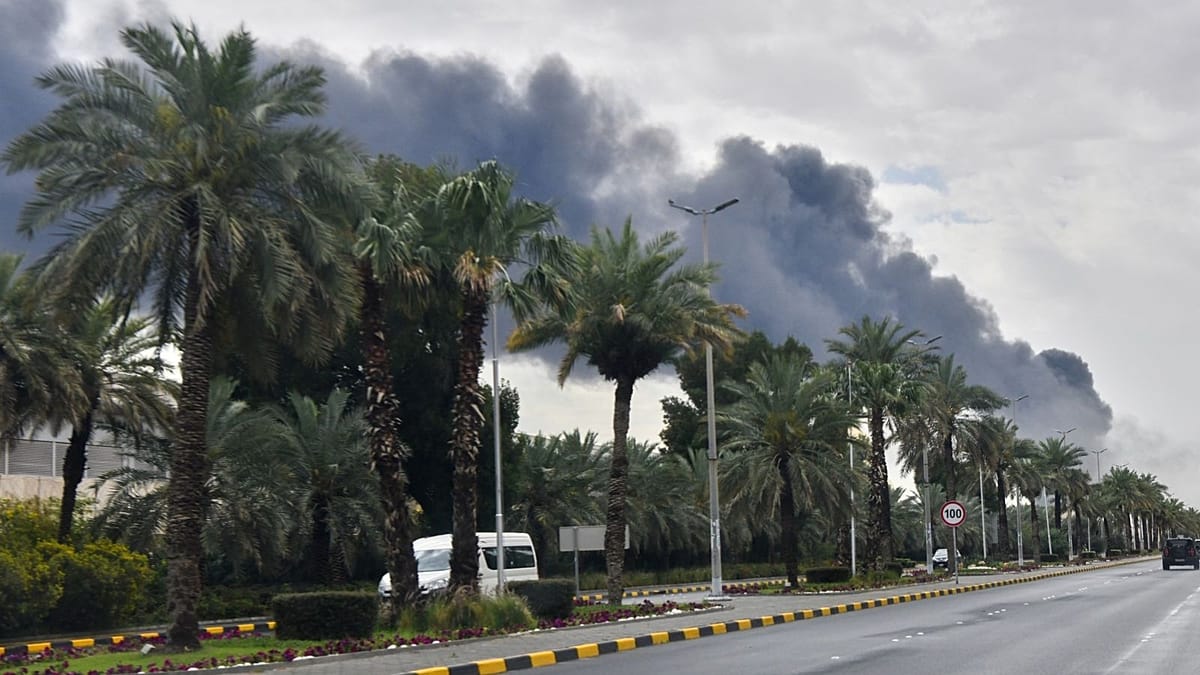
Iran has formally denied any involvement in the drone strike on Kuwaiti military installations that killed two Italian nationals on Thursday, with Foreign Minister Abbas Araghchi dismissing the accusations as baseless and proposing a joint investigation with Rome and Kuwait City.
In a phone call with his Kuwaiti and Italian counterparts, Sheikh Jarrah Jaber Al-Ahmad Al-Sabah and Antonio Tajani, Araghchi described the incident as "suspicious and looks like a precooked recipe for war" in a post on X. He added that Tehran was ready to cooperate to determine the cause of the attack.
The two Italians were employees of the German arms manufacturer Rheinmetall, working at an air defence radar centre when several Iranian drones struck the facility around 2 pm local time (12 pm CET), according to Tajani's statement to the Italian Senate.
Kuwait's ruling Al-Sabah family condemned the attack as "a heinous Iranian aggression" and expressed condolences to Italy. Meanwhile, Abolfazl Shekarchi, a senior spokesperson for Iran's armed forces, flatly denied any Iranian military operation in the region and accused the US and Israel of staging a false flag attack to destabilise the area.
The Iranian embassy in Rome issued a separate statement categorically rejecting any Iranian role and warning against attempts to widen the war. The IRGC-affiliated Fars news agency went further, citing an unnamed security source who alleged that Ukraine had deployed a network of thousands of drones across the region, including in the Kurdistan Region of Iraq, though no evidence was provided.
Gulf states rally against Tehran
Saudi Arabia called for an immediate halt to Iranian attacks and said it held Tehran responsible for the consequences of its actions. Bahrain asked the UN Security Council to hold Iran accountable and demanded compensation for the damage. Qatar warned that repeated strikes on Kuwait risked undermining diplomatic efforts to reduce regional tensions, while the UAE, Syria, and Jordan also condemned the attack.
European Commission President Ursula von der Leyen called for increased pressure on Tehran, stating that Gulf security was directly linked to Europe's security. Her remarks underscore the broader European concern over instability in the region, which has already affected European nationals and companies operating there.
Iran has repeatedly struck Arab Gulf states with drones and missiles since the start of the war, saying it has targeted military bases and US-linked facilities. Kuwait and Bahrain have been among the most frequently targeted countries. Tehran has urged its neighbours not to allow their territory to be used for attacks against Iran.
The Iranian army confirmed a separate drone attack on Kuwait's Ali Al Salem base earlier in November. The latest incident has heightened tensions in the Gulf, with European governments now facing pressure to respond. Italy has called for an urgent international investigation, while the EU is considering additional measures against Iran.
For Europe, the attack is a stark reminder of the fragility of security in the Gulf, a region that remains vital for energy supplies and trade. The deaths of two Italian workers have also reignited debates about the safety of European personnel deployed in conflict zones. As the investigation unfolds, the EU is likely to coordinate with Kuwait and other Gulf partners to ensure accountability and prevent further escalation.



