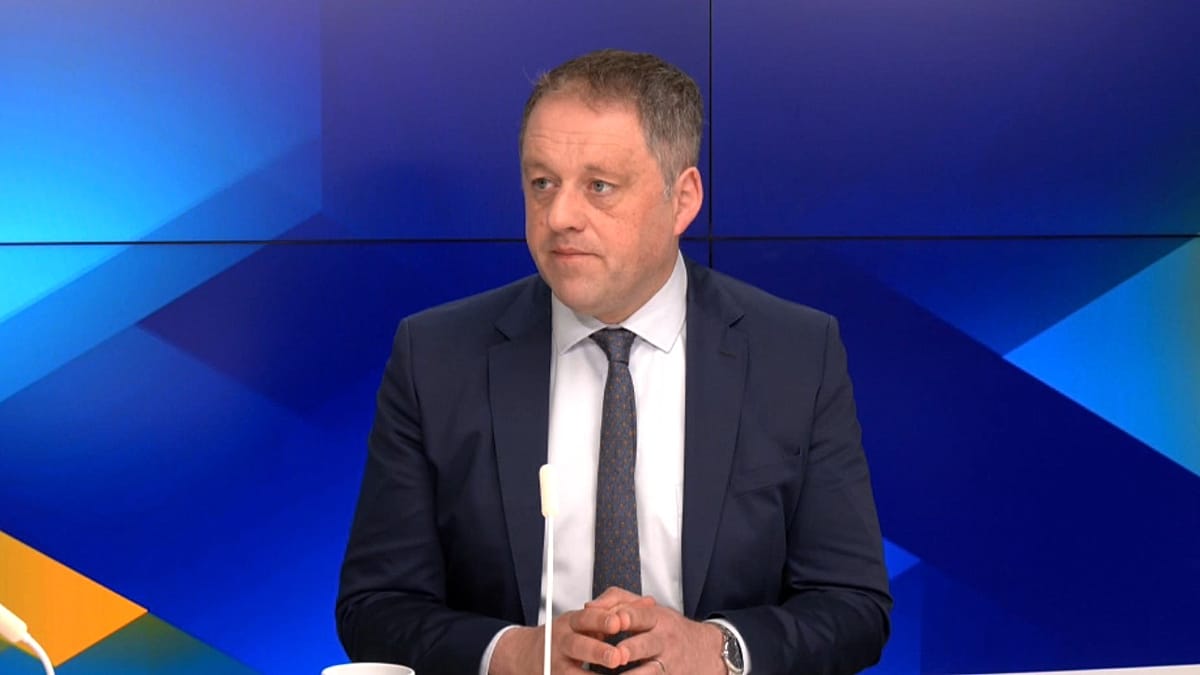
Ireland's Minister of State for European Affairs and Defence, Thomas Byrne, has expressed cautious optimism that the recent political shift in Budapest could pave the way for Ukraine's long-stalled European Union membership negotiations. Speaking on Euronews' Europe Today, Byrne noted that Ukraine remains a top priority for European capitals, even as the conflict enters its third year.
Byrne's remarks come as EU defence ministers convene in Brussels to coordinate strategy on Russia's ongoing invasion and the situation in the Middle East. The minister stressed that the bloc must continue applying pressure on Moscow through multiple channels. “The question is how do we best help Ukraine,” he said. “Whether it’s provision of military material, whether it is through sanctions on Russia, whether it’s through peace talks or indeed the enlargement of the European Union.”
Sanctions and Diplomatic Engagement
EU officials are preparing a 21st package of sanctions against Russia, even as internal debate grows over whether these measures are sufficient to alter the Kremlin's calculus. Byrne acknowledged the limitations but defended the strategy. “We’ve got through 20 packages. Those sanctions have had an impact on the Russian economy, quite a significant impact. They clearly haven’t ended the war, but I think we need to continue putting pressure on Russia and indeed on its people in order that they can somehow put pressure on Vladimir Putin.”
On the question of direct talks with Moscow, Byrne signalled that Ireland would support diplomatic contacts if they could contribute to ending the war. “We’ve supported when individual leaders have contacted Vladimir Putin in the past,” he said. “We think it is important to allow that dialogue to take place if it’s going to end the war.” He stopped short of endorsing a special envoy for direct engagement, calling it “a consideration for another day.”
The minister also welcomed a breakthrough in Brussels on sanctions targeting Israeli settlers accused of violence in the occupied West Bank. The move became possible after Hungary's new government dropped its previous opposition. “I think it’s very, very welcome that Hungary has changed its position on this,” Byrne said. “Nobody disagrees with this now around the European table.”
Budapest's Pivot and Ukraine's Path
Byrne hinted that the political shift in Budapest could have wider implications for EU policy, particularly regarding Ukraine's accession process. “The Hungarian government up to now has blocked the opening of accession talks formally with Ukraine, and that’s something we’d like to see change,” he said. Ireland, which will assume the rotating presidency of the Council of the European Union in July, is expected to play a central role in advancing the enlargement agenda.
The prospect of unblocking Ukraine's membership talks is a significant development, as the EU has struggled to maintain unity on the issue. Hungary's previous government under Viktor Orbán had been a consistent obstacle, citing concerns over minority rights and corruption in Ukraine. The new administration in Budapest appears to be taking a more conciliatory line, raising hopes among EU officials that the accession process can move forward.
Byrne also addressed Ireland's absence from this year's Eurovision Song Contest amid controversy over Israel's participation. He stressed that the decision was made independently by Ireland's public broadcaster RTÉ, not by the government. “We're not Hungary. We don't get involved in telling the media what to do in Ireland,” he insisted. “The independence of RTÉ is something that has been critical and central to our democracy over the decades.”
As the EU prepares for its next round of sanctions and debates the future of enlargement, Byrne's comments reflect a broader hope that the changing political landscape in Budapest could help break the deadlock on Ukraine's membership. With Ireland set to take the helm of the Council in July, Dublin may find itself at the centre of efforts to reshape the continent's geopolitical architecture.