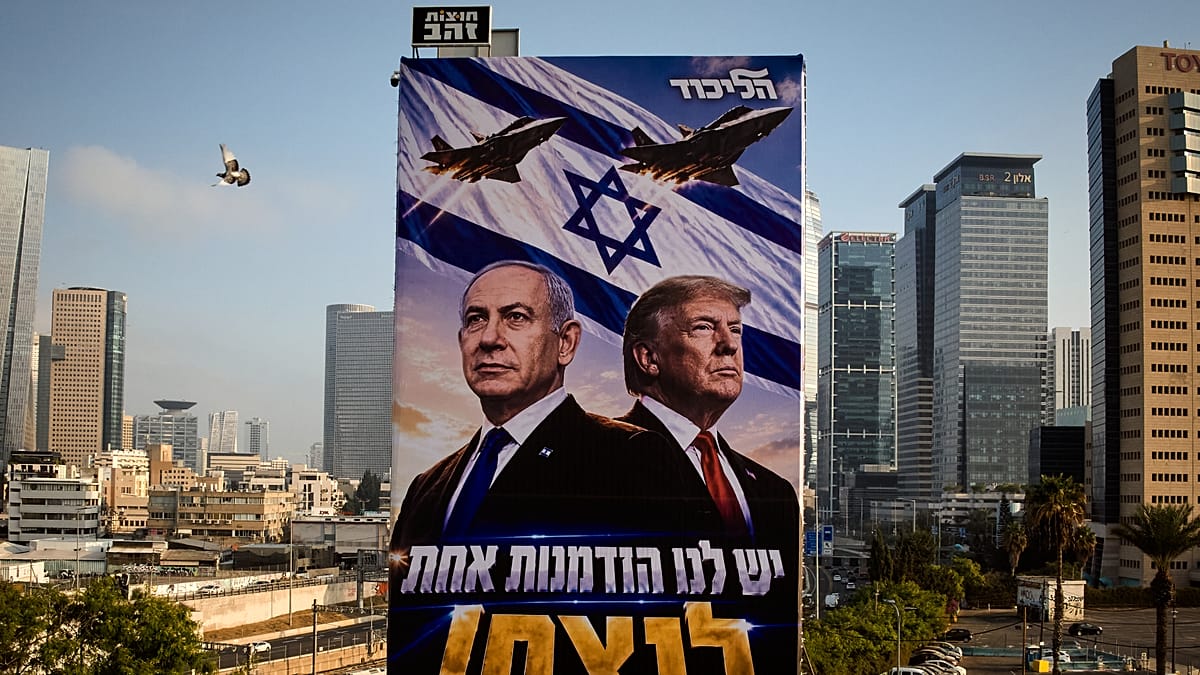
Israelis go to the polls on Tuesday in their first national election since the Hamas attack of 7 October 2023. The vote is widely seen as a referendum on Prime Minister Benjamin Netanyahu, but the campaign has been strikingly quiet about the wars that have defined his tenure.
For a country that has fought on multiple fronts for three years, the conduct of those conflicts has barely been debated. Israel's military operations in Gaza, which led to an international arrest warrant for Netanyahu, have not been a central issue. Nor have the occupations of southern Lebanon and parts of Syria, or the two direct confrontations with Iran. All enjoy broad support among Jewish Israelis.
Instead, the main contenders have clashed over Netanyahu himself: his character, his responsibility for the security failures of 7 October, military exemptions for ultra-Orthodox men, and his 2023 attempt to overhaul the judiciary.
The shadow of 7 October
Reminders of the war are everywhere. Stickers bearing the faces of fallen soldiers line train stations, alongside fading yellow ribbons for the hostages, the last of whom returned under a ceasefire deal last year.
According to the Israel Democracy Institute (IDI), a Jerusalem-based think tank, around 68% of Jewish Israelis say their views on 7 October are central to how they will vote. Among Arab citizens, the figure is 32%, with most naming crime as their main concern.
Netanyahu, Israel's longest-serving prime minister, has pointed to military gains against Hamas, Hezbollah, and Iran while blaming the security establishment for the 7 October failures. His critics say he has dodged accountability by blocking an official state inquiry. They also accuse him of delaying a hostage deal and of failing to secure a decisive victory on any front.
Who serves in the army?
The issue that has stirred the most anger is conscription. Military service is compulsory for most Jewish Israelis, but Netanyahu's coalitions have long depended on ultra-Orthodox parties that insist yeshiva students be exempt.
Resentment has grown as reservists have been called up repeatedly and the army struggles with a manpower shortage. Around 13,000 ultra-Orthodox men turn 18 each year, but fewer than one in ten enlist.
About a quarter of Jewish voters told the IDI the issue would weigh on their choice. IDI president Yohanan Plesner said it was “probably the number one issue” for the anti-Netanyahu camp. The IDI's Tamar Hermann said many Israelis see military service as a “kind of permit to citizenship”.
Netanyahu's main challenger, former army chief Gadi Eisenkot, has pledged to end the de facto exemptions. Eisenkot, a centrist, lost his son and two nephews in the fighting in Gaza.
Judicial overhaul fades as an issue
The judicial overhaul brought hundreds of thousands onto the streets in 2023 and left Israel deeply divided when Hamas attacked. Netanyahu cast it as a check on unelected judges. Opponents saw a power grab by a leader under indictment on corruption charges, which he denies.
After 7 October, much of that protest movement turned its energy towards demanding the hostages' release. Today, only 18% of Jewish Israelis say the overhaul will shape their vote, a sign of what Hermann described as “public fatigue”. It matters more on the left, where 22.5% cite it.
A law passed last year giving the government more say in judicial appointments will only take effect once the next Knesset is sworn in. The opposition bloc has promised to scrap it.
Coalition arithmetic
Israelis vote for party lists rather than individual candidates, and no party is expected to come close to the 61 seats needed for a majority in the 120-seat Knesset. The next prime minister will be whoever can assemble a governing coalition. If no one can, Netanyahu will stay on as caretaker until yet another election.
More than a quarter of Jewish voters say the party leader is a decisive factor. Netanyahu's backers see a seasoned statesman who has stood up to US presidents and refused concessions they believe would endanger Israel. His detractors see him as corrupt.
Eisenkot's supporters cite his decades in uniform and his personal losses. The son of Moroccan Jewish immigrants, he would become Israel's first prime minister of non-European heritage, though he has not campaigned on it.
The missing economic debate
Living costs are a major concern but have barely featured. Research by Sarit Menahem-Carmi of Reichman University's Aaron Institute for Economic Policy found that Israel is now more expensive than wealthy European countries such as Austria, Denmark and Sweden.
The IDI found 38% of Jewish Israelis rank the economy as their first or second priority, rising to 46% among Arab citizens. Netanyahu credits his policies with fuelling growth and a thriving tech sector, while opponents say many have been left behind.
None of the leading candidates has put the cost of the wars at the centre of their campaign. Joseph Zeira, an economics professor at the Hebrew University of Jerusalem, warned that heavy military spending cannot be ignored. “The cost of the conflict is tremendous,” he said.
As Israelis cast their ballots, the outcome will shape not only the country's immediate future but also its relations with Europe and the wider world. The election comes amid broader regional shifts, including Serbia's historic political change and ongoing debates about security and democracy across the continent.