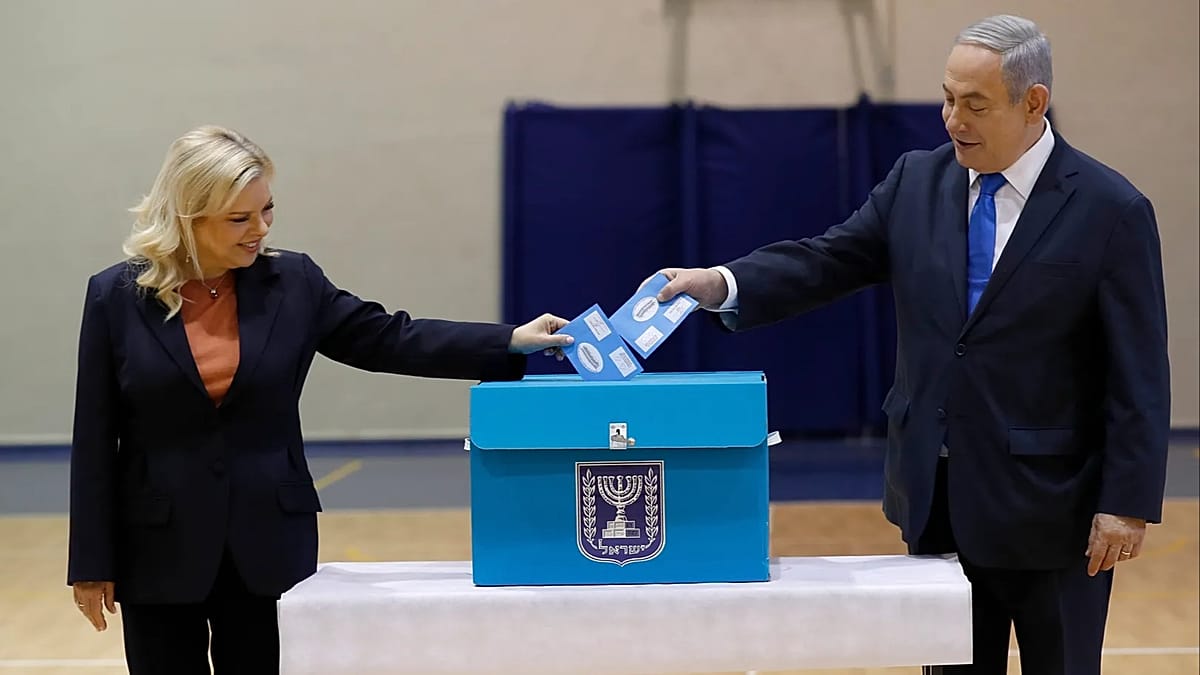
Israel will hold national elections on 27 October, the last date permitted by law, in a vote widely interpreted as a referendum on Prime Minister Benjamin Netanyahu's leadership since the Gaza conflict erupted in 2023. The Knesset is scheduled to end its current term on 17 July, allowing the ruling coalition to complete a full four-year term for the first time in decades.
“Since the current Knesset is expected to serve its full term and the next general election is already set by law for 27 October, with no intention of shortening the legislature's tenure, there is no need to enact a Knesset Dissolution Law in the usual sense,” the parliament stated.
Netanyahu's Coalition and Campaign Strategy
Netanyahu, 76, is already Israel's longest-serving prime minister, having held the office across multiple terms. He has declared his intention to run again. His government—one of the most right-wing coalitions in the country's history—has been racing to pass a series of bills to strengthen his alliance and enter the election from a position of strength.
Last month, Netanyahu said he intended to “establish a broad national government, not a right-wing, not a left-wing government that depends on Arab parties, but a broad national government.” This outreach is widely seen as an attempt to reposition his campaign around national unity rather than ideology.
However, recent polls indicate that a majority of Israelis want him out of office, with former military chief Gadi Eisenkot emerging as his main contender. The Israeli public has been largely critical of the ceasefire that halted the war Israel and the United States launched against Iran in late February, with many viewing the deal between Tehran and Washington as unfavourable to Israel.
There is also lingering discontent over the security failures during Netanyahu's tenure that surrounded the 7 October 2023 attacks by Palestinian militant group Hamas on southern Israel. These events continue to shape the political landscape as the election approaches.
The European Union has maintained a nuanced stance on Israeli policies, including trade bans on Israeli settlements that test the bloc's unity. The outcome of the October election could influence EU-Israel relations, particularly regarding settlement expansion and the broader peace process.
As the campaign unfolds, European observers will be watching closely, given the implications for regional stability and the EU's foreign policy in the Middle East.