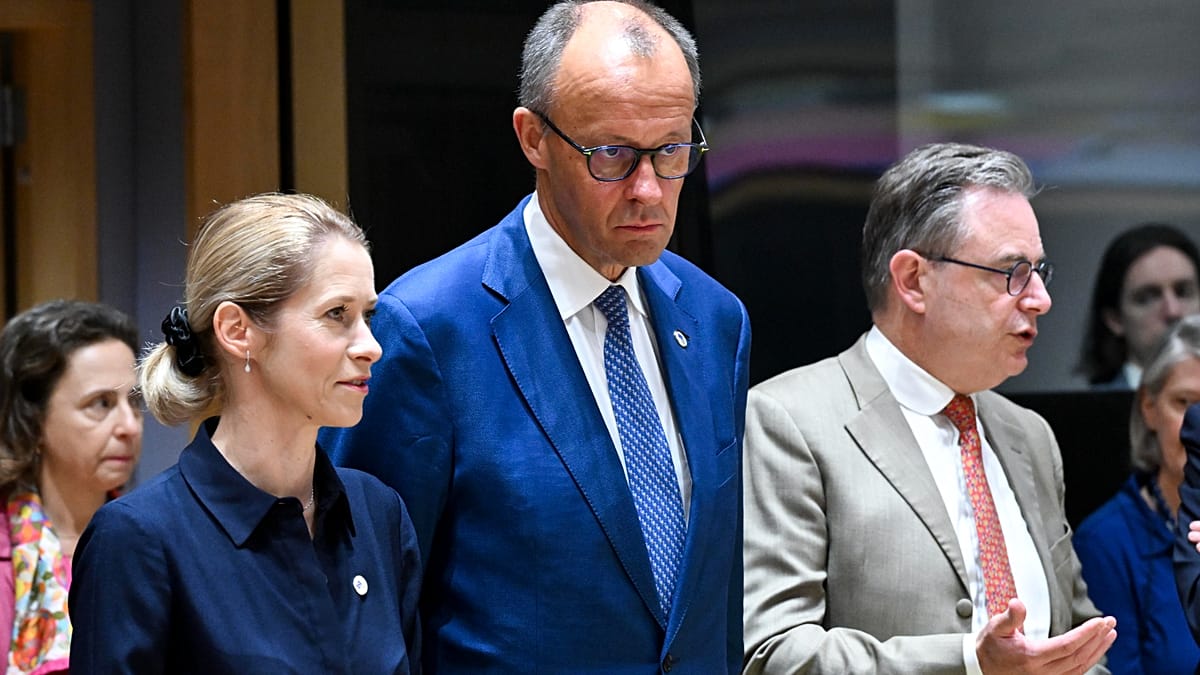
The European Commission has taken a step toward potentially banning trade with Israeli settlements in the occupied Palestinian territories, presenting EU foreign ministers with a set of options that could reshape the bloc's approach to Israel. The move, discussed at Monday's Foreign Affairs Council, is the latest test of unity among the twenty-seven member states on a deeply divisive issue.
The options paper, circulated on Wednesday, outlines three possibilities: a full or partial trade ban, a requirement for export licenses for goods from settlements, or higher tariffs designed to make such products prohibitively expensive. Twenty member states had urged the Commission to clarify the available legal and policy tools at a ministerial meeting last month, a request later reinforced in the conclusions of the European Council summit.
While several capitals welcomed the fact that the file is finally moving, diplomats acknowledge that consensus remains elusive. “There is no consensus on this,” an EU diplomat told Euronews on condition of anonymity. “But we are already happy that it is there.”
Italy's Potential Pivot
France and Sweden have openly called for restricting trade with settlements, which are illegal under international law. Germany and the Czech Republic have been more cautious, wary of alienating Israel. According to a second diplomatic source, Italy—traditionally a strong supporter of Israel under Prime Minister Giorgia Meloni's centre-right government—may tip the balance toward restrictive measures. “Italy has said several times they are open to exploring potential options,” the diplomat said. Rome's position has shifted amid domestic pressure and a public spat with Israeli National Security Minister Itamar Ben Gvir. Italy's Permanent Representation to the EU declined to comment, saying the government is still analyzing the document.
The key unresolved question is the legal basis for any ban. The Commission has consistently argued that the measure falls under foreign policy, which requires unanimity among member states. However, the options paper leaves the question open, noting that the answer depends on the “centre of gravity” of the proposal, as set out in existing case law. The Council's legal service has told EU countries, in an oral opinion, that a commercial policy legal basis—requiring only a qualified majority—could be viable, depending on the details. The EU's diplomatic service has also pushed for a flexible reading of the treaties to serve the bloc's foreign policy objectives.
Deputy Chief Spokesperson Olof Gill declined to confirm whether the Commission's position had shifted. “We have transmitted the paper to our member states, as we committed to doing. It will be discussed at the FAC on Monday, and we will take stock of that discussion and then see what happens from there,” he said.
Some governments that pushed for the paper welcomed the progress but cautioned that formal proposals remain distant. While a decision to advance a formal proposal could in theory be taken at any Council format, the issue is likely to require further discussion among foreign ministers. The next formal Foreign Affairs Council is not scheduled until October. “At least the options are on the table now, but this will be yet another delay,” said MEP Lucia Annunziata (Italy/S&D), arguing that the Commission is practicing obstructionism, particularly on the legal basis issue.
Israel rejects the designation of settlements as illegal, classifying them as “temporary sites,” and has recently tightened its control over the West Bank and East Jerusalem. With Israel heading to elections in October, several EU governments interpret these actions as part of the electoral campaign. “Every decision must be assessed not only on its political message, but on whether it actually improves the situation on the ground, avoids unintended consequences for civilians, and preserves the EU’s ability to play a constructive role in the region,” said MEP Hildegard Bentele (Germany/EPP).
The debate comes amid broader tensions over EU trade policy and external relations. For context, the bloc has previously weighed similar measures in other contexts, such as EU Weighs Ban on Imports from Israeli Settlements in Occupied Territories. Meanwhile, economic pressures elsewhere, like IMF Trims Growth Forecasts for France and Germany, Italy Holds Steady, add to the complexity of maintaining a unified stance.