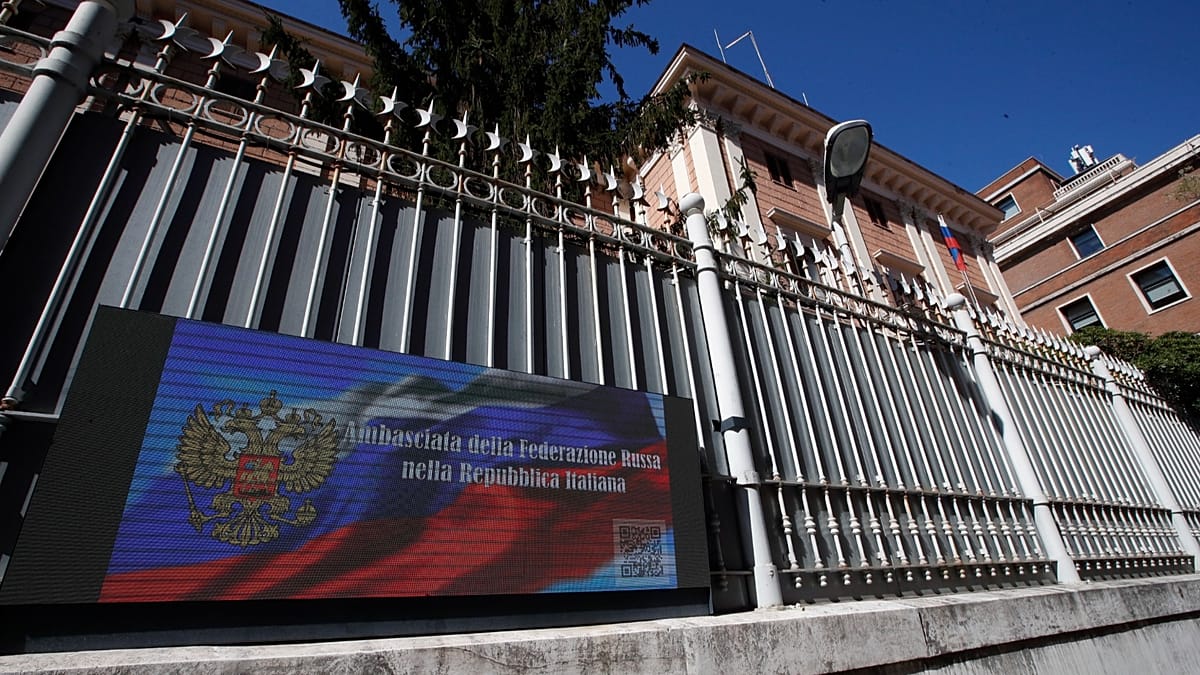
Italy ordered the expulsion of two Russian military attaches on Thursday, accusing them of espionage in what Foreign Minister Antonio Tajani described as part of Moscow's broader 'hybrid warfare' against the West. The move comes just days after Italian police arrested two former intelligence officers suspected of passing classified information to Russia.
Tajani announced the decision on X, naming the expelled diplomats as Ivan Petrovich Gorbachev and Mikhail Vasilyevich Astakhov, both attached to the Russian embassy in Rome. They have been given 72 hours to leave the country. 'Moscow continues to use hybrid warfare to attack the West and Italy, acts of interference that are serious and unacceptable to Italian institutions and national security,' Tajani wrote.
Espionage network uncovered
The expulsions follow the arrest on Tuesday of a 59-year-old former Italian intelligence officer and a younger ex-military official. According to Rome police, the older suspect had been paid by a Russian handler and 'disclosed to him information of interest through six sources, including four serving military personnel assigned to posts marked by a high level of confidentiality.'
Italian media reports indicate that the leaked information included details on the Italian-French SAMP/T air defence system, scheduled for delivery to Ukraine this year, as well as on Aster missiles already sent to Kyiv. The suspects also allegedly provided intelligence on a NATO mission in Bulgaria and on Avio, the Italian company that manufactures motors for drones and supersonic missiles.
Corriere della Sera reported that the 59-year-old former spy even revealed the identities of Italian counter-espionage agents tasked with monitoring Russian operatives. La Stampa, citing recorded telephone conversations, said the man had passed 'thousands' of pieces of information over a 12-year period.
A lawyer for the former intelligence officer denied any treason, asserting that his client had only gathered publicly available information. The suspect is due to be formally questioned on Friday.
Broader pattern of Russian interference
Defence Minister Guido Crosetto described the case as 'just the tip of the iceberg' in Russia's so-called 'hybrid war' across Europe, as Moscow continues its full-scale invasion of Ukraine. The incident echoes a 2024 case in which an Italian navy captain was jailed for selling classified documents to the Russian embassy. Italy expelled two Russian officials at that time, and Moscow retaliated by expelling an Italian diplomat.
The Russian foreign ministry, quoted by state news agency RIA Novosti, said on Thursday that Moscow would respond with 'an appropriate response.' The expulsions come amid heightened tensions between Russia and NATO, with several European countries reporting increased espionage activity. Recent incidents include the interception of Russian aircraft near HMS Prince of Wales in the Norwegian Sea.
Italy's actions also align with broader EU efforts to counter Russian hybrid threats. The EU recently scaled back a visa ban for Russian combatants after objections from France and Italy, highlighting the delicate balance between security and diplomatic engagement.
The case underscores the persistent challenge of Russian espionage in Europe, particularly as the war in Ukraine continues to strain relations. Russian strikes on Ukraine have killed seven people as NATO leaders convened in Ankara, further illustrating the continent's security vulnerabilities.