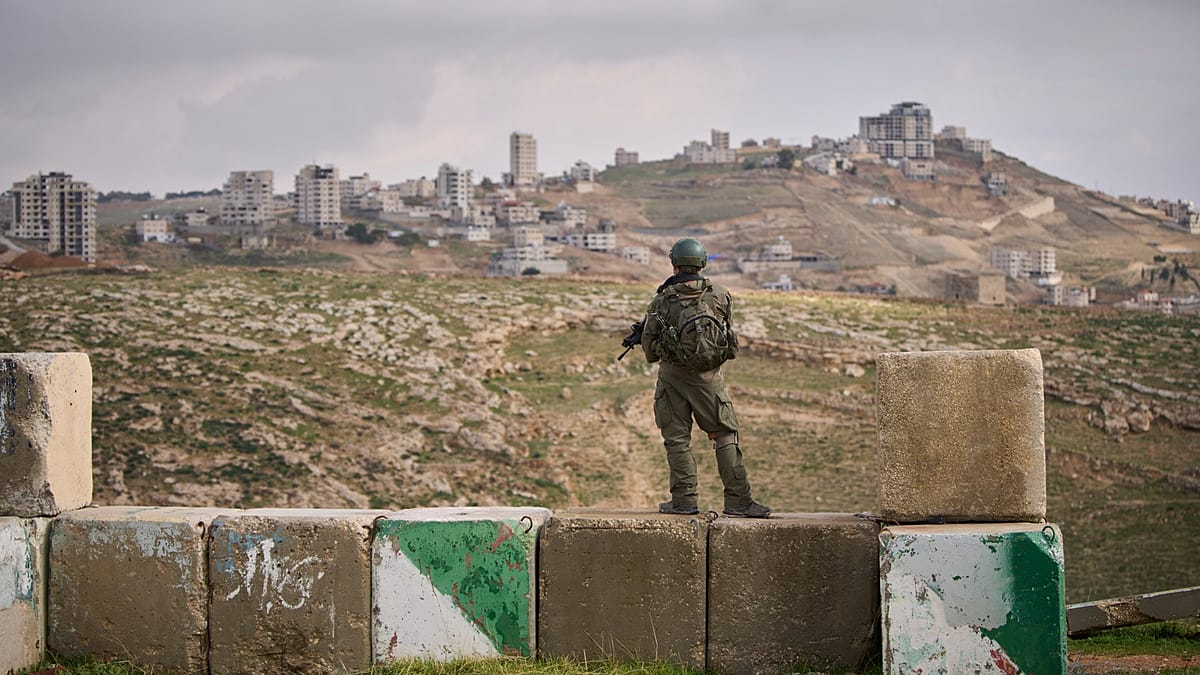
The European Commission has circulated an internal options paper to EU member states proposing a range of trade restrictions on goods produced in Israeli settlements in the occupied Palestinian territories, according to diplomatic sources. The measures, which include a full or partial ban on imports, stricter export licensing, and prohibitive tariffs, aim to respond to growing calls from a majority of EU foreign ministers for clearer action against settlement expansion.
The paper, shared with EU ambassadors on Wednesday, outlines three potential approaches. The first would require companies importing settlement-made goods to obtain an export license, a solution previously advocated by France and Sweden in a joint letter to the Commission in April. However, the Commission warns that such a system remains vulnerable to circumvention, as recent investigations have found exporters using mislabeling and mixing of settlement goods with products from inside Israel to evade existing restrictions.
The second option involves introducing higher tariffs to make imports prohibitively expensive, though the Commission acknowledges this too is susceptible to similar circumvention tactics. The third and most far-reaching option is a full or partial ban on imports from illegal settlements, which would require customs officers at EU borders to identify goods from these areas. The paper leaves open the legal basis for any such measures, noting that commercial policy requires only a qualified majority, while common foreign and security policy demands unanimity—a significant hurdle given the lack of consensus among member states.
Political Momentum and Legal Hurdles
The proposals follow a June meeting of EU foreign ministers in Luxembourg, where at least 20 member states urged the Commission to outline available options for further restricting settlement trade. Political momentum has increased since France and Sweden formally requested action in April, citing the 2024 International Court of Justice advisory opinion on the illegality of Israeli settlements. Several UN resolutions dating back to the late 1970s also affirm that settlement activity in the Palestinian territories is illegal under international law.
An EU diplomat, speaking on condition of anonymity, told Euronews that the Commission is effectively buying time, noting that there is no consensus within the Council. "While I don't see this initiative as ideal, maybe it sets the ball in motion," the diplomat added. The next formal Foreign Affairs Council is not expected until October, which some member states fear will further delay any concrete action.
The Council legal services have indicated in an oral opinion that using the commercial policy legal basis should be possible, depending on the details of the proposal. However, the Commission reiterated in its paper that it considers the foreign policy legal basis necessary, which would make any proposals extremely difficult to pass given the requirement for unanimity. This internal disagreement highlights the broader tensions within the EU over how to balance trade policy with foreign policy objectives.
Israel rejects the designation of its settlements as illegal, classifying them as temporary sites. In recent months, the Israeli government has introduced measures to strengthen its control over the West Bank and East Jerusalem in areas including property law, planning, and licensing—moves that appear to contravene key agreements signed under the 1993 Oslo peace accords.
Speaking to Euronews in May, France’s deputy minister for foreign trade, Nicolas Forissier, defended the push for tighter restrictions, stating: "It's not an aggressive position. In terms of international law and human rights, it's normal that we say that." The debate over trade with settlements is part of a broader recalibration of EU foreign policy, as the bloc also navigates other trade challenges, such as the ongoing tensions with China over trade deadlines and the potential for retaliation if Beijing fails to meet October commitments.
EU ambassadors are expected to provide initial feedback in a closed-door meeting in Brussels on Friday, ahead of further discussions among foreign ministers on Monday. No formal decision is anticipated next week, but the options paper represents a significant step in the EU's efforts to align its trade practices with its legal and diplomatic stance on the Israeli-Palestinian conflict.