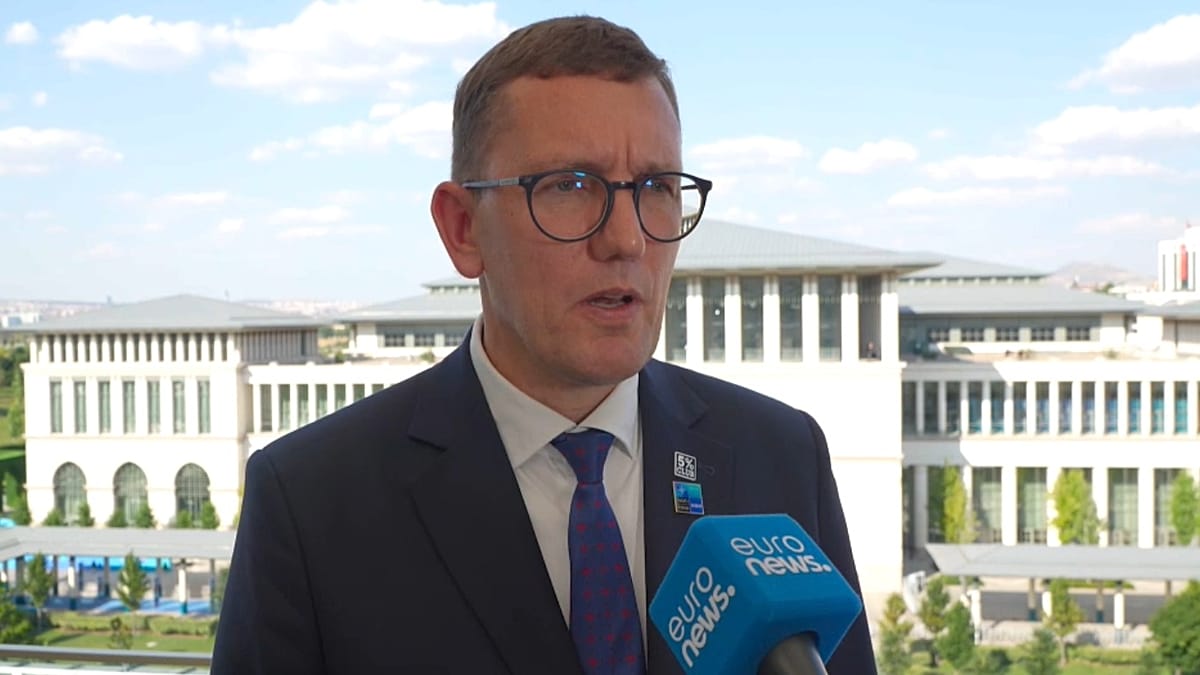
Estonian Prime Minister Kristen Michal has pushed back against growing scepticism about NATO's relevance, declaring in an exclusive interview that the alliance remains effective and indispensable for European security. Speaking to Euronews from Ankara, Michal offered a robust defence of the transatlantic partnership at a time when political shifts in Washington and Moscow's continued aggression have raised questions about the bloc's cohesion.
NATO's Track Record Under Scrutiny
Michal, whose country shares a 294-kilometre border with Russia, stressed that NATO's collective defence clause—Article 5—has proven its worth. “NATO is working well,” he said, pointing to the alliance's rapid reinforcement of its eastern flank since Russia's full-scale invasion of Ukraine. Estonia, a NATO member since 2004, has consistently urged allies to maintain a credible deterrent posture. The prime minister's remarks come amid renewed debate over burden-sharing and the potential return of Donald Trump to the White House, who as president questioned the value of the alliance.
“We have seen NATO adapt quickly,” Michal noted, referencing the deployment of multinational battlegroups in the Baltic states and Poland. He also highlighted Estonia's own defence spending, which exceeds 3% of GDP—well above the alliance's 2% target. For Tallinn, the message is clear: the alliance is not merely a political symbol but a functioning military structure.
Russia and the Baltic Security Calculus
The interview took place against a backdrop of heightened tensions. Russia recently halted rail traffic at key border crossings with Finland, Estonia, and Latvia, a move that Baltic officials interpret as part of Moscow's broader campaign to pressure NATO's eastern members. Michal described the disruption as “another reminder that Russia sees infrastructure as a weapon.” He called for continued EU and NATO investment in connectivity and resilience, particularly in the Baltic region.
Estonia has also deepened its defence ties with Ukraine. In a separate development, Estonia and Ukraine signed a drone pact to strengthen defence industry ties, underscoring Tallinn's commitment to Kyiv's fight. Michal framed this cooperation as part of a broader European effort to bolster Ukraine's self-defence while sending a signal to Moscow that the continent stands united.
European Defence: Complement, Not Replace
When asked about the push for a more autonomous European defence capability, Michal struck a pragmatic note. He argued that European strategic autonomy should complement, not replace, NATO. “We need both,” he said. “A stronger European pillar within NATO makes the alliance stronger. But we must avoid duplicating structures or sending signals that the transatlantic bond is weakening.”
His comments reflect a delicate balancing act for many EU member states, particularly those on the eastern flank. While France and Germany have championed greater EU defence integration, countries like Estonia worry that too much emphasis on European-only frameworks could undermine the US security guarantee. Michal's stance aligns with that of other Nordic and Baltic leaders who see NATO as the bedrock of continental defence.
Looking Ahead: NATO's Next Era
Michal acknowledged that the alliance faces a “new era” defined by hybrid threats, cyberattacks, and the erosion of arms control agreements. Yet he rejected the notion that NATO is in crisis. “Every era brings challenges. The question is whether we have the political will to meet them,” he said. Estonia, for its part, is investing in new capabilities, including drone technology and cyber defence, and pushing for a more integrated European defence market.
The prime minister also addressed the upcoming NATO summit in Washington, where leaders are expected to agree on a new defence investment pledge and a long-term support package for Ukraine. “We need to move from words to concrete commitments,” Michal urged. “Ukraine's fight is our fight. And NATO's credibility depends on its ability to defend every inch of allied territory.”
As the interview concluded, Michal returned to his central theme: NATO works. For a small nation on Russia's doorstep, that is not an abstract proposition but a daily reality.