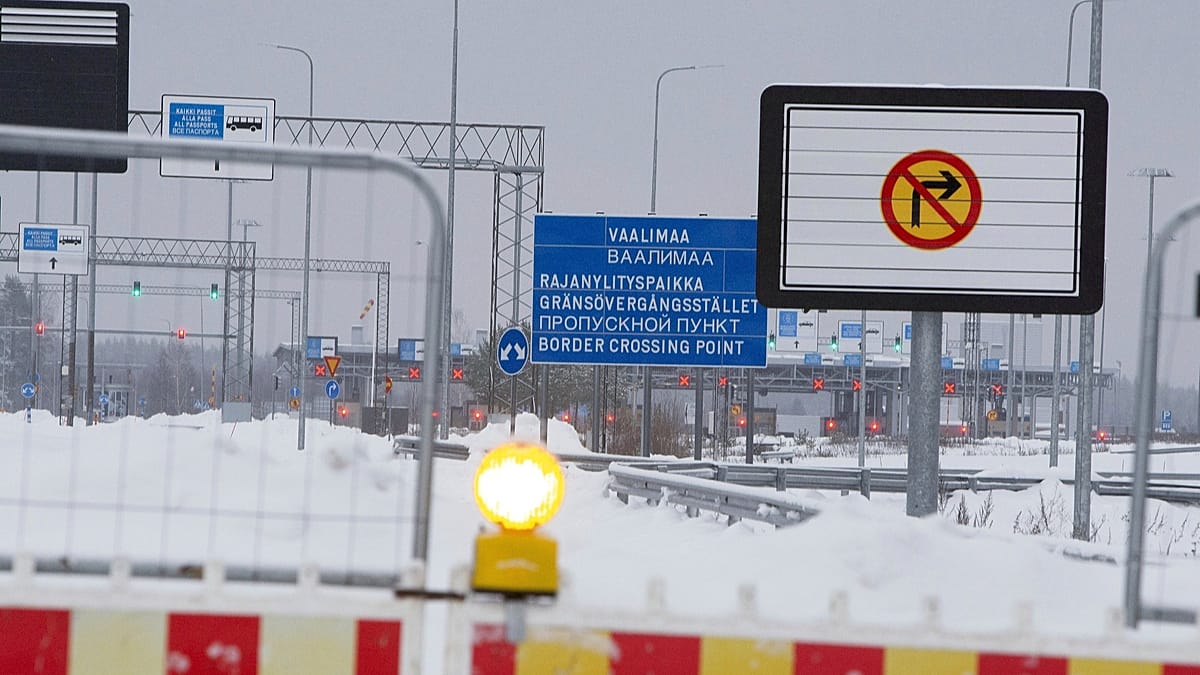
Moscow announced on Tuesday the suspension of railway traffic through multiple border crossings with Finland, Estonia, and Latvia, effective from Wednesday. The Kremlin's decree, published without explanation, cites only a 'temporary suspension' of the movement of people, vehicles, goods, and cargo at selected checkpoints along the Russian state border. Russia's Foreign Ministry has been instructed to notify the three affected nations.
The closures hit Finland hardest, with five railway checkpoints shut: Vyborg, Vartsilya, Lyuttya, Saint Petersburg-Finlandsky, and Svetogorsk. On the Estonian border, the Pechory-Pskov crossing is closed, and on the Latvian border, the Pytalovo checkpoint is affected. The move comes amid heightened tensions between Russia and its Nordic and Baltic neighbours, all of which are now NATO members.
Why Now? Finnish Defence Deal and Russian Threats
Days before the closure, Finland announced plans to partner with US defence contractor Lockheed Martin to build Europe's first maintenance centre for Multiple Launch Rocket Systems (MLRS) in Tampere. The announcement drew sharp condemnation from Moscow. Aleksey Zhuravlyov, first deputy chair of the Russian State Duma Defence Committee, accused Finland of becoming 'a second Ukraine' and openly threatened that Russia has the military capacity to 'destroy half the country.'
Since Russia's full-scale invasion of Ukraine in 2022, Finland has dramatically bolstered its defence posture. Helsinki closed its land border with Russia in late 2023, accusing Moscow of orchestrating hybrid operations—such as channelling asylum seekers—and expanding military infrastructure along the frontier. A recent Danish investigation indicated that Russia is significantly reinforcing its military presence on the NATO border, preparing for a potential future conflict with the alliance.
The railway closures may also be linked to broader strategic calculations. Lithuania's recent move to lift its nuclear weapons ban, following Finland's lead, underscores the shifting security landscape in the Baltic region.
Mobilisation Rumours Resurface
Another plausible motive for the sudden border restrictions is the widely rumoured new wave of mobilisation in Russia. According to multiple reports, the Kremlin is discussing a fresh call-up as soon as this autumn, possibly announced after the State Duma elections scheduled for 18–20 September. Ukraine's Commander-in-Chief, Oleksandr Syrskyi, has also warned that Russia may resort to a new mobilisation drive this autumn, pointing to the September vote as a potential trigger.
Kyiv officials estimate that Moscow is preparing to draft tens of thousands of additional soldiers to offset its mounting battlefield losses. The Centre for Strategic and International Studies reported in January that Russia had suffered approximately 1.2 million battlefield casualties by December 2025, including up to 325,000 killed. To sustain its offensive, Russia needs to recruit more than 30,000 fresh troops each month. Ukrainian intelligence claims that only about 70,500 new soldiers signed contracts in the first three months of 2026—falling short of the Russian Defence Ministry's target by roughly 30,000.
The first 'partial mobilisation' in September 2022 sparked widespread protests and prompted hundreds of thousands of Russians to flee abroad. The Kremlin has since avoided repeating the step, aware of its unpopularity and potential to fuel domestic discontent. However, with the war grinding on and casualties mounting, pressure to replenish ranks is intensifying. The frontline has largely stalled in recent months, but Russia continues to deploy faster jet-powered drones to overwhelm Ukraine's air defences, as reported in our earlier analysis.
Media reports indicate that mass mobilisation drills were held in Russia's Volgograd region in mid-June, with officials from neighbouring regional administrations invited to observe. Closing railway border crossings could be a preparatory step to prevent a repeat of the 2022 exodus, when men of fighting age rushed to leave the country.
The closures also serve as a pointed message to Finland, Estonia, and Latvia—three EU and NATO members that have been among Ukraine's staunchest supporters. By severing rail links, Moscow signals its willingness to escalate economic and logistical pressure on its neighbours, even as it struggles to maintain its own war effort.