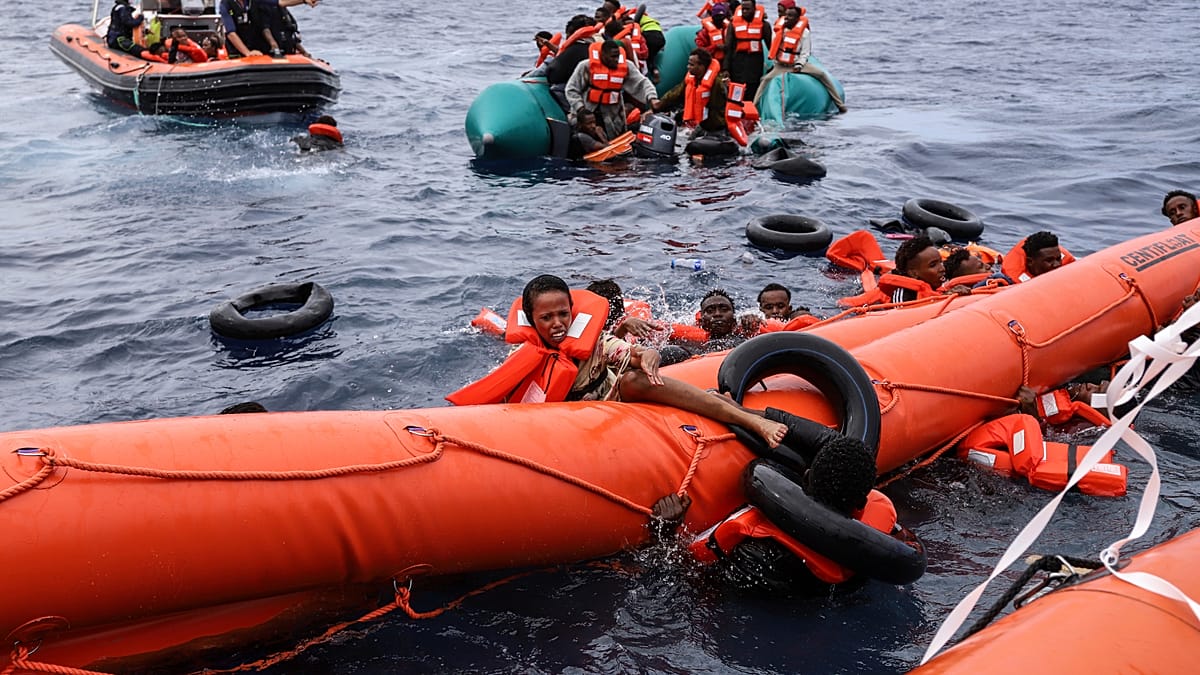
The simmering dispute between Rome and Berlin over who bears responsibility for migrants rescued in the Mediterranean has intensified, with Italy's Interior Ministry publishing new figures and demanding financial compensation from Germany.
According to data released by the ministry, since Giorgia Meloni became prime minister in October 2022, German aid organisations have brought roughly 22,500 migrants to Italian ports. In total, about 42,300 people have arrived in Italy aboard private rescue vessels during that period, meaning German groups account for more than half of those arrivals. A further 4,500 people reached Italy on ships operated by other European organisations, though those vessels sailed under the German flag. Rome calculates that the German share therefore approaches two-thirds of all private rescue arrivals.
Italy's Interior Minister, Matteo Piantedosi, has called on Berlin to contribute financially to the costs of hosting these migrants. He has also made clear that Italy will not discuss taking back migrants from Germany who first entered the EU through Italy until the financial question is resolved. Germany has requested the transfer of three individuals who entered the EU via Italy and later applied for asylum in Germany, but Rome has signalled it may refuse to admit them and send them straight back.
Under EU rules, the country of first entry is generally responsible for examining an asylum application. This principle was retained in the bloc's new migration pact, which came into force in June, though it now includes exceptions and a solidarity mechanism. The dispute highlights a fundamental tension in European migration policy: who should shoulder the burden of arrivals across the Mediterranean, and who should pay for their reception?
German NGOs under fire
Italy's Deputy Prime Minister Matteo Salvini has again attacked private sea rescuers, urging the governments in Berlin and Madrid to “rein in” their aid organisations. He argued that they should no longer be allowed to bring “illegal immigrants” to the Italian coast. His comments reflect a broader frustration in Rome that NGOs, many of them German or Spanish, are effectively determining migration flows into Italy.
Aid organisations, for their part, stress the life-saving nature of their work. The Italian group Emergency recently reported seven deaths on an overcrowded boat off the Libyan coast, with 57 people rescued, two in critical condition. German groups Sea-Watch and Resqship also reported finding three bodies in the Mediterranean. The central Mediterranean route remains one of the most dangerous migration routes in the world; the International Organization for Migration (IOM) has documented at least 872 deaths or disappearances there so far this year, though the true figure is likely higher because many incidents go unrecorded.
The standoff between Rome and Berlin is part of a wider European debate about solidarity and responsibility. While the new EU pact introduces a mandatory solidarity mechanism, its implementation remains contentious. Italy has long argued that frontline states like itself and Spain bear a disproportionate burden, while northern European countries have been reluctant to accept relocations or provide financial support. The issue has also strained relations within the EU, as seen in Spain's efforts to return migrant minors to Morocco and Morocco's blocking of new migrant pushes near Ceuta.
According to the Italian Interior Ministry, Piantedosi and his German counterpart, Alexander Dobrindt of the CSU, are continuing to work towards a joint solution. However, the tone from Rome suggests that progress will be slow. Salvini's rhetoric, in particular, points to a hardening of positions, with the deputy prime minister framing the issue as one of national sovereignty rather than humanitarian obligation.
The outcome of this dispute could have significant implications for the future of EU migration policy. If Italy succeeds in extracting financial compensation from Germany, other frontline states may follow suit, potentially reshaping the financial burden-sharing across the bloc. Conversely, if Berlin resists, the credibility of the EU's new solidarity mechanism could be called into question.
For now, the immediate flashpoint is the proposed transfer of three migrants from Germany to Italy. Rome's willingness to defy the Dublin principle suggests that the dispute is far from resolved, and that migration will remain a contentious issue in European politics for the foreseeable future.