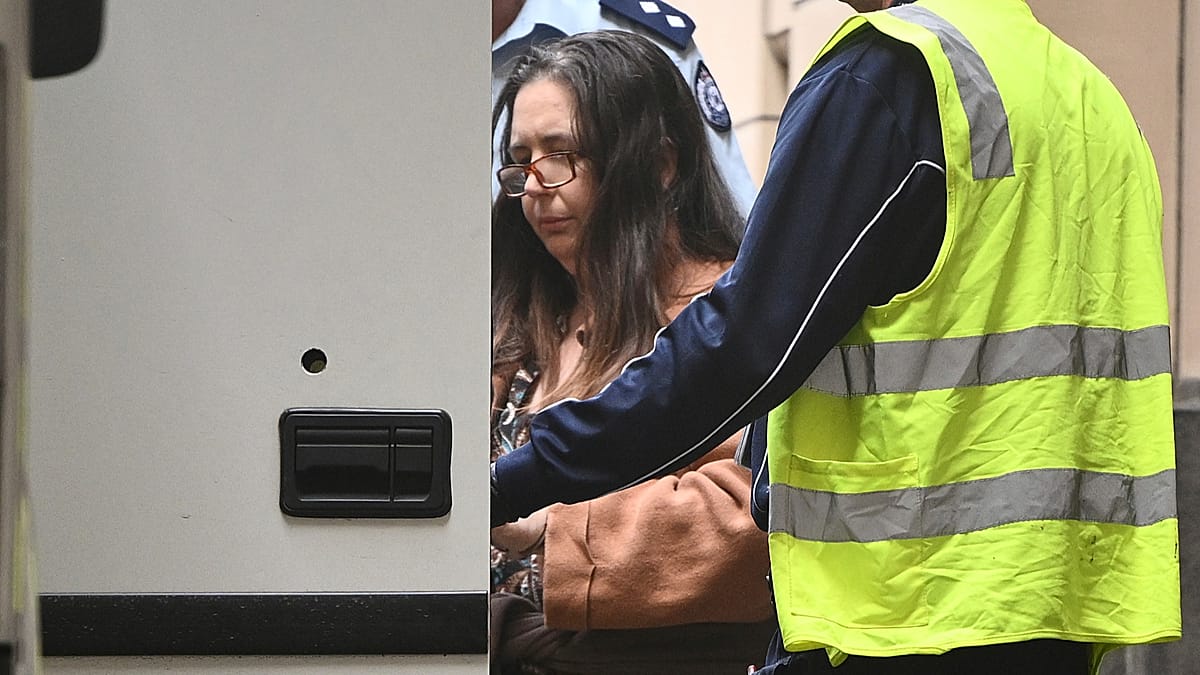
Lawyers for Erin Patterson, the Australian woman convicted of killing three relatives with a poisonous mushroom lunch, have opened an appeal by arguing that the jury in her trial was not properly sequestered. The case, which drew global attention, is now before three judges at the Supreme Court of Victoria in Melbourne.
Patterson, 51, was found guilty last year of murdering her husband's parents, Don and Gail Patterson, and his aunt, Heather Wilkinson, after serving them a beef Wellington meal laced with death cap mushrooms at her home in Leongatha, a farming village in Victoria. She was also convicted of the attempted murder of Heather's husband, Ian Wilkinson, a local pastor who survived after weeks in hospital.
The trial judge sentenced Patterson to life imprisonment with a non-parole period of 33 years. The appeal hearings, scheduled over two days, will consider both Patterson's bid to overturn her conviction and the prosecution's argument that the sentence was too lenient.
Jury sequestration concerns
Patterson's barrister, Richard Edney, told the court that members of the jury had stayed in the same hotel as a police witness and members of the prosecution team. He argued this represented a “fundamental failure” of the legal process in what he described as “perhaps one of the most high-profile criminal trials this state has ever had.”
Edney conceded there was no evidence that the jury had actually communicated with the other parties, but maintained that the lack of proper sequestration undermined the trial's fairness. The jury was not isolated from external influences as required, he said.
Patterson's other lawyer, Veronika Drago, focused on the admissibility of certain evidence. She argued that cell tower data and posts about death cap mushroom sightings were “innocuous” and unreliable, and that forcing Patterson to answer questions based on such evidence “arises to the level of a substantial miscarriage of justice.”
In a separate submission, Patterson's solicitor accused the prosecution of conducting an “unfair and oppressive” cross-examination. The defence also argued that evidence about mushroom images found on a memory card in Patterson's home was wrongly excluded by the trial judge.
The Court of Appeal judges must first decide whether these grounds justify granting Patterson leave to challenge her conviction. If they do, the full appeal will be heard.
Prosecution seeks harsher sentence
On the other side, the prosecution has appealed against the 33-year non-parole period, calling it “manifestly inadequate.” The prosecution argued that the sentencing judge erred in finding there was a substantial chance Patterson would be held in solitary confinement for years, and that this “infected” his decision.
The case has been a sensation in Australia and beyond, not least because of the bizarre nature of the crime and the small-town setting. The victims died after consuming a meal that contained one of the world's most toxic mushrooms, the death cap, which is native to Europe but has spread to other regions.
Patterson watched the proceedings via video link from the Dame Phyllis Frost Centre, a maximum-security prison in Melbourne's western suburbs. She has maintained her innocence throughout.
The appeal hearings are expected to conclude on Thursday, with a decision likely to be reserved. The case has also prompted broader discussions about food safety and the dangers of foraging for wild mushrooms, a topic that resonates in Europe where death caps are more common.