Brazil is heading for a second-round presidential election on 25 October after Sunday's first-round vote failed to produce an outright winner. With nearly all ballots counted, the Superior Electoral Court in Brasília reported that Senator Flávio Bolsonaro, son of former president Jair Bolsonaro, had secured just over 56 million votes, while incumbent President Luiz Inácio Lula da Silva trailed with approximately 53.7 million. Neither candidate reached the majority threshold required for a first-round victory.
The runoff will determine who leads South America's biggest economy, home to 214 million people, for a four-year term beginning 5 January. The outcome carries significant geopolitical implications: a Bolsonaro win would likely strengthen ties with Washington, while a Lula victory could deepen Brasília's alignment with Beijing and further distance it from the United States. This dynamic has drawn attention beyond the region, including from European capitals monitoring shifts in global alliances.
Bolsonaro declares 'end of the Workers' Party era'
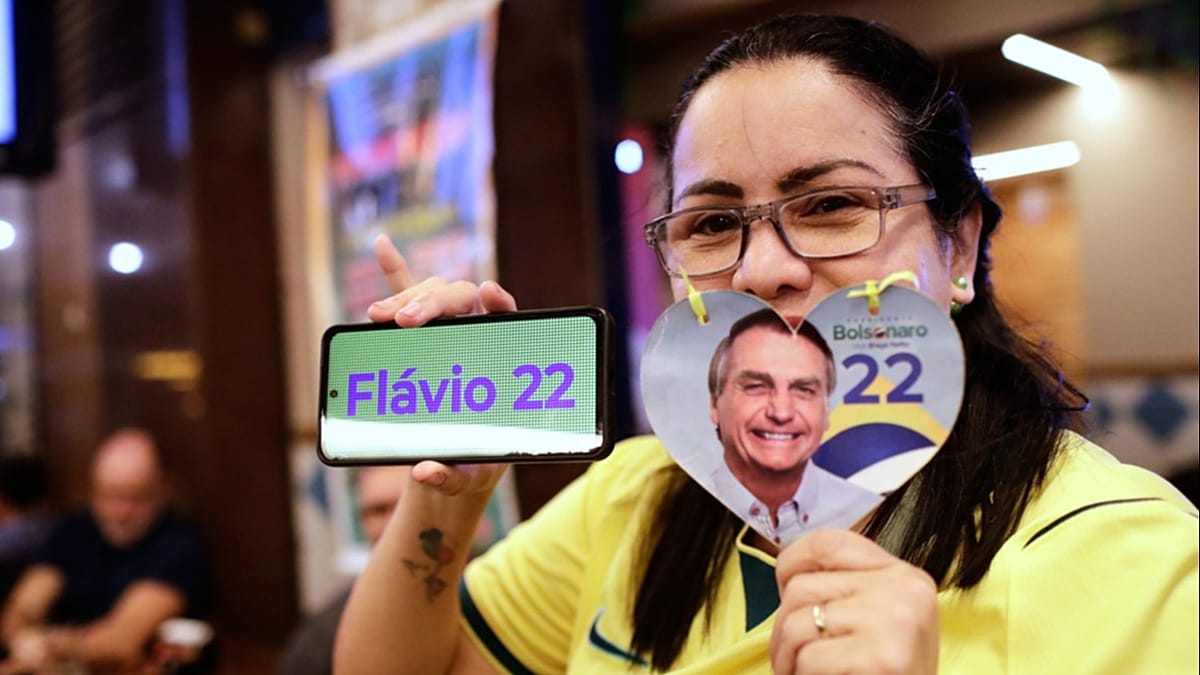
Speaking to supporters outside his home in Brasília, Flávio Bolsonaro framed the result as a mandate for change. "Brazil wants change, that's the reading of what happened today," he said. "It's the end of the Workers' Party era," he added, referring to Lula's political movement. The crowd included supporters wearing green and yellow Brazil jerseys and one woman draped in the Israeli flag.
Lula, who had hoped to win outright, acknowledged the setback. "Tomorrow we start a new campaign," he told reporters. "I am very good in the knockout stage. We will see who has the best plan." The 80-year-old incumbent is seeking a fourth non-consecutive term, while Bolsonaro, 45, is vying to follow in his father's footsteps after the elder Bolsonaro was barred from office and placed under house arrest for plotting to subvert democracy following the 2022 election.
The two candidates now have three weeks to court the millions of voters who backed other contenders. Augusto Cury, a writer who finished third with 3.4 million votes, said he would not endorse either candidate. Ronaldo Caiado and Renan Santos, who together drew about 5.3 million votes, have also declined to back either side. Their combined support—roughly 8.73 million votes, or 7.5% of the electorate—could prove decisive.
Lula's challenges: affordability crisis and corruption scandal
Lula enters the runoff with a strong base of supporters who credit his social policies for lifting millions out of poverty. But his approval ratings have fallen during his third term, weighed down by an affordability crisis and a corruption scandal that has ensnared Supreme Court Justice Alexandre de Moraes—the same judge who led the investigation into Jair Bolsonaro and ordered his house arrest. Moraes is accused of improper contacts with Daniel Vorcaro, a disgraced banker and head of Banco Master, who allegedly sought legal advice from the justice.
Both candidates face significant image problems. According to multiple polls, roughly half of Brazil's population disapproves of the Bolsonaro family, while the other half disapproves of Lula's Workers' Party. The polarized electorate means the runoff will likely hinge on turnout and the ability of each campaign to mobilize its base.
Four years ago, Lula defeated Jair Bolsonaro by about 2.1 million votes. This time, the margin could be even narrower. The campaign ahead will test whether Lula can overcome the legal and economic headwinds, or whether Flávio Bolsonaro can translate his father's political legacy into a return to power.
For European observers, the Brazilian election is more than a distant spectacle. Brazil is a key partner for the EU on trade, climate, and digital regulation. A shift in Brasília's foreign policy could affect everything from Mercosur negotiations to global supply chains. As the runoff approaches, European policymakers will be watching closely to see whether Brazil continues its recent tilt toward China or rebalances toward the West.
The next three weeks will be intense. Both candidates will need to broaden their appeal beyond their core supporters, and they may have to make policy concessions to win endorsements from the eliminated candidates. The result on 25 October will shape not only Brazil's future but also the geopolitical landscape of the Americas and beyond.