The International Energy Agency (IEA) has issued its starkest warning yet: the ongoing Middle East conflict now represents the most serious threat to global energy security ever recorded. In its flagship World Energy Outlook report, the Paris-based agency said that disrupted oil supplies through the Strait of Hormuz are pushing up prices and leaving households increasingly exposed to the fallout.
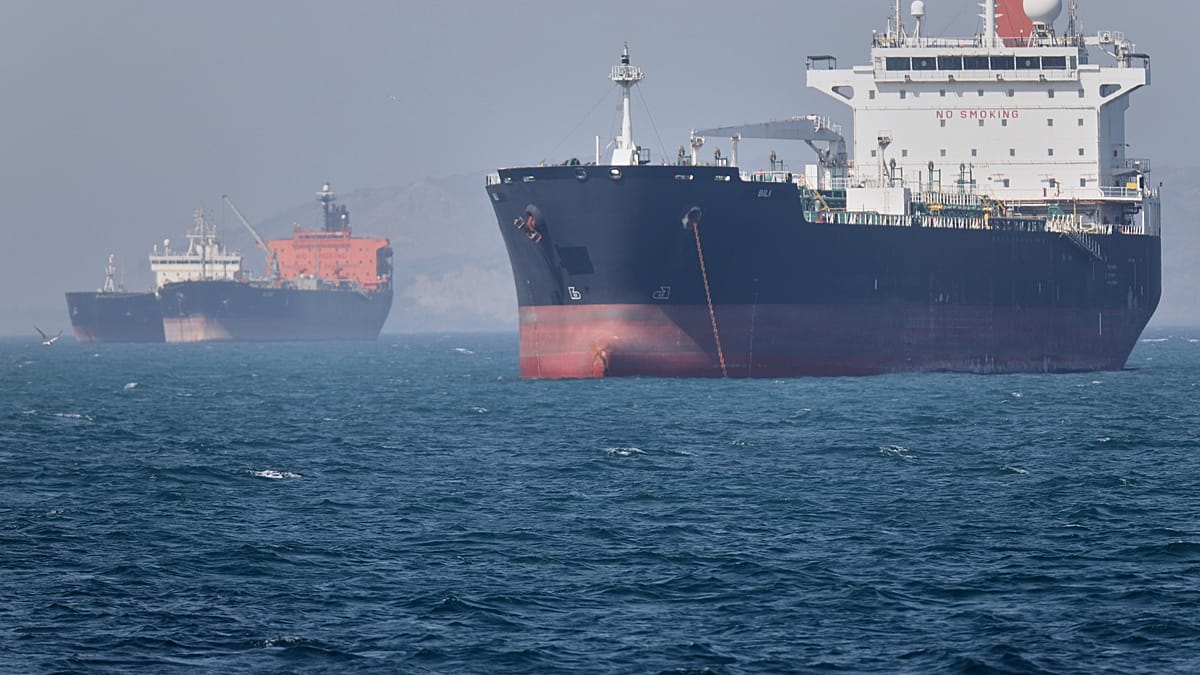
The crisis began in February, when the United States and Israel launched a bombing campaign against Iran. In response, Iran has blockaded the Strait of Hormuz—a narrow waterway that carried roughly one-fifth of global oil shipments before the conflict—and has targeted tankers in the area. Despite US-led naval escort efforts, supply lines remain severely disrupted.
Consumers bear the brunt
In the report's foreword, IEA Executive Director Fatih Birol wrote: "The Strait of Hormuz crisis has created the largest threat to energy security in history, one that dwarfs the scale of the oil shocks of the 1970s." He noted that governments have tried to shield households, with producing nations increasing supply and using alternative routes, while China has reduced its purchases from international markets. Yet, as Birol put it, "Governments have intervened to try and provide some shelter for consumers, but they have nonetheless faced higher prices and, in some cases, shortfalls of supply."
The report stresses that "increasingly it is falling to consumers – and high prices – to absorb the impact as other buffers are run down." This marks a sharp contrast with July, when Birol said the oil market was benefiting from "several cushioning factors." Those buffers have now been exhausted, making the outlook considerably bleaker.
No way back?
The IEA's warning comes as world leaders gather for the COP31 climate talks in Turkey. There, governments face mounting pressure to act on climate change after a year of searing heatwaves and wildfires across Europe, as well as deadly floods in Nepal. The IEA's report outlines three scenarios: a cautious one based on current policies, a middle scenario reflecting stated government commitments, and an ambitious path to net-zero emissions by 2050.
Climate scientist Bill Hare, founder of the Climate Analytics think tank, urged governments to commit to the most interventionist scenario. "If we don't get on the net-zero train the IEA has outlined, then we are condemning the world to irreversible and permanent warming of 2.5C or above," he told AFP.
In a new addition, the IEA has modelled two scenarios based on how the Middle East crisis might evolve. While the energy sector and the global economy have shown considerable resilience so far, Birol warned: "The longer the crisis lasts, the deeper the effects will be." He added that he does not "see any credible pathway for the energy world to return to the way it was before."
The implications for Europe are profound. European households and businesses are already grappling with high energy prices, and the crisis threatens to undermine the continent's efforts to end its fossil fuel dependence. The IEA's report underscores the urgency of accelerating the transition to renewable energy, a message that resonates strongly in Brussels and national capitals alike.
As the crisis continues, European leaders are also looking at alternative supply routes, such as the Middle Corridor linking the Caucasus and Central Asia, to reduce reliance on chokepoints like Hormuz. However, the IEA's analysis suggests that such measures can only partially mitigate the damage.
The report also highlights the broader geopolitical stakes. With the conflict showing no signs of abating, the world faces a prolonged period of energy insecurity that could reshape global trade and diplomacy. For Europe, the challenge is twofold: ensuring immediate energy supplies while staying committed to long-term climate goals.