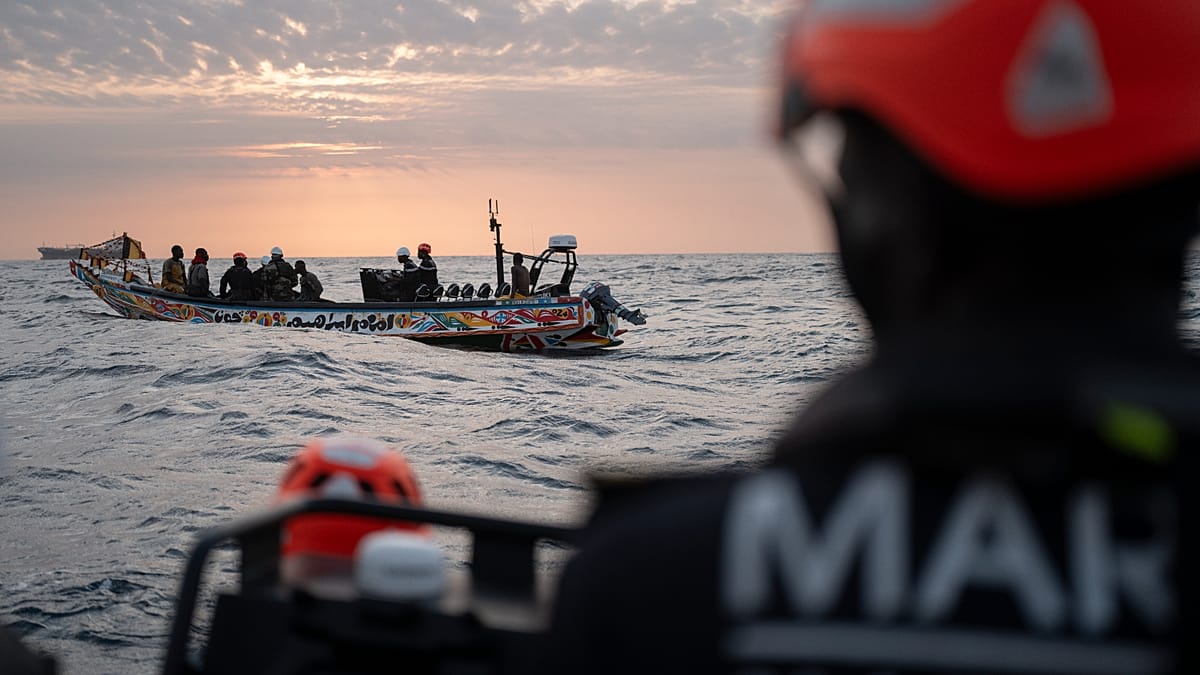
At least one person has died and dozens are missing after a boat carrying around 100 migrants capsized off the coast of Senegal early Wednesday morning, local officials said. The vessel, described by some sources as rickety, went down near the town of Yenne, south of the capital Dakar, as it attempted to reach Spain's Canary Islands.
Ousmane Sène, secretary general of the Yenne mayor's office, told reporters that the accident occurred around 3 a.m. local time. "When we went to the scene, we saw the boat on the shore," he said. Firefighters recovered one body, and police arrested a survivor. Two other bodies were found in nearby villages, though it remains unclear whether they were linked to this particular sinking.
Survivors reported that roughly 100 people were aboard when the boat capsized. The incident underscores the escalating risks faced by migrants taking the Atlantic route from West Africa to the Canary Islands, an archipelago that lies more than 1,000 kilometres south of the European mainland.
A surge in Atlantic crossings
The latest tragedy comes amid a sharp rise in departures toward the Canaries. According to Spanish government figures, more than 11,000 migrants reached the archipelago in the first two weeks of November alone — a number that exceeds half of the total for all of 2025. The route, while shorter than the Mediterranean crossing, is notoriously dangerous due to strong currents, overcrowded boats, and the vast distances involved.
This week's sinking follows another disaster near the town of Kébémer in northern Senegal, where at least 39 people died when their boat went down. The repeated tragedies have prompted Senegalese authorities to intensify efforts to curb irregular migration, including dozens of arrests. On Wednesday, the country's navy said it had "rescued" over 1,400 migrants at sea in just 48 hours.
Senegalese President Bassirou Diomaye Faye spoke out against the resurgence of migrant departures, calling for strengthened coastal controls. "The acceleration and complexity of irregular migration demonstrate the urgency for the government to intensify... the diligent and efficient implementation of public policies concerning youth, education, vocational training, youth employment and entrepreneurship, as well as the economic empowerment of women," Faye said in a statement.
The crisis has also drawn attention to broader European migration policy. The European Union has been grappling with how to manage arrivals, with some member states pushing for stricter border controls and others advocating for more legal pathways. The first migrant return hub in Rwanda, backed by five EU states, is one such initiative, though its effectiveness remains untested.
Meanwhile, Spain's domestic politics have been shaped by migration debates. Prime Minister Pedro Sánchez's government faces pressure from both the left and right over its handling of arrivals, particularly in the Canary Islands, where local authorities have struggled to accommodate the influx. The situation has also intersected with other policy areas, such as Spain's decision to halt foreign degree recognition amid a surge in medical residency applications, a move that affects many migrants with professional qualifications.
The Atlantic route has become a focal point for European border agencies. Frontex patrols off Crete have been reinforced as Libya crossings surge, but the Senegalese route presents distinct challenges, requiring cooperation with West African nations. The EU has pledged support for Senegal's coast guard, but critics argue that more needs to be done to address the root causes of migration, including poverty, unemployment, and climate change.
For the families of those missing, the wait for news is agonising. Local communities in Yenne and elsewhere have been left to grapple with the human cost of a crisis that shows no signs of abating. As one resident put it, "These are our sons and daughters. They leave because they see no future here, but the sea takes them."
The tragedy off Senegal is a stark reminder that migration is not a statistic but a matter of life and death. While European leaders debate policy, the Atlantic continues to claim lives, and the need for a coordinated, humane response has never been more urgent.